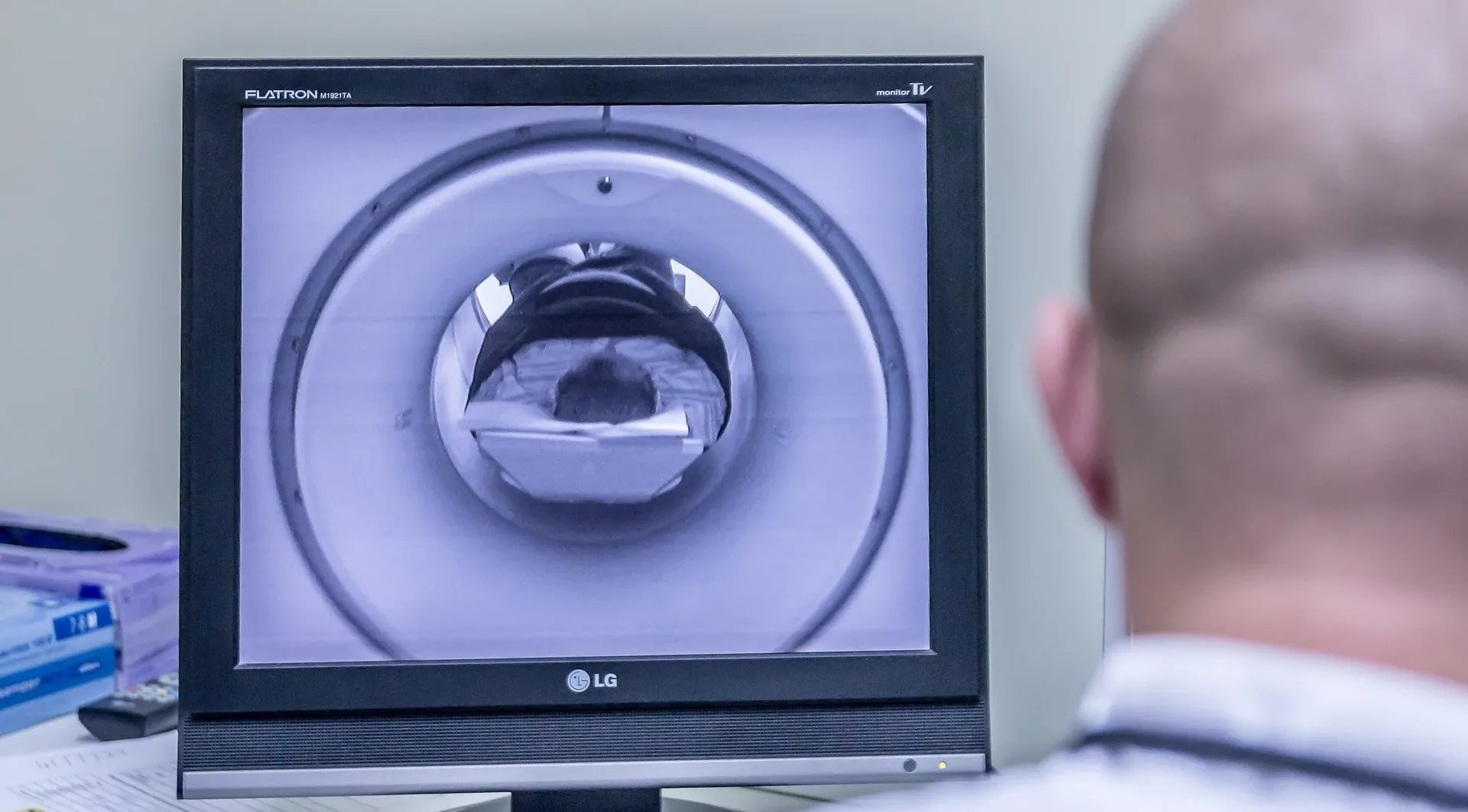

The global AI market in medical imaging was valued at USD 1.28 billion in 2024 and is projected to surpass USD 14.46 billion by 2034, at a CAGR of 27.10% from 2025 to 2034.
The AI in Medical Imaging market is experiencing rapid growth, driven by advancements in artificial intelligence technologies and the increasing demand for early and accurate diagnosis in healthcare. AI-powered tools are revolutionising medical imaging by enhancing image acquisition, segmentation, and interpretation, thereby improving diagnostic accuracy and workflow efficiency. Key applications include radiology, oncology, cardiology, and neurology, where AI aids in detecting abnormalities, predicting disease progression, and assisting in treatment planning. The rising prevalence of chronic diseases, the growing aging population, and the need to reduce diagnostic errors are further fueling market expansion.
Additionally, the integration of AI with PACS (Picture Archiving and Communication Systems), cloud-based solutions, and deep learning algorithms is transforming how medical images are analysed and stored. While regulatory challenges and data privacy concerns remain, ongoing innovations and collaborations among tech firms, healthcare providers, and research institutions are paving the way for broader adoption. As a result, AI in medical imaging is poised to become a vital component of next-generation healthcare systems worldwide.
Download the Sample Report: https://www.precedenceresearch.com/sample/2380
AI in Medical Imaging Market Key Points
- North America dominated the global market with the largest market share of 38.74% in 2024.
- Asia Pacific is poised to grow at the quickest CAGR of 28.1% between 2025 and 2034.
- By application, the neurology segment contributed the biggest market share of 21.07% in 2024.
- By image acquisition technology, computed tomography will capture the highest market share of 31.09% in 2024.
- By end-use, the hospitals and clinics segment accounted for the largest market share of 64.80% in 2024.
- By offering, the software/platforms segment has contributed 58.65% market share in 2024.
AI in Medical Imaging Market Regional Insights
North America holds the largest share in the AI in medical imaging market in 2024, with a valuation of USD 494.27 million, accounting for 38.74% of the global market. This dominance can be attributed to the region’s advanced healthcare infrastructure, strong investment in AI research, and early adoption of cutting-edge diagnostic technologies. Countries like the United States and Canada have been pioneers in integrating AI tools into radiology and diagnostic imaging, particularly through FDA-approved solutions. Additionally, the presence of major players such as GE Healthcare, IBM Watson Health, and Aidoc has further accelerated regional innovation. Strategic government support and a high level of digital literacy among healthcare professionals position North America to maintain its leadership in the coming years.
Europe ranks second in the global AI in medical imaging market, with a 2024 valuation of USD 367.70 million, capturing 28.82% of the market share. The region benefits from a well-established healthcare system and robust policies supporting digital health transformation. Countries like Germany, the United Kingdom, and France are at the forefront of adopting AI-driven diagnostic technologies, particularly in oncology and neurology imaging. European initiatives such as the European Health Data Space are encouraging data sharing and interoperability, key enablers for AI adoption. Furthermore, strong academic and industry collaborations are fueling the development and clinical validation of innovative AI applications. These factors collectively contribute to Europe’s stronghold in the market and its potential to further expand its AI-driven healthcare capabilities.
Asia Pacific is emerging as the fastest-growing region in AI in the medical imaging market, valued at USD 287.64 million in 2024 and representing 22.55% of the global market. The region’s growth is driven by a rapidly improving healthcare infrastructure, rising awareness of early disease detection, and increasing government support for digital health initiatives. Key markets such as China, India, Japan, and South Korea are making substantial investments in AI-enabled imaging systems to address the growing demand for efficient and scalable diagnostic solutions. The high population density, combined with a rising burden of chronic diseases, further amplifies the need for AI in diagnostics. Moreover, local tech startups are forming strategic partnerships with hospitals and radiology centers, making Asia Pacific a promising hub for AI-driven medical imaging in the near future.
The LAMEA region, while currently the smallest in market size, shows promising potential. In 2024, it accounted for USD 126.25 million, representing 9.90% of the global market share. Countries in the Middle East, particularly the UAE and Saudi Arabia, are making strategic investments to modernise their healthcare systems and integrate AI into diagnostic workflows. In Africa and Latin America, the adoption is still at a nascent stage due to challenges such as limited infrastructure, regulatory hurdles, and a shortage of skilled professionals. However, mobile health technologies and telemedicine platforms are helping bridge the healthcare gap, providing opportunities for AI in remote diagnostics and portable imaging devices. With continued support from governments and international collaborations, the LAMEA region is expected to witness steady growth in the coming years.
Scope of AI in the Medical Imaging Market
| Report Coverage | Details |
| Market Size in 2024 | USD 1.28 Billion |
| Market Size by 2034 | USD 14.46 Billion |
| Growth Rate from 2025 to 2034 | CAGR of 27.10% |
| Base Year | 2024 |
| Forecast Period | 2025 to 2034 |
| Segments Covered | AI Technology, Solution, Modality, Application, End Use, and Regions |
| Regions Covered | North America, Europe, Asia-Pacific, Latin America, and Middle East & Africa |

Market Dynamic
The AI in Medical Imaging Market is undergoing rapid transformation, driven by advancements in artificial intelligence and its increasing integration into healthcare systems globally. Artificial intelligence technologies—especially deep learning and machine learning—are being used to enhance image acquisition, processing, and interpretation across modalities like MRI, CT, X-ray, ultrasound, and PET. These technologies significantly reduce diagnostic errors, improve workflow efficiency, and provide faster and more accurate image interpretation, which is particularly crucial in critical care, oncology, neurology, and cardiology.
One of the key dynamics influencing this market is the growing burden of chronic diseases such as cancer, cardiovascular diseases, and neurological disorders. These conditions demand frequent and accurate imaging, making AI-powered systems increasingly valuable for early detection and treatment planning. Additionally, the aging global population, which presents higher healthcare demands, is accelerating the adoption of AI-driven diagnostic tools that can support overburdened radiologists and reduce turnaround times.
Despite the opportunities, the market also faces challenges such as data privacy, integration issues, and lack of standardisation. Ensuring that AI algorithms are trained on diverse and representative datasets remains a concern, especially when deploying solutions in multi-ethnic or global healthcare systems. Moreover, the high initial investment and the need for skilled professionals to manage AI tools may limit adoption in smaller hospitals and emerging economies.
Solution Analysis
AI in the medical imaging market is broadly segmented into Software Tools/Platforms and Services. Software solutions represent the core of AI functionality in medical imaging, encompassing deep learning algorithms, machine learning models, and platforms used to automate image analysis and assist in diagnostics. These tools are increasingly integrated with radiology workflows to speed up diagnosis, reduce human error, and handle large volumes of medical images generated daily. On the other hand, the Services segment includes implementation, training, consulting, and post-deployment support. As hospitals and diagnostic centers struggle with the complexity of integrating AI into legacy systems, the demand for specialised AI services continues to grow, particularly in regions facing a shortage of IT and radiology professionals.
Image Acquisition Technology Analysis
AI applications in medical imaging vary significantly depending on the image acquisition technology used. In X-ray imaging, AI is commonly used for detecting fractures, pneumonia, tuberculosis, and, more recently, for COVID-19 diagnostics. Its affordability and wide availability make it a primary field for AI integration. Computed Tomography (CT) benefits from AI’s ability to provide rapid and detailed 3D reconstructions for disease detection in organs such as the lungs and brain, aiding in oncology and cardiovascular diagnostics. Magnetic Resonance Imaging (MRI) is another critical area where AI enhances resolution, reduces noise, and shortens scan times, which is especially beneficial in neurology and musculoskeletal imaging. Ultrasound imaging, often used in obstetrics, cardiology, and liver analysis, is seeing a surge in AI-enhanced handheld devices that enable point-of-care diagnostics. Meanwhile, Molecular Imaging, including PET and SPECT scans, leverages AI to detect cancer and neurological conditions with greater precision, improving tracer signal interpretation and image quantification.
Application Analysis
AI is revolutionising a wide range of medical imaging applications. In digital pathology, AI algorithms assist in scanning and interpreting histological slides, offering significant advantages in cancer diagnosis and tissue analysis. Oncology is one of the largest application areas, with AI supporting tumor detection, staging, and treatment planning by analysing CT, MRI, and PET images. In cardiovascular imaging, AI helps evaluate heart function, detect anomalies, and predict the risk of cardiac events. Neurology benefits from AI’s precision in identifying conditions like strokes, Alzheimer’s, and multiple sclerosis. For the lung and respiratory system, AI has proven invaluable in detecting pneumonia, COVID-19, and chronic pulmonary diseases through X-ray and CT imaging. In breast imaging, AI tools enhance the accuracy of mammography by reducing false positives and improving early cancer detection. Applications also extend to the liver and GI tract, where AI detects liver fibrosis and cancer, and oral diagnostics, where emerging AI solutions help identify dental issues and oral cancers. Other areas include musculoskeletal disorders and ophthalmology, where AI enhances retinal image interpretation.
End Use Analysis
In terms of end use, hospitals and clinics remain the dominant segment due to the high volume of diagnostic procedures and the need to improve workflow efficiency. AI tools are being increasingly adopted in these settings to support radiologists, reduce reporting time, and improve patient outcomes. Research laboratories and diagnostic centers also play a significant role, particularly in the development and testing of new AI models and in clinical studies. These facilities are crucial in validating AI algorithms and driving innovation. The other category, which includes ambulatory surgical centers and intensive care settings at home, is gaining traction, especially in the wake of the pandemic, where remote diagnostics and portable AI-powered imaging devices have become more important. The need for real-time diagnostics in non-traditional settings and the growing trend of decentralised healthcare drive this shift.
Recent Activities
- AI Integration in Diagnostics: AI is increasingly used to enhance diagnostic accuracy and efficiency, particularly in imaging analysis, predictive analytics, and decision support systems.
- AI in Ultrasound Imaging: The AI in ultrasound imaging segment is expected to grow at a rate of 22% over the next five years, propelled by automation and telemedicine advancements
- Microsoft’s Collaborations: In July 2024, Microsoft partnered with Mass General Brigham and the University of Wisconsin to advance AI applications in medical imaging.
- GE HealthCare’s Acquisition: GE HealthCare announced the acquisition of MIM Software, a provider of medical imaging analysis and AI solutions, in January 2024
Immediate Delivery Available | Buy This Premium Research Report@ https://www.precedenceresearch.com/checkout/2380
Feature Image by Michal Jarmoluk from Pixabay