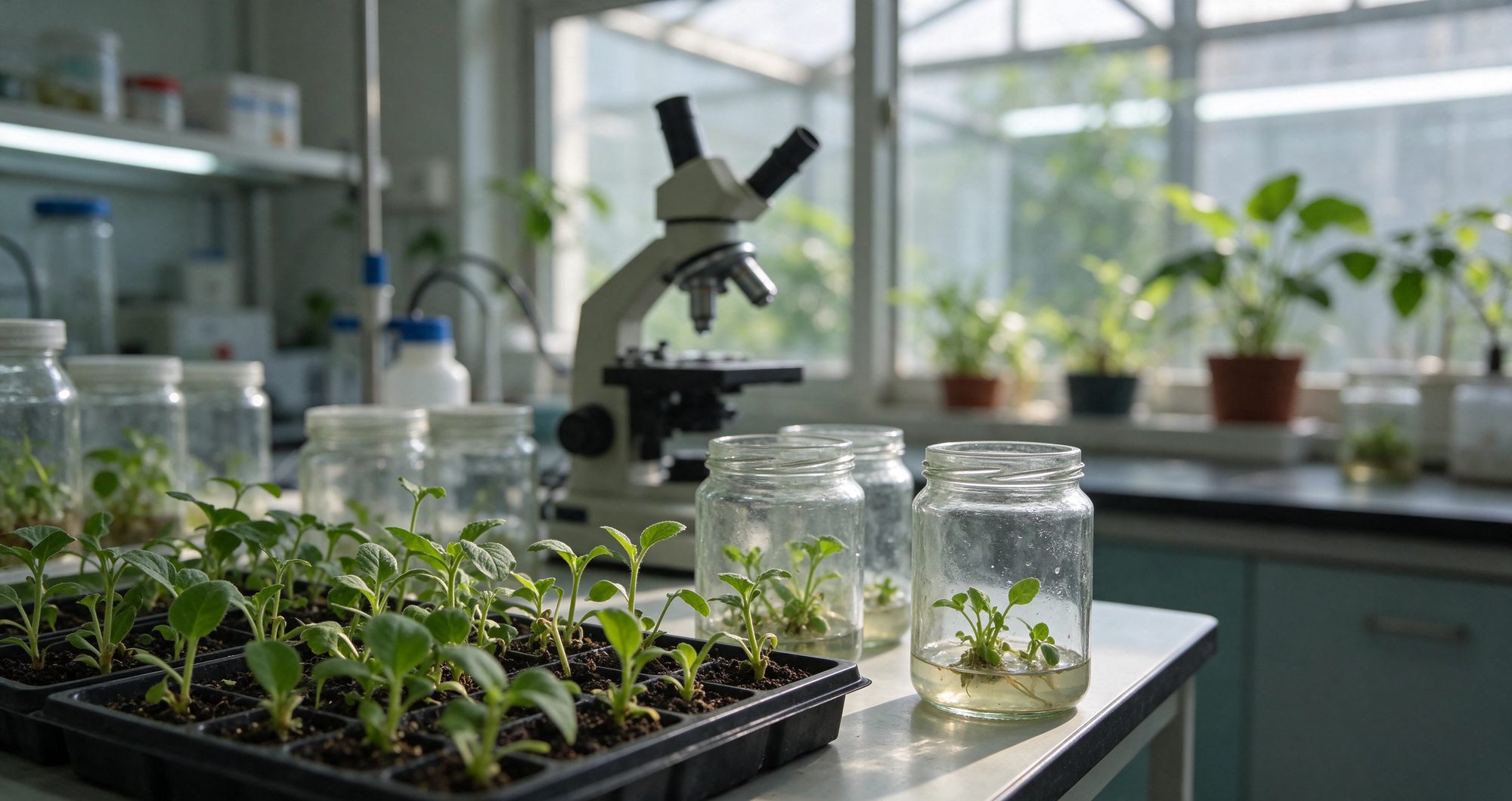

The Indian Institute of Horticultural Research in Bengaluru has opened a Centre of Excellence for Genome Editing in Horticultural Crops, bringing together laboratory facilities for research on fruit and vegetable crops. A Farmers’ Advanced Training Centre was inaugurated during the same visit on 15 November, linking the institute’s expansion in biotechnology with its work supporting growers.
The genome-editing centre includes a Biosafety Level-II laboratory and is based at the institute’s Hessarghatta site. Both centres were opened by Dr M. L. Jat, secretary of the Department of Agricultural Research and Education and director-general of the Indian Council of Agricultural Research, known as ICAR.
Research on crop traits
The centre has been funded through an ICAR project focused on climate resilience and food and nutritional security through genome editing in horticultural crops. Its research will concentrate on developing varieties and hybrids with specific traits in tomato, chilli, papaya, grapes and pomegranate.
The facilities include a plant tissue-culture and transformation unit with advanced plant growth chambers, alongside a molecular-biology laboratory. A bioinformatics laboratory will support genetic confirmation of genome-edited plant material. Together with the biosafety laboratory, these provide facilities for different parts of the research process.
The institute’s ongoing genome-editing programme uses CRISPR/Cas9 techniques and has several disease-resistance objectives. These include resistance to anthracnose in chilli, potyvirus in papaya, mildew in grapes and bacterial nodal blight in pomegranate. Multiple disease resistance in tomato is another target.
Vitamin-D biofortification in tomato is also among the programme’s research aims. These objectives describe work the institute is pursuing, rather than results announced at the opening. The inauguration establishes a new research facility; it does not itself establish the approval or commercial release of a new crop variety.
Building scientific capability
During the visit, Jat called for stronger indigenous capabilities in CRISPR-based genome editing and the genome resources needed to support it. His priorities included developing Indian technologies and expertise rather than relying on external organisations, and making better use of the country’s scientific talent.
He also emphasised the connection between basic research and practical delivery. Research priorities should reflect farmers’ needs and conditions in the field, with scientific work judged by the benefits it ultimately delivers. A stronger data ecosystem, clearer targeting and attention to each institution’s strengths were identified as important parts of that approach.
Farmer training alongside laboratory work
Following the opening of the advanced training centre, Jat met farmers, entrepreneurs, nursery owners and natural-farming practitioners who have adopted the institute’s varieties and technologies. Their discussion covered horticultural innovation, natural farming and ways to reduce the impact of El Niño conditions on crops.
Farmers taking part described their experience of mulching, sprinkler irrigation and border cropping. They also discussed intercropping with short-duration flower and vegetable crops, and green manuring. The exchanges placed practical farming methods alongside the institute’s longer-term biotechnology research.
Jat encouraged educated young people, engineers and agricultural graduates to participate in agriculture and horticulture through scientific innovation. He also called for successful farmer innovations and experiences to be documented and shared more widely, with modern scientific knowledge and traditional practice complementing each other.
The visit included meetings with postgraduate students, tours of research laboratories and a field visit to the institute’s research facilities. Developing young scientific talent formed part of the discussions, alongside the expectation that research should lead to useful outcomes for growers. The two new centres add laboratory and training infrastructure to that work, while the crop-improvement objectives remain research goals.