
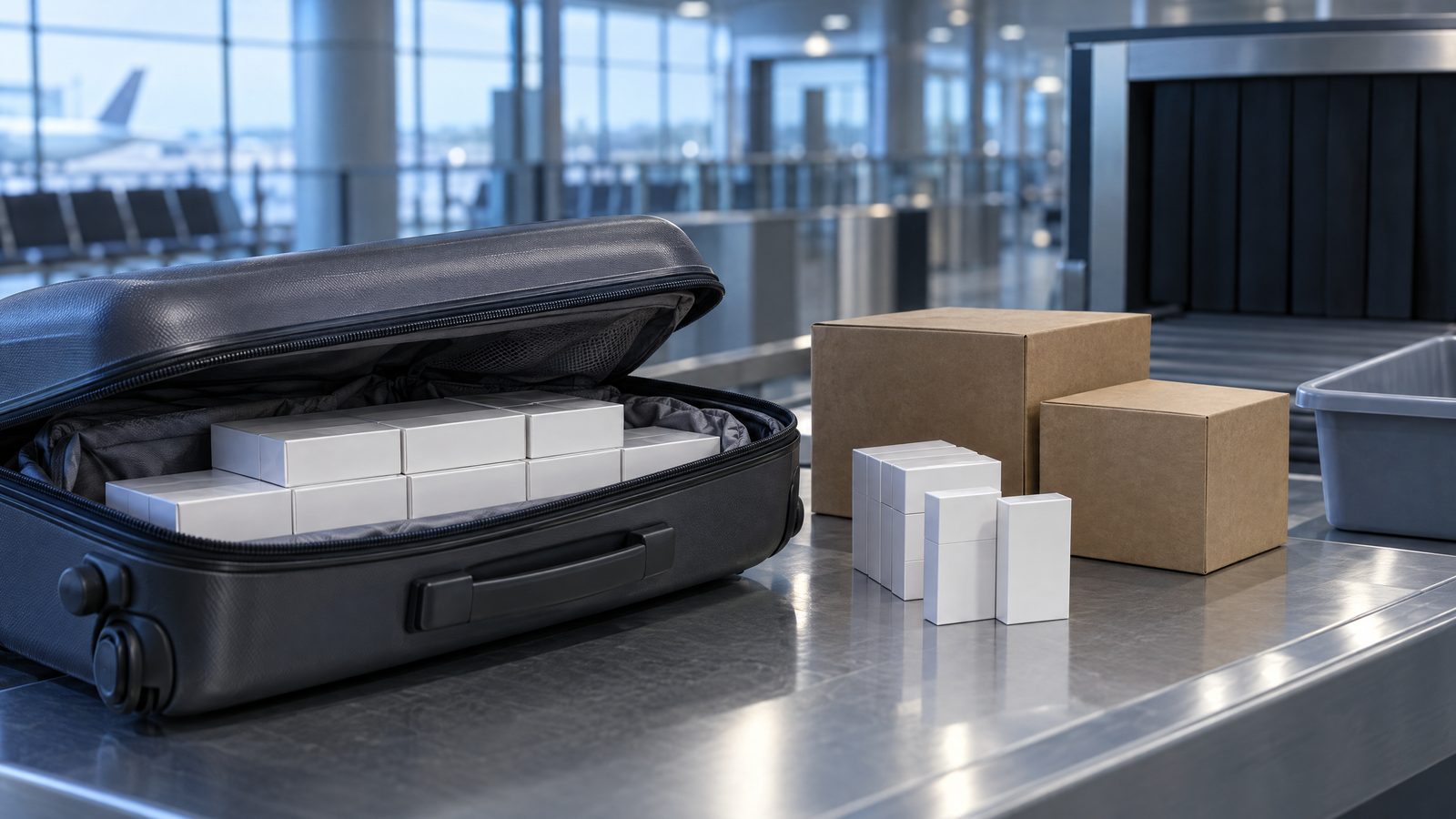

Border Force officers have seized 4,884,001 illegal cigarettes and 405kg of rolling tobacco during a four-day operation at Manchester Airport. The tobacco haul was given an estimated street value of £2.59 million.
The operation focused on flights, baggage and passengers assessed as higher risk. Officers also seized 35kg of cannabis during the same period. The figures describe a discrete airport operation rather than a national total, but they show the volume of tobacco that can be carried through a major arrival point in only a few days.
Airport operation targeted baggage and arrivals
Specialist detector dogs were deployed alongside Border Force officers. The methods described in the operation included altered pillows and suitcases with false bottoms. One case involved an allegation that a passenger arriving on a flight from Dubai had carried 100,000 cigarettes in six suitcases.
That example is one allegation within the wider operation, not a finding about every passenger or flight examined. The operation does not identify the individual involved or give the outcome of any subsequent case. It should not be read as evidence that a particular route, airline or group of travellers is responsible for the wider illicit tobacco trade.
Officers made four arrests and denied entry to 23 people during the operation. A further 26 people were referred for investigation. Arrest, referral and denial of entry are enforcement steps, not convictions. No charges, court outcomes or individual identities were set out, so it is not possible to draw conclusions about the eventual outcome for any person involved.
A single operation within a much wider enforcement picture
The four-day result is substantial, but it should be kept distinct from the annual figures used to describe the wider market. In the preceding year, Border Force and HMRC seized 1.9 billion illicit cigarettes nationally. That activity resulted in 201 arrests, 134 charges and 83 convictions.
Those nationwide figures cover a far longer period and a broader set of enforcement activity than the Manchester Airport operation. They provide context for the scale of the challenge, but they do not show how much illicit tobacco enters through one airport or one method. Equally, the current seizure cannot be used to estimate the total quantity that may have avoided detection.
The £2.59 million figure is an estimated street value for the cigarettes and rolling tobacco seized. It is not a measure of unpaid duty, a retail-price comparison or the value of the separate cannabis seizure. Keeping those measures apart matters: they describe different parts of the operation and should not be added together without further detail.
What happens after a seizure
The cigarettes and rolling tobacco are due to be destroyed. The immediate removal of the goods prevents this consignment from reaching shops or consumers, while the examination of baggage and passenger information can contribute to further inquiries into possible supply networks.
Illegal cigarettes may include goods brought into the country outside the rules as well as counterfeit products. The operation did not give a breakdown of the Manchester haul by product type, origin or intended destination. It therefore would be wrong to describe all of the cigarettes as counterfeit, or to assign a destination to them beyond the detail set out for the operation.
Retailers found selling illegal cigarettes can face fines of up to £10,000. Penalties for such sales exceeded £2 million in the preceding year. That places airport work within a wider chain of enforcement that can involve border checks, investigations and action against sales in communities.
Why the detail matters
The operation illustrates the practical techniques used to conceal high volumes of tobacco in passenger baggage, from adapted luggage to seemingly ordinary household items. It also shows why the headline figure alone is not the whole story. The number of cigarettes, the quantity of rolling tobacco, the four arrests, the referrals and the separate cannabis seizure are related parts of one enforcement operation, but each carries a different legal and evidential status.
For now, the confirmed outcome is the removal of 4,884,001 cigarettes and 405kg of rolling tobacco at Manchester Airport. Any criminal proceedings, immigration decisions or further investigative outcomes will need to be judged on their own evidence if and when they are made public.







