

Christmas is a joyful time, yet it is often physically and emotionally demanding. We frequently worry about finances or finding the ideal gift. However, we rarely consider the impact the festive season has on our spines. As a Consultant Spinal Neurosurgeon, I see a noticeable increase in patients with acute back and neck pain flare-ups in December and January. This surge usually results from the combined effects of stress, poor posture, and rushed movements, not a single dramatic injury.
The Neuro-Physical Link: Stress and Your Back
The connection between emotional strain and physical pain is not psychosomatic. Instead, it is pure neurobiology. When stress hits, your body activates the “fight or flight” response. Consequently, your autonomic nervous system releases cortisol. This hormone causes the large muscles protecting your spine to tense up. These muscles include the traps, rhomboids, and lumbar muscles.
This persistent, low-level muscle contraction significantly increases pressure on your spinal discs and joints. Over time, the tension pulls joints out of optimal alignment. It also reduces blood flow. A normal daily strain can then become chronic, debilitating pain. If you have an underlying issue, such as a worn disc, this tension often triggers a painful flare-up.
Simple, Mindful Strategies to De-Stress Your Spine
The good news is that counteracting this tension is straightforward. It requires simple, mindful movement, not complex medication.

Anthony suggests avoiding back problems that regardless of whether you’re working, wrapping gifts, or watching a film, people should commit to five minutes of gentle movement every hour to break static posture and release built-up muscle tension. Credit: Aaron Amat.
-
The 5-Minute De-Stress Break
Every hour, regardless of whether you’re working, wrapping gifts, or watching a film, commit to five minutes of gentle movement. Stand up, roll your shoulders back and down five times, and do the “Cat-Cow” stretch (arching and rounding your spine slowly) five times. This breaks static posture and releases built-up muscle tension.
-
Master the Festive Lift
Lifting a heavy suitcase into the car or the Christmas turkey out of the oven are prime injury moments. Never twist and lift. When lifting, keep the object as close to your body as possible. Instead of overly focusing on a “straight back” or deep knee bend, focus on bending from the hips in a fluid motion and driving the lift with your powerful leg muscles. This is the method used by many in cultures accustomed to lifting loads without injury.
-
Optimise Festive Travel
Long car or train journeys or even perhaps flights to visit loved ones are often a common and unavoidable part of Christmas. Consider using a small cushion or rolled-up towel to support the small of your back (lumbar region) and ensure your hips are level with your knees. Most importantly, break the journey every 60-90 minutes to stand, walk, and gently stretch your hamstrings and calves.
-
4. Stay Hydrated (and Go Easy on the Alcohol)
Spinal discs are 80% water. Dehydration can cause them to lose height and shock-absorbing capacity. While celebratory drinks are part of the season, remember that alcohol is a diuretic. Prioritise water throughout the day to keep your discs plump and resilient.
By consciously managing stress and focusing on mindful movement, you can ensure that your back remains strong and flexible enough to enjoy a truly merry and pain-free Christmas.
By managing stress and focusing on mindful movement, you can keep your back strong and flexible. This ensures you can enjoy a truly merry and pain-free Christmas.
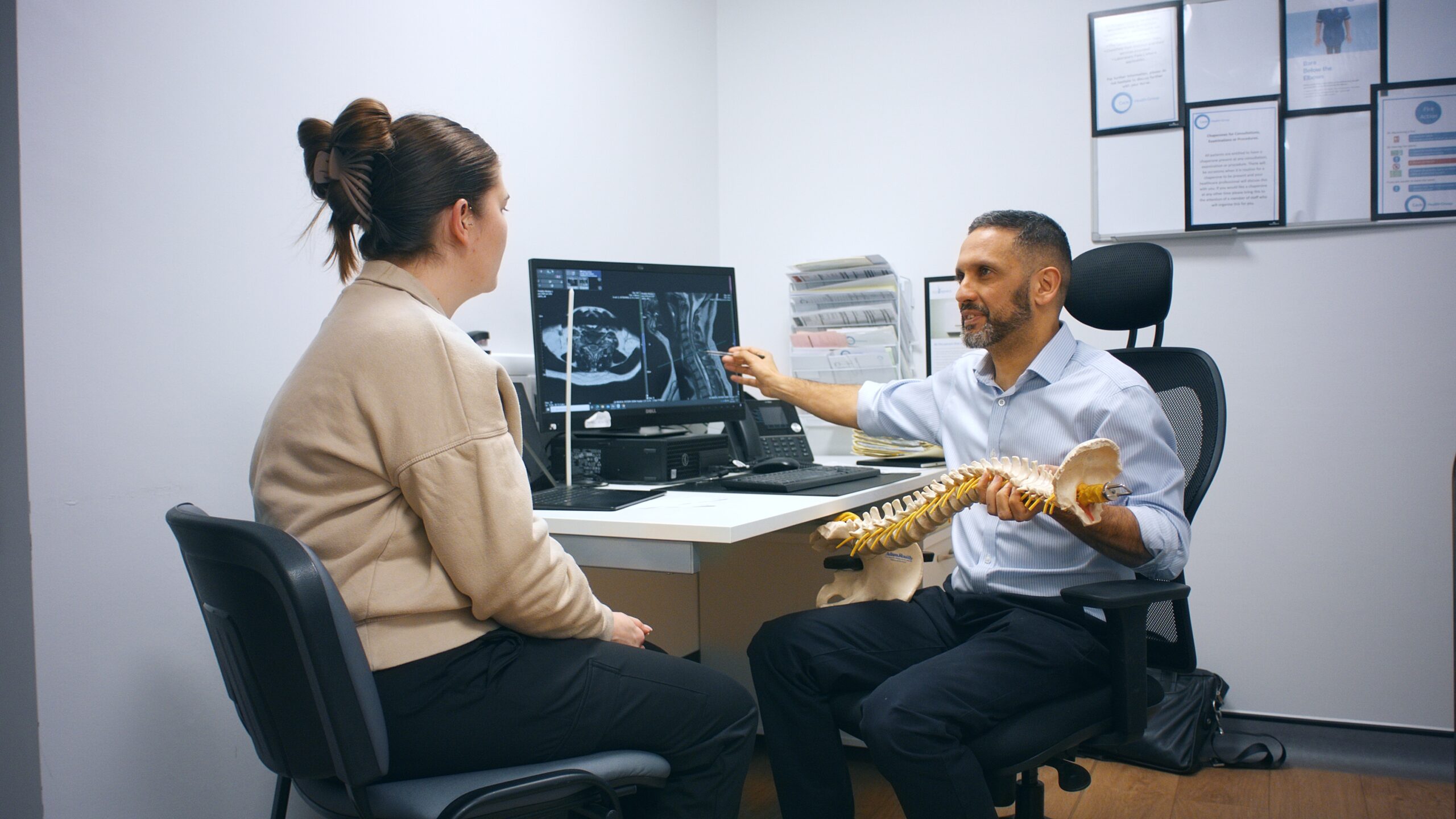
Anthony Ghosh gives back consultation to the patient.
This article was written by Mr Anthony Ghosh, Consultant Spinal Neurosurgeon and Director of The Spine MDT
Mr Anthony Ghosh, Consultant Spinal Neurosurgeon and Director of The Spine Multi-Disciplinary Team, trained in London and adapted his microsurgical skills from vascular neurosurgery to make spine surgery less invasive.
Driven by a lifelong fascination with the nervous system’s role in movement, Anthony finds fulfilment in restoring patients’ function and quality of life through minimally invasive techniques. Recognising the fragmented nature of spine care, he founded the Spine MDT to unite surgeons, physiotherapists, chiropractors, and pain specialists under one coordinated approach.
Through this work, Anthony has built a large and engaged audience of both patients and healthcare professionals via his growing YouTube channel, continuing his mission to educate, empower, and keep people moving.
To find out more, visit www.spinemdt.com.