
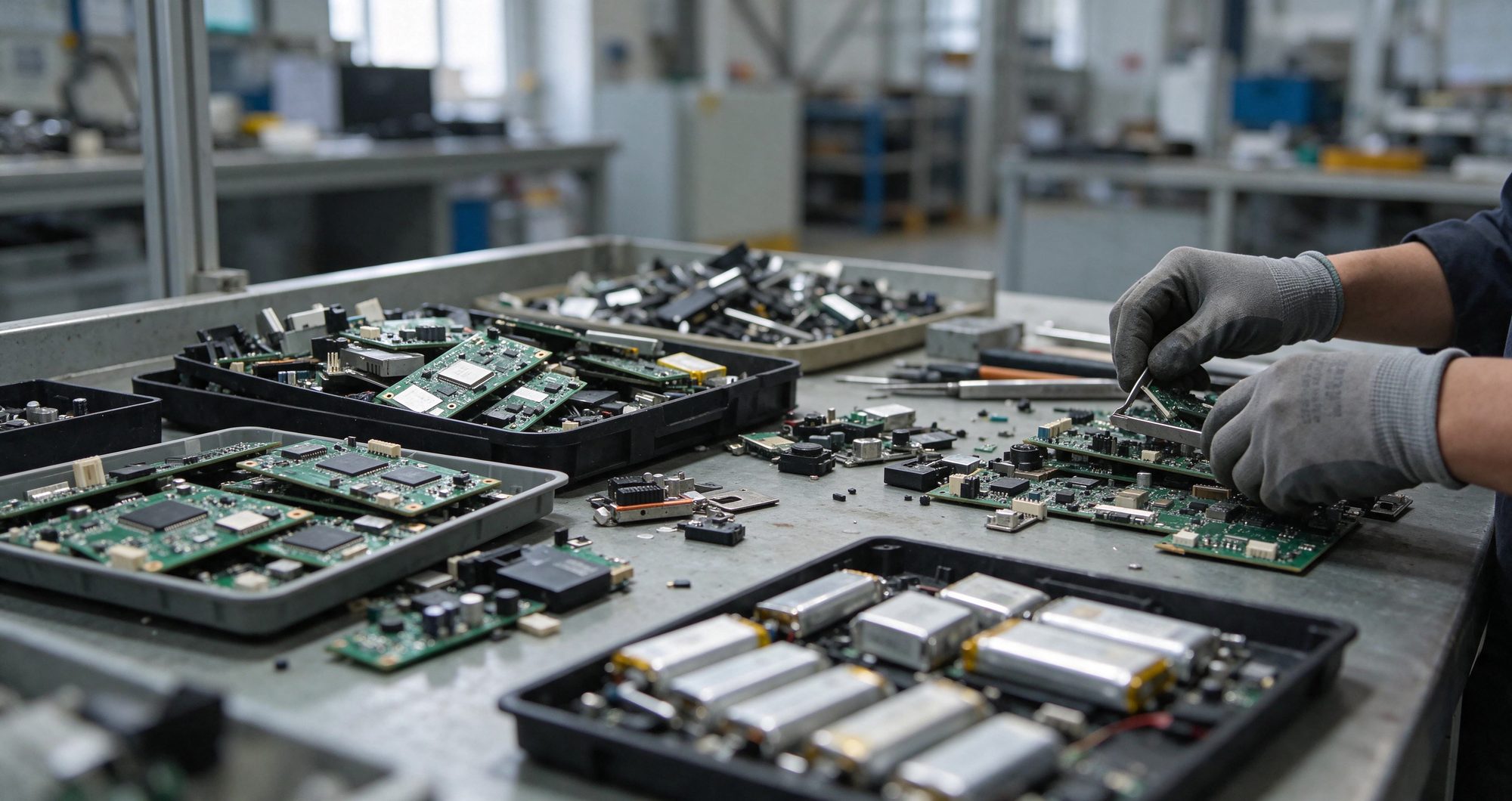

India’s Technology Development Board has signed an agreement with Hyderabad-based Neo Seekermetals to support a ₹20 crore project aimed at recovering critical metals from electronic waste and used lithium-ion batteries.
The board has approved ₹10 crore, equivalent to 100 million rupees, under the Research, Development and Innovation Fund. The assistance will take the form of optionally convertible debt, rather than a grant. The agreement was announced on 16 November and is intended to help develop and commercialise the company’s recycling technology.
Financing the move towards commercial use
The approved support accounts for half of the project’s total cost of 200 million rupees. Neo Seekermetals, based in Hyderabad in the southern Indian state of Telangana, will use the project to advance a process designed to handle both e-waste and lithium-ion battery waste.
Optionally convertible debt is a financing arrangement that allows debt to be converted into equity under agreed conditions. Approval of the assistance does not mean the full amount has already been paid to the company. The agreement’s detailed disbursement schedule, interest rate and conversion conditions have not been made public with the announcement.
Under the board’s wider RDI financing framework, funding normally covers up to half of the assessed project cost, with the remaining share met by the project developer through its own resources or commercial finance. Payments are linked to projected spending and milestones. Those general rules provide the setting for the support, but do not establish the individual terms of this agreement.
Recovering materials from two waste streams
The project centres on an integrated recycling process intended to extract valuable metals and battery materials from discarded electronics and end-of-life batteries. Its purpose is to return recovered materials to productive use, rather than leave them in waste streams.
The two types of waste are being addressed within the same technology-development project. This places resource recovery alongside waste management: the intended output is material that can re-enter the economy, not simply a reduction in the volume of discarded equipment.
India’s expansion in electric mobility, clean energy, electronics and advanced manufacturing is increasing the importance of secure supplies of critical minerals. Developing domestic recovery technology is intended to provide an additional route to those resources while addressing growing quantities of electronic and battery waste.
Commercial deployment remains the goal
The project aims to move the technology from Technology Readiness Level 5 to Level 9, taking it towards commercial-scale deployment. That is a development target, not a milestone already achieved through the signing of the agreement.
The financing therefore supports work still to be completed. No commercial operating date, annual processing capacity or independently verified recovery rate has been set out for the funded project. Its eventual contribution to mineral supplies will depend on the technology progressing through development and into commercial use.
The RDI scheme was approved in July 2025 to encourage private-sector investment in research and innovation. It supports technology-intensive work from Technology Readiness Level 4 onwards and identifies critical-mineral processing and recycling among its priority areas. The Technology Development Board operates under India’s Department of Science and Technology.
The Neo Seekermetals agreement gives a specific recycling project access to that development financing. It combines a defined funding approval with a longer-term commercialisation aim, while leaving production volumes and practical resource-recovery outcomes to be demonstrated as the work progresses.







