
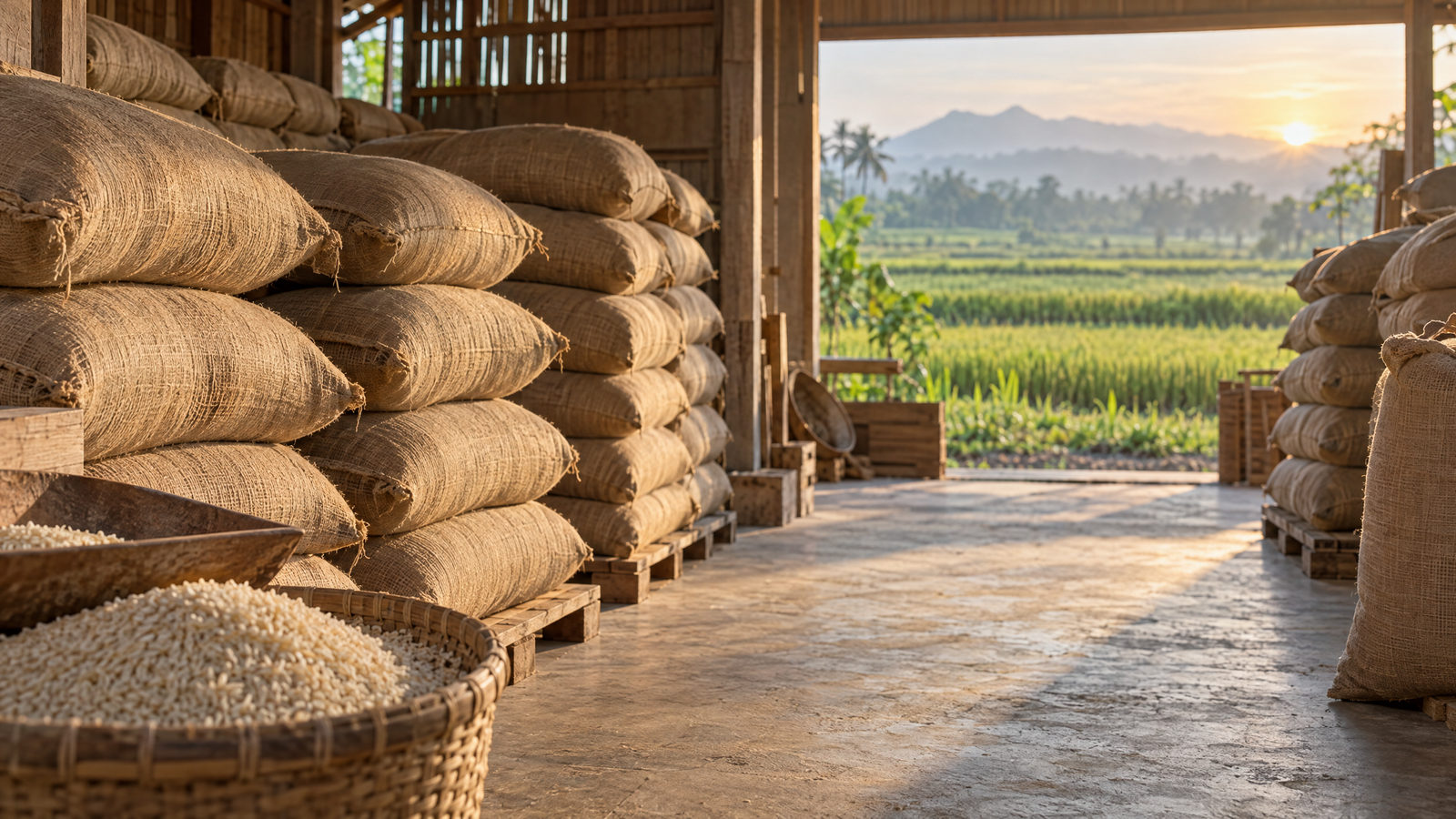

Indonesia has said its rice stocks have reached a record level, placing the October total at 4.56 million tonnes as the administration sets out its food-security plans for the year ahead.
The figure was presented during a cabinet session in Jakarta marking the administration’s first two years. Agriculture Minister Andi Amran Sulaiman said stocks had also reached 5.7 million tonnes at one point, although no date was given for that higher level. The government describes the October total as its highest on record.
Rice is a staple food for much of Indonesia’s population, so the size and reliability of reserves carry significance beyond a warehouse figure. They affect how far officials believe they can cushion supply pressure, manage distribution and respond to weather-related risks without relying on emergency imports.
How the supply calculation is framed
The 4.56 million-tonne figure sits within a wider government calculation of rice availability. Standing crops still in the fields were estimated at 10 million tonnes. Stocks held by households, hotels, restaurants and catering businesses were also estimated at roughly 10 million tonnes, while warehouse holdings were placed at around 4.5 million tonnes.
Together, those components were presented as about 25 million tonnes of available rice. With monthly national demand put at approximately 2.5 million tonnes, the government said this would provide around ten months of cover, taking supplies through July next year.
That calculation is an estimate rather than a guarantee of future availability. Rice still growing in fields must be harvested successfully, and stocks held across households and businesses are not the same as centrally controlled reserves. Weather, harvest conditions, transport, local price movements and distribution decisions can all affect the practical picture over time.
The two closely aligned warehouse figures also reflect the difference between a record-stock headline and a rounded supply assessment. The government used 4.56 million tonnes for the October record and around 4.5 million tonnes in the broader availability calculation. Both point to a large reserve position, but neither should be treated as a precise forecast of every future household need.
Farm policy and food prices
Officials link the stronger reserve position to a wider effort to raise domestic production and support growers. Measures highlighted at the cabinet session include a 20 per cent reduction in fertiliser prices and a higher government purchase price for unhusked rice. The policy aim is to make production more viable for farmers while maintaining adequate supplies for consumers.
The administration said farmers’ terms of trade had reached 131, describing that as the highest level since 1992. It also cited agricultural gross domestic product growth of 5.74 per cent. These are government measures of sector performance and should be read alongside the different costs and market conditions faced by individual farming households.
Keeping consumer prices stable remains a separate challenge. The government said it was increasing oversight of distribution after an apparent mismatch between falling farm-gate prices for chicken and eggs and higher prices paid by consumers. It also raised concerns about premium fortified rice being sold at prices well above the level it considered appropriate. Those matters concern price monitoring and distribution, rather than a finding that the new rice-stock figure has resolved every food-market pressure.
Planning for the next harvests
Indonesia is also preparing longer-term production measures. Plans include developing two million hectares of mineral-soil land, beginning with a 500,000-hectare phase involving agricultural, defence and armed-forces institutions. The proposal is intended to expand capacity as the population grows; it is not land already in production.
Climate risk remains part of the calculation. Officials have pointed to the need for water pumping, land optimisation, irrigation repairs and drought-tolerant seed as preparations for possible El Niño conditions. The reported reserve level gives the government a larger buffer, but the durability of that buffer will depend on harvest outcomes, effective distribution and the course of weather conditions in the months ahead.







