
You no longer need to crack open the newspaper or even turn on the TV to understand front-page news. If you’re under the age of 40, chances are you know this and most likely already get your news from social platforms first. The days of ruffling through the pages of a physical broadsheet are long gone.
The share of UK adults who get their news from social media has peaked at 49% already back in 2019, according to Ofcom data. At the same time, access to information has expanded dramatically for all adults, while the average attention span has shrunk.
No wonder that in this environment, short-form content — like the memes created and enjoyed by millions on iFunny and other FUNCORP platforms – has become king. Memes can deliver information quickly. They convey messages on key developments of the day in a way that really sticks with you yet doesn’t require much time to process. Some of them are hilarious too, and who doesn’t need more laughs in their lives?
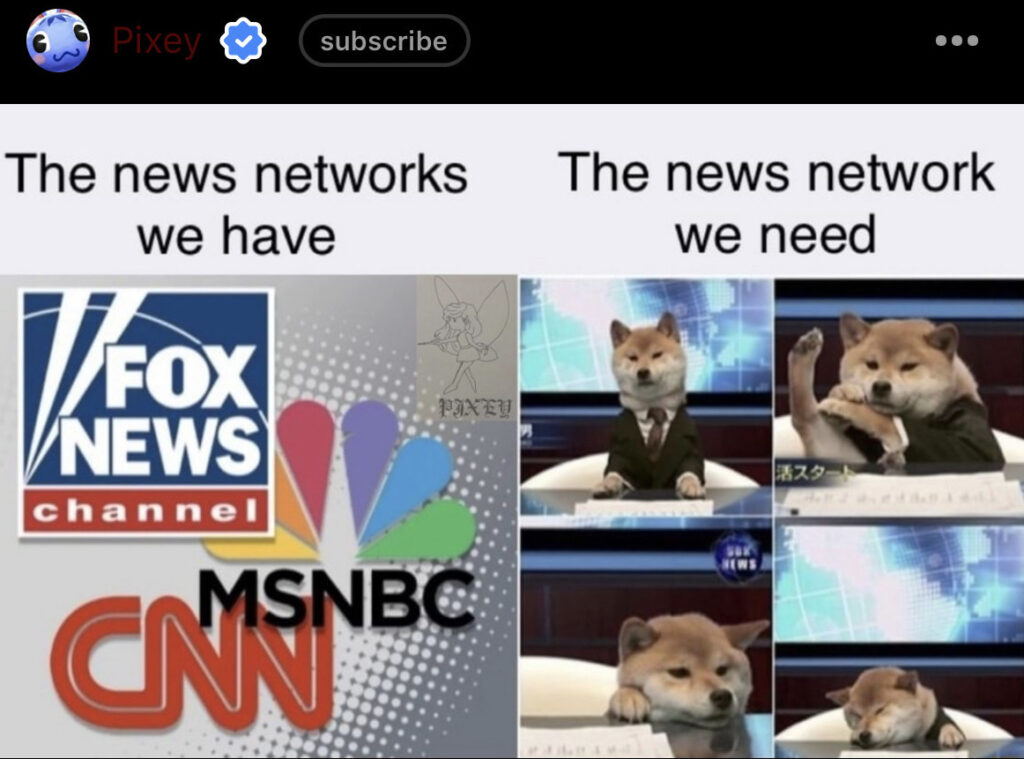
The biggest news stories of the day can often provide the best fodder for memes – and the race to name the UK’s next prime minister, which has just concluded in Liz Truss getting the top job – is no exception. In fact, the search term ‘Liz Truss memes’ has been trending in Google, with snippets of her impassioned speeches about opening new pork markets and importing less cheese making the rounds, alongside other more creative content.
While Liz Truss, closely followed by the UK’s former Chancellor of the Exchequer, Rishi Sunak, and former Home Secretary Priti Patel are the popular meme protagonists du jour in the UK, other issues are top of mind in the social universe across the pond.
Memes about student loans have been trending in the U.S., as the political debate about the cost of higher education and the government’s role in loan repayments has raged on for the past few months.
Whatever your geography, the great thing about memes is that they let you take things with a grain of salt, laugh a little and be entertained while getting informed, all without devoting too much time to the task.
So, it’s not surprising that memes are increasingly becoming a vibrant part of the creator economy, which has seen a record $1.3 billion in funding in 2021 alone, CBInsights research shows.
According to a recent social media behaviour survey conducted by YPulse, 75% of users aged 13–36 regularly share memes, and 30% of these users share memes daily.
What’s more, it is easier than ever to make memes these days, and more platforms like Yepp are now also addressing the compensation issue, allowing creators to make money from the memes they create for others to enjoy.
I cannot wait to see what this exciting industry has in store next, but for now, I’ll sit back and enjoy the latest edition of top politicians dressed as bins – I may as well be entertained while I’m keeping informed, right?