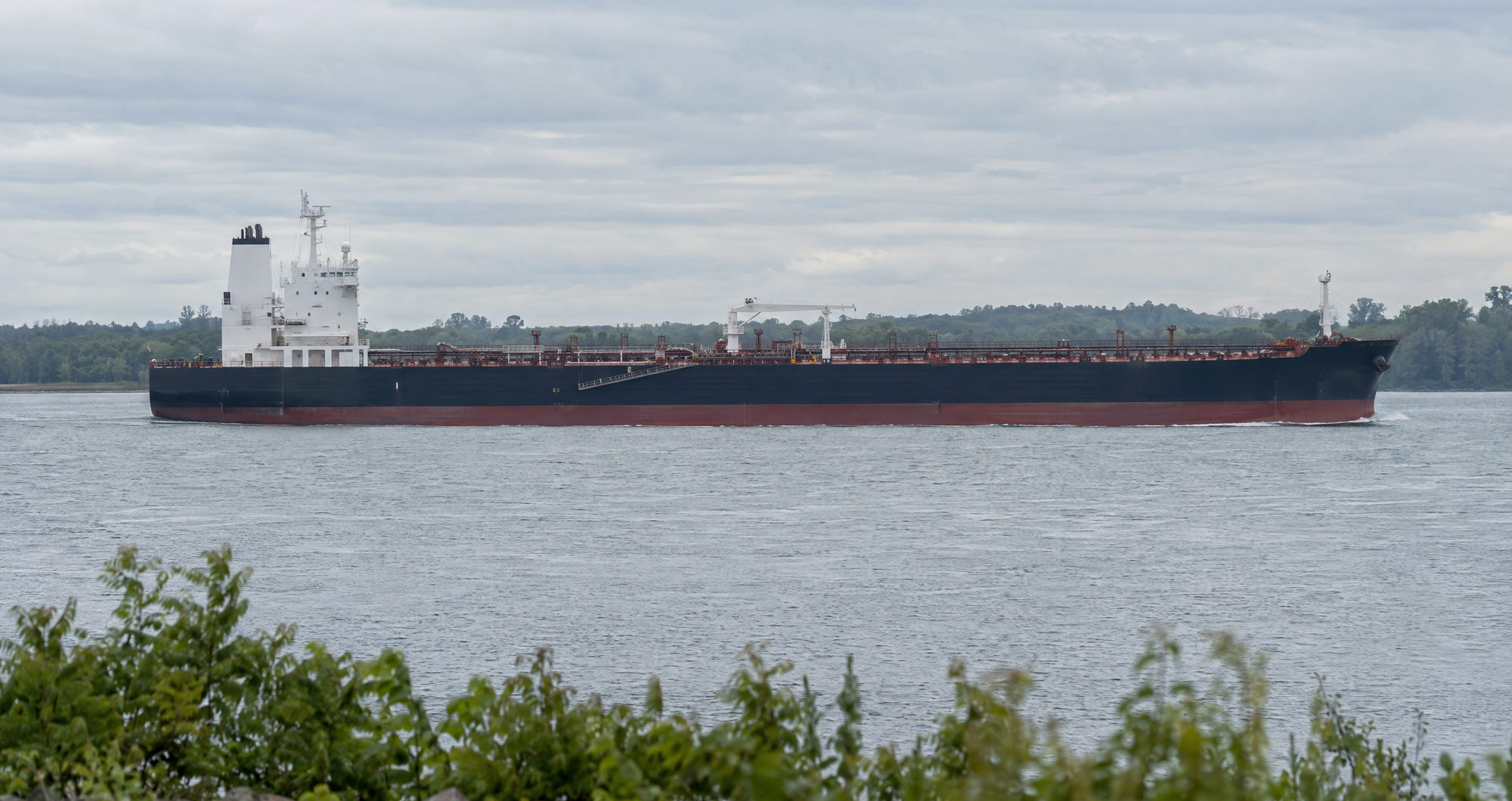

Federal safety investigators have identified a steering problem aboard a tanker that struck a moored river cruise ship on the Mississippi River in New Orleans, leaving the passenger vessel on its side and prompting a large rescue operation.
An initial examination of the Atlantic Asphalt’s voyage data recorder found that its rudder remained turned to starboard, or right, before the tanker veered towards the river’s east bank and hit the American Heritage on 13 November.
On 15 November, the National Transportation Safety Board said it had not established what caused the steering problem. Its findings were preliminary, and further examination of the recorder and other evidence was continuing.
Two minutes before impact
The Atlantic Asphalt was travelling upriver towards an oil facility in Reserve, Louisiana. It had left an anchorage on the lower Mississippi at about 11am local time, carrying 19 crew members and a local pilot.
The American Heritage had arrived in New Orleans that morning and was docked at Thalia Street Wharf. The safety board’s preliminary account puts 140 passengers and 50 crew members aboard the riverboat at the time of the collision.
At about 12.26pm, the tanker was near the Crescent City Connection bridge when it experienced a “steering casualty”. Its rudder remained to starboard and the vessel turned towards the bank. At approximately 12.28pm, it struck the American Heritage.
The board has deliberately used the broad term because several different problems could fall within it. Identifying which one occurred will require more investigation; a specific mechanical fault has not been confirmed.
Investigators downloaded more than nine hours of information from the tanker’s recorder. The equipment captures bridge audio as well as data including rudder angle, engine revolutions, course and speed.
As the ship approached the bank, the recording contained sounds consistent with a whistle, warnings and requests for help over marine radio. Other sounds were consistent with commands to deploy anchors and emergency ship-handling orders. The investigation has not yet established which anchors were lowered or how far.
Rescue and support
Preliminary information indicates that the American Heritage capsized in about 22 minutes. Federal, state and local responders, together with people in nearby private vessels, took part in the rescue. At its 15 November briefing, the safety board said there had been no fatalities.
Thirty-two people were taken to hospital, including two police officers who entered the water. The city’s 15 November update recorded six people still in hospital at that point. The figure is a snapshot from that day, not a current count.
On 15 November, the city was working with the cruise operator to help passengers and crew return home. Its update that day recorded 50 hotel rooms still occupied by passengers, while a family assistance centre was providing support and essential supplies.
In its 15 November update, the city said a safety zone was in effect on the Mississippi between mile markers 95.5 and 96.5. It said deep-draft vessels and towing vessels with at least ten barges were required to use one-way traffic through the area. Vessels were also required to co-ordinate with the river traffic service and proceed at their slowest safe speed. Conditions can change, and mariners should consult the latest US Coast Guard guidance.
Investigation continues
The safety board is leading the investigation with the US Coast Guard. Its teams are examining operations, engineering, human and survival factors, and recorder evidence. On 15 November, the Coast Guard was overseeing the salvage operation with recovery companies.
On 15 November, investigators were interviewing crew members from the American Heritage and seeking information from passengers. Interviews with the Atlantic Asphalt’s crew were planned for the following days. The board is also seeking photographs and videos that could assist its work.
Alongside the events leading to the impact, investigators intend to examine the rescue and other factors that helped people survive. The safety investigation is intended to establish probable causes and make recommendations; it does not determine legal blame or liability.
On 15 November, the board said it expected a preliminary report in about 30 days. A final report is likely to take substantially longer, and the initial findings do not settle why the steering problem occurred.