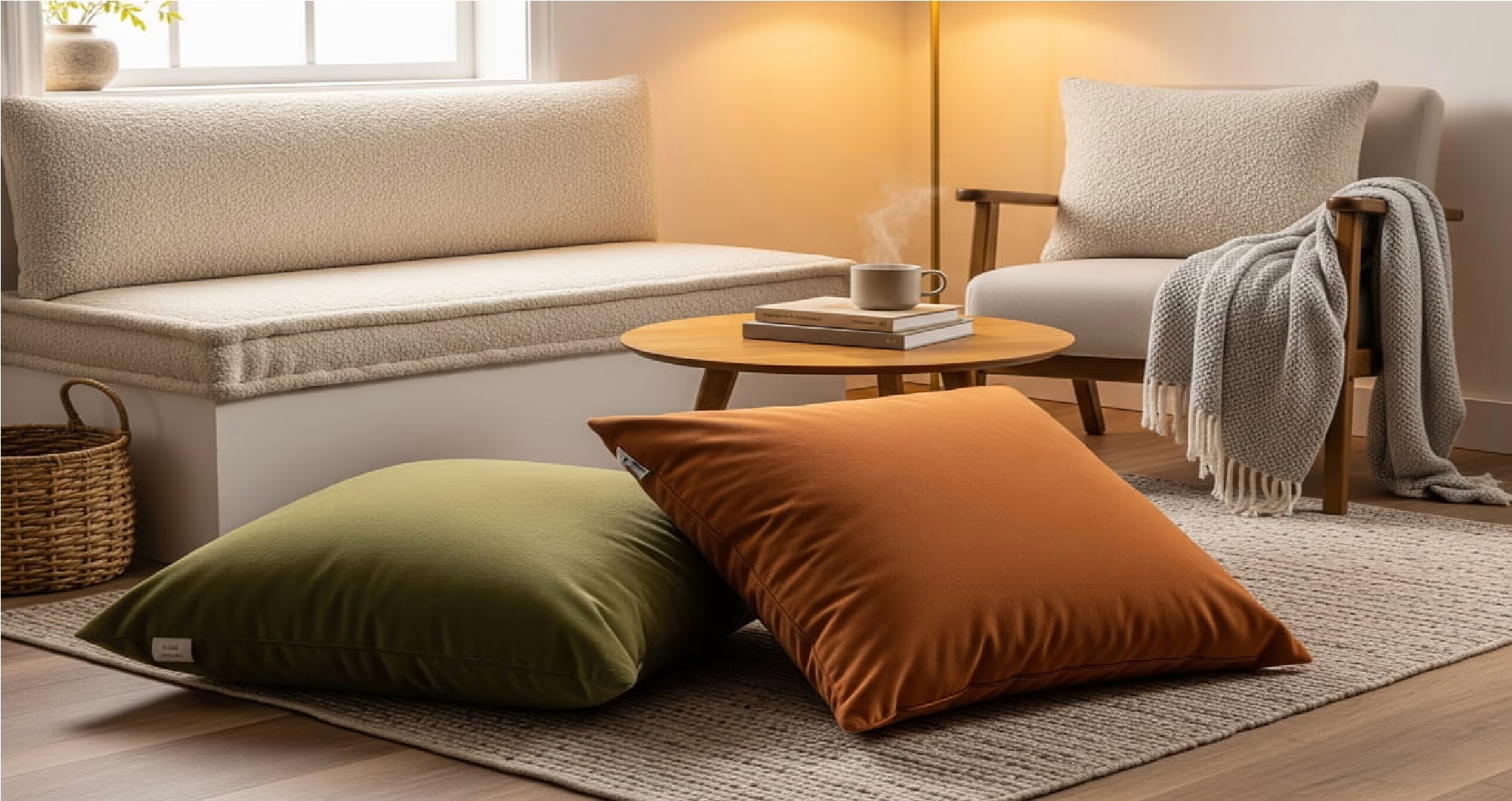

Finding the perfect furniture cushions can feel overwhelming when you’re staring at endless options online or wandering through furniture stores. I’ve been there myself – standing in the cushion aisle, touching fabrics, wondering if that gorgeous outdoor bench cushion will actually hold up to my family’s daily use.
Whether you’re looking to refresh your outdoor patio, create a cosy reading nook with a comfortable corner floor cushion, or simply want to make those hard dining chairs more bearable, this comprehensive guide will walk you through everything you need to know.
Understanding different types of furniture cushions
The world of furniture cushions is surprisingly diverse, and each type serves specific purposes while offering unique benefits. Let’s dive deep into the most common categories you’ll encounter.
Outdoor cushions: Built for the elements
Outdoor cushions face some of the toughest conditions imaginable. They need to withstand UV rays that would fade indoor fabrics in months, survive sudden downpours, and resist mould and mildew growth in humid conditions. The key differentiator here isn’t just water resistance – it’s the complete package of durability features.
High-quality outdoor cushions typically feature solution-dyed acrylic fabrics like Sunbrella, which have colourfast properties that prevent fading. The foam cores are usually made from quick-dry materials that don’t retain moisture, preventing that musty smell that cheaper cushions develop.
Indoor chair cushions: Comfort meets style
Indoor chair cushions serve a dual purpose: they need to provide comfort for extended sitting while complementing your interior design. The challenge here is balancing durability with aesthetics, especially in high-traffic areas like dining rooms.
For dining chair cushions, thickness matters more than you might think. Too thin, and you’ll still feel the hard seat beneath; too thick, and you might find yourself sitting awkwardly high at the table. The sweet spot is usually between 2-3 inches, depending on your chair design and personal preference.
Floor cushions: Creating flexible seating solutions
Floor cushions have experienced a renaissance in recent years, partly due to the rise of minimalist design and the need for flexible living spaces. They’re not just for meditation or children’s play areas anymore – modern floor cushions can serve as elegant additional seating for entertaining or create cosy reading nooks.
Bench cushions: The underestimated comfort enhancers
Bench cushions often get overlooked, but they can dramatically improve both the comfort and appearance of your seating areas. Whether you’re dealing with a hard wooden outdoor bench, an entryway storage bench, or a dining bench, the right cushion makes all the difference.
Material science: What actually matters in cushion construction
Understanding materials is where most cushion-buying decisions go wrong. Marketing terms like “premium” or “luxury” don’t tell you much about real-world performance. Let’s break down what actually matters.
Fabric technologies and their real-world performance
Solution-dyed acrylics represent the gold standard for outdoor fabrics, but understanding why helps you make better decisions. In solution dyeing, the colour is added to the acrylic polymer before it’s spun into fibre.
Foam types and fill materials: Beyond basic density
Foam density is often quoted in pounds per cubic foot, but this number alone doesn’t tell the whole story. A high-density foam that’s poorly formulated can feel harder than a lower-density foam with better cell structure.
Quick-dry foams have open-cell structures that allow air and moisture to move through them freely. This prevents the growth of mould and mildew while ensuring comfort isn’t compromised by soggy cushions after rain. However, open-cell foams may not provide the same level of support as closed-cell alternatives.
Sizing and fit: Getting the measurements right
Proper sizing goes beyond simply measuring your furniture. The relationship between cushion size, thickness, and the furniture’s design affects both comfort and appearance.
The art of proper cushion thickness
Cushion thickness affects everything from comfort to proportion. For dining chairs, 2-inch cushions work well for chairs with slightly contoured seats, while flat, hard seats may need 3-inch cushions for adequate comfort.
Custom vs. standard sizing considerations
Standard-sized cushions work well for common furniture dimensions, but many modern furniture pieces have unique proportions that don’t fit standard categories. This is where custom cushions become valuable, though they require more careful planning and measurement.
Maintenance and longevity: Making your investment last
The best cushions in the world won’t last if they’re not properly maintained. Understanding care requirements before you buy can save you money and frustration down the road.
Cleaning and care strategies
Different fabrics require different cleaning approaches, and what works for one material can damage another. Solution-dyed acrylics can typically handle bleach-based cleaners, which makes them excellent for outdoor use where mould and mildew are concerns. However, the same bleach solution that cleans an outdoor cushion perfectly can permanently damage indoor fabrics.
When to repair vs. replace
Quality cushions can often be repaired rather than replaced, especially if the foam is still in good condition but the cover has worn out. Professional reupholstering might cost 60-70% of a new custom cushion, but you’ll get exactly the fabric and fit you want while keeping the foam you’re already comfortable with.
Foam replacement is another option for cushions with high-quality covers that have developed compressed or damaged cores. This works particularly well for expensive outdoor cushions where the fabric is still in excellent condition but the foam has lost its spring.
Budget considerations and value assessment
Cushion pricing varies wildly, and understanding what drives costs helps you make better value decisions. The cheapest option rarely provides good value, but the most expensive isn’t automatically the best choice either.
What you’re actually paying for
Premium fabrics command higher prices for good reasons. A Sunbrella fabric might cost three times as much as a basic polyester, but it could last five times longer while maintaining its appearance throughout its lifespan. When you factor in replacement costs and the inconvenience of frequent cushion shopping, the premium fabric often provides better value.
Brand considerations and where to find quality
The cushion market includes everything from big-box retailers to specialised manufacturers, and each serves different needs and budgets. Brands like Rulaer have built their reputation by focusing specifically on custom cushions and understanding that one size doesn’t fit all furniture or lifestyles.
Seasonal and climate considerations
Your local climate affects cushion performance more than many people realise. What works perfectly in Arizona might fail quickly in Florida, and cushions that excel in Seattle might not provide adequate UV protection in Southern California.
Adapting to your environment
High-humidity environments accelerate mould and mildew growth, making quick-dry foams and antimicrobial treatments essential. In these climates, storing cushions in covered areas during the wettest months can significantly extend their lifespan, even for cushions designed to handle moisture.
Extreme temperature swings affect both fabrics and foams. Materials that remain flexible in winter cold while resisting degradation in summer heat require more sophisticated engineering and typically cost more. However, the investment pays off in climates with significant seasonal variation.
Making the final decision: A practical framework
With all this information, making the actual purchase decision can still feel overwhelming. Here’s a practical framework I’ve developed through years of cushion buying (and some regrettable purchases).
Prioritising your requirements
Start by identifying your non-negotiables. If you have pets or small children, stain resistance might trump every other consideration. If you’re furnishing a vacation home that sits empty for months, durability and weather resistance become paramount. If you’re on a tight budget, focus on getting the best construction quality you can afford rather than premium fabrics.
Testing and evaluation
If possible, test cushions before buying by visiting showrooms or ordering samples. What feels comfortable for five minutes might not work for extended sitting. Pay attention to how quickly cushions recover their shape after you get up – slow recovery often indicates poor foam quality.
Conclusion: Comfort is an investment in daily life
Choosing the right furniture cushions might seem like a small decision, but it’s one that affects your daily comfort and the appearance of your living spaces for years to come. Whether you’re looking for outdoor bench cushions, custom indoor cushions, or speciality items like floor cushions, the key is understanding what you actually need rather than just what looks good in photos.