by Adam Harrington,
January is a time for reflection, but also for pondering what lies ahead in the coming year. My mindset is glass half-full since we are entering an era defined by technological transformation and pro-business policy frameworks.
The convergence of these factors with shifting capital flows and increased business confidence among founders, executives, and investors like me will create conditions we haven’t witnessed in generations. 2026 has the potential to be a great year for the global economy, and I see five key developments that will define it:
1: AI will continue to drive the economy.
AI represents the key that will unlock the next stage of economic growth, forecast to contribute $7 trillion to global GDP over the next decade. Despite over-hyped concerns over an AI bubble, it enables emerging companies to reach massive heights. The unprecedented growth of Anthropic and Open AI, valued at $500 billion this October, is only a testament to that.
So far, the world has watched closely while AI has proven its ability in a range of fields. In 2026, its potential in health and medicine will be a major talking point.
2: The search for new forms of energy and power will continue.
The growth of AI has triggered unprecedented demand for energy. There are already over 5,000 data centres in the U.S., and by 2030, they could account for 14% of its total power demand. Blackrock’s announcement of a £500 million investment in a UK data centre is emblematic of the considerable global impact they will have by the 2030s.
Companies will search for efficient and innovative ways to power the AI revolution. The Trump administration recently pledged a $1 billion loan to reactivate the Three Mile Island nuclear reactor to power Microsoft’s AI operations, while Google has announced partnerships with multiple nuclear energy startups. We will see the continuation of these patterns on a global scale in 2026.
3: There will be a surge in the tokenisation of assets.
A year after Bitcoin crossed the $100,000 threshold, institutional stances have fundamentally shifted. Asset managers like Fidelity and Vanguard now offer bitcoin exposure, bringing cryptocurrency into mainstream retirement portfolios.
As Strike and Cashapp offer bitcoin-denominated peer-to-peer payments, it seems likely that bitcoin will become embedded in everyday financial behaviour. I predict that it will become a staple of gift-giving. What better way to prove your affection for a friend or relative than to invest in their future?
4: As the U.S. enters a golden era, the Middle East will continue along its road to becoming a superpower.
President Trump has ushered in a wave of revitalised business confidence which could lead to a ‘golden era’ for the U.S. The reduced regulatory burden and the ‘Big Beautiful Bill’, including $754 billion in broad-based domestic business tax cuts, illustrates a commitment to growth.
Meanwhile, the Middle East’s emergence as an economic powerhouse will continue. The Abu Dhabi Global Market now hosts over 5,000 registered companies, including major AI research labs, while Saudi Arabia’s NEOM project represents a $500 billion investment in building a technology-focused economic zone.
In contrast, despite the UK’s formidable economic, cultural, and geographic strengths – placed at the intersection between the U.S. and Middle East – its growth is stifled by heavy tax and regulation, which costs businesses £100 billion annually. Its potential is reflected in its continued pulling power with global investors, with JPMorgan recently announcing plans to move to a new £3 billion office in Canary Wharf, yet this cannot be maximised without a radical change in policy.
5: Business will be a force for good.
By prioritising business, President Trump provides an alternative to war and global tensions. The geopolitical sphere will be transformed into a stage for economic negotiation, with the opportunity to do business carrying significant weight.
When free to innovate, companies and corporations can demonstrate an organic interest in social impact activity. Business can solve our most profound contemporary challenges, from social care and health to climate change. Already, we are seeing an investment in future generations: Michael and Susan Dell’s $6 billion pledge to fund investment accounts will teach 25 million American children the principles of financial literacy.
Though some see U.S. tariffs as signalling a new era of protectionism, I do not agree. While sometimes divisive in the short term, tariffs are demonstrably effective to enact necessary change. President Trump has ultimate leverage on the global stage, and he is unafraid to use it.
If we embrace innovation and competition, we can accelerate global opportunities and enter a super-cycle for the markets. Regardless of our backgrounds, our individual attitudes moving into 2026 should match that of the global economy: we should be open for business, and raring to create jobs, opportunities, and deals.
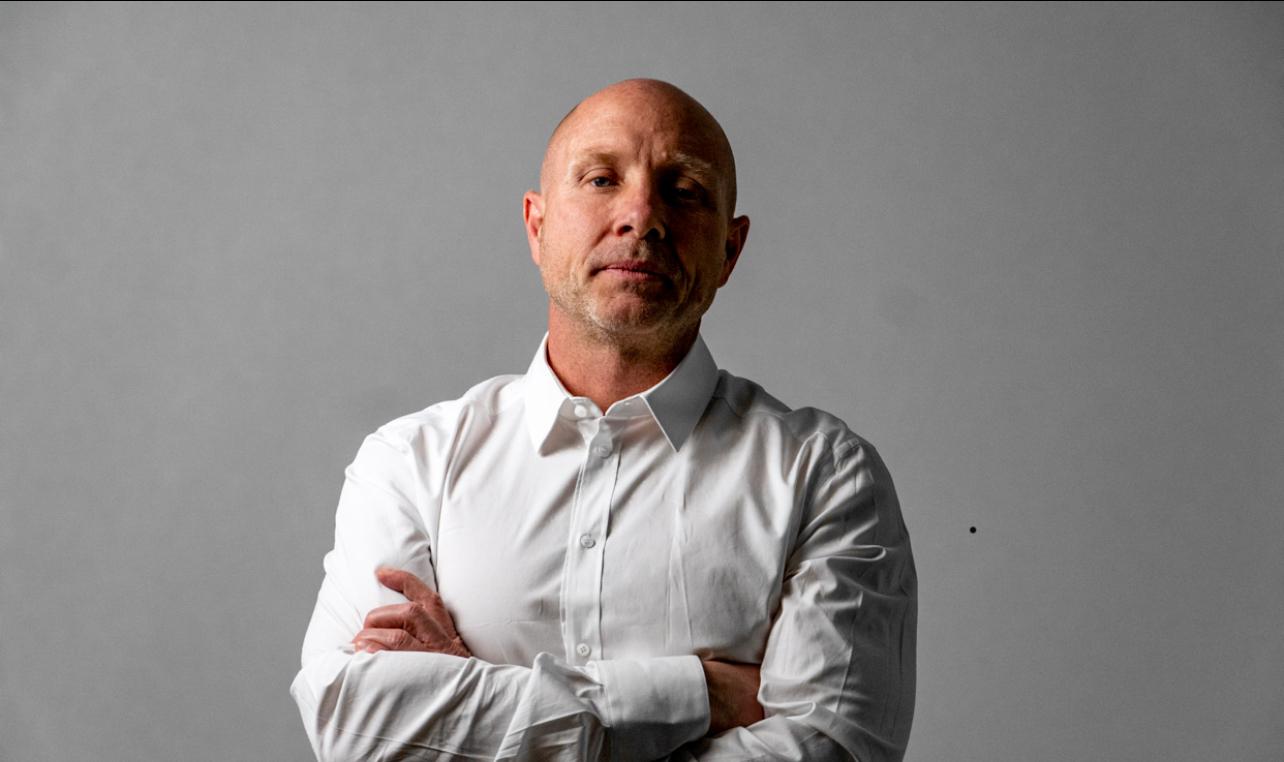
Adam Harrington, co-founder and president of Intellectual Digital Global.