
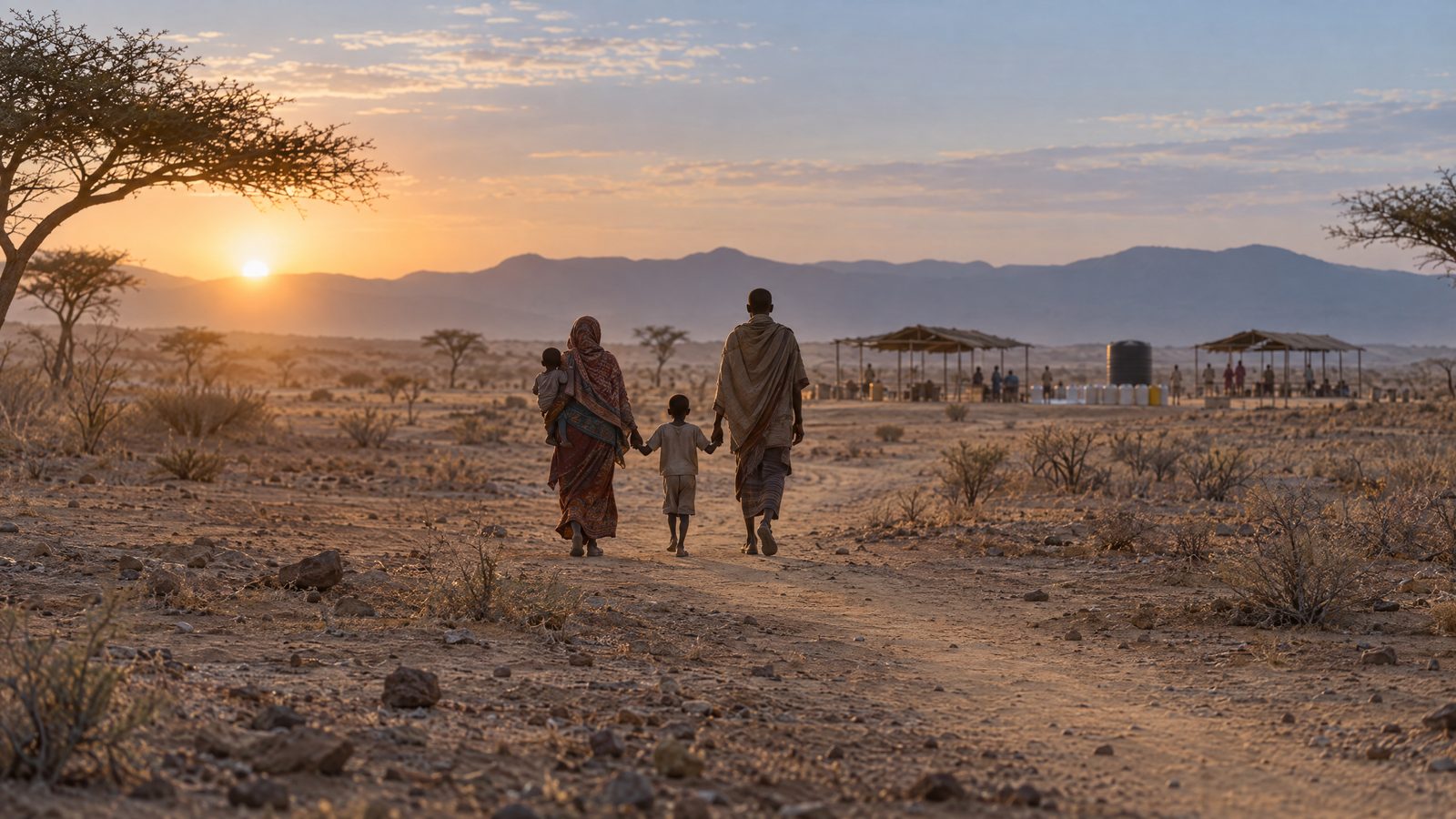

About 36,000 people have crossed from Ethiopia into Kenya amid renewed violence around the border town of Moyale, placing immediate pressure on food, water, shelter and health services. Many of those seeking safety are women and children. Some are staying with relatives and host communities, while others are using temporary locations as humanitarian teams assess the scale of need.
The movement is centred on Moyale, a town divided by the Ethiopia–Kenya frontier. Fighting flared on the Ethiopian side last week, against a backdrop of tensions involving the Oromia and Somali regional states. The precise sequence of events and responsibility for the violence have not been independently settled. That uncertainty makes it important to keep the focus on the immediate protection and humanitarian needs of civilians, rather than on unverified claims about the wider political dispute.
A rapidly changing picture
The latest rounded total is much larger than the early counts recorded after the first crossings. Initial relief planning was intended to reach 1,000 households when arrivals were being measured in hundreds and then thousands. The newer figure should be understood as an operational estimate of people who have crossed into Kenya, not as a final person-by-person registration list.
That distinction matters in a fast-moving emergency. People staying with relatives or other host households may not appear in the same records as people using temporary sites. Different assessments can also cover different places and times. Separate totals should not simply be added together, and the scale of movement may change again as access, registration and needs assessments continue.
Food, water and safe shelter
Food is the most urgent identified need. Safe drinking water, shelter, sanitation and healthcare are also required, alongside practical household items for people who arrived with very few possessions. Temporary accommodation can offer immediate safety, but it does not by itself meet the needs of families who require meals, clean water, toilets, basic healthcare and a place to sleep.
Early assistance in Moyale included temporary shelter arrangements and essential supplies such as tents, blankets, sleeping mats, water containers, kitchen sets and fortified porridge flour. Such support was designed as an initial response, not as evidence that every family had received assistance or that needs had been fully met. The size of the later arrival estimate underlines the importance of reassessing coverage as the situation develops.
Humanitarian agencies including UNHCR, IOM, UNICEF and the World Food Programme are working with the Kenya Red Cross Society and other partners in support of a national and local response led by the Kenyan Government. The work includes identifying immediate needs, supporting people seeking safety and helping communities that are accommodating new arrivals.
Pressure on host communities
The impact reaches beyond formal temporary sites. Relatives and host communities are providing shelter to some arrivals, often before assistance can be organised. Their role may reduce the need for people to sleep in the open, but it can also stretch household food stocks, water access, sanitation facilities and local health services. Any sustained response will therefore need to consider both people who crossed the border and the communities receiving them.
It remains unclear how long people will stay in Kenya, whether further crossings will occur, and how conditions will develop on the Ethiopian side of the frontier. The current total is a serious indicator of need, not a final account of the crisis. Protection, safe water, food and healthcare will remain central priorities while the picture continues to evolve.







