
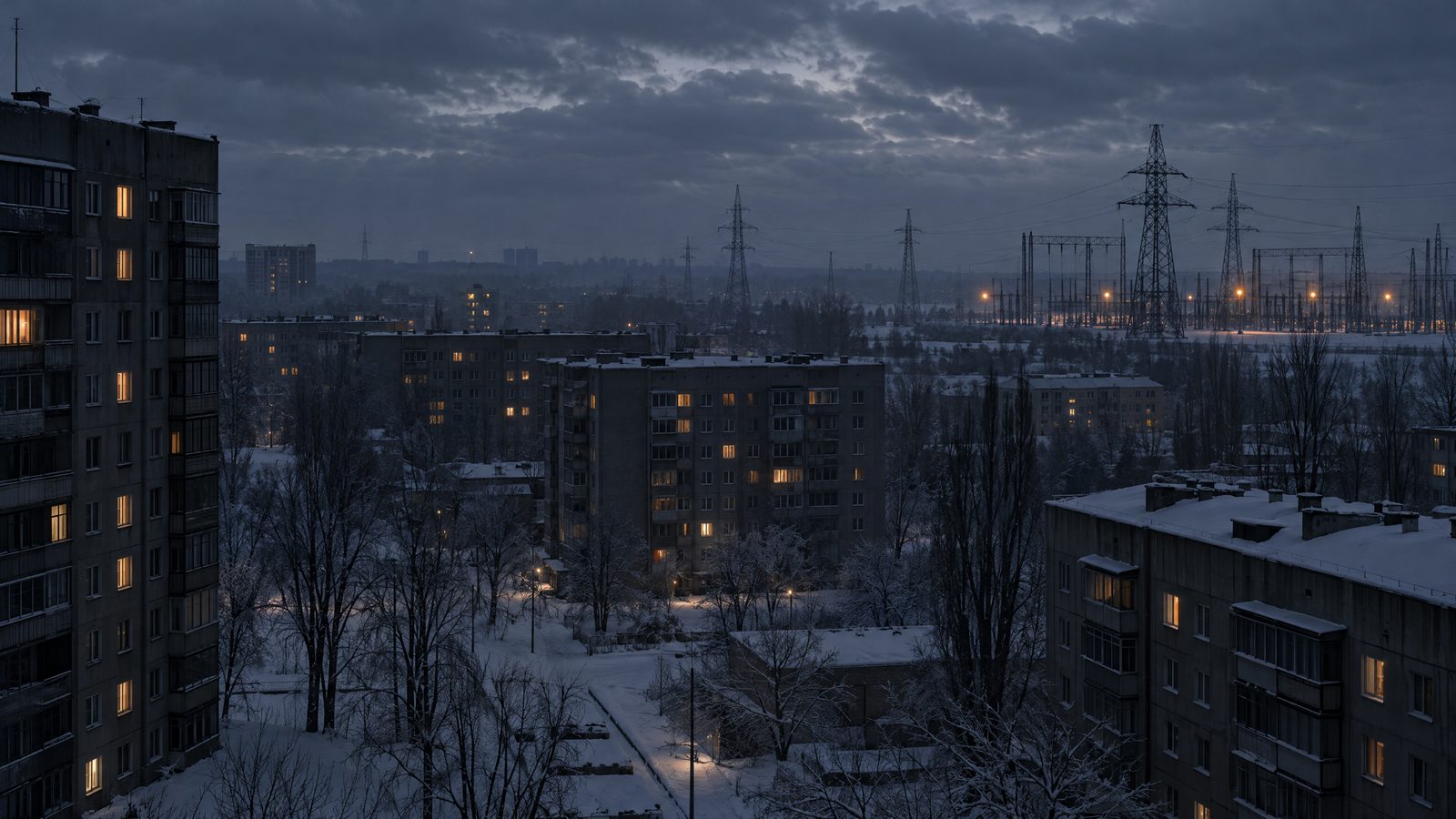

The Independent International Commission of Inquiry on Ukraine has concluded that continuing Russian attacks on Ukraine’s energy infrastructure amounted to war crimes and crimes against humanity. The findings concern attacks on facilities providing electricity, heating, water and gas, and examine the effect of prolonged disruption on civilians during the winter of 2025–26.
The commission concluded that Russian commanders who ordered attacks on heating facilities in large civilian areas knew that those sites were indispensable to the population, particularly in winter. It found that attacks intentionally directed at civilian objects constituted war crimes. It also concluded that the attacks were carried out intentionally and as part of a state policy to deprive civilians of electricity and other essential energy-dependent services, causing great suffering. On that basis, it characterised the conduct as crimes against humanity of other inhumane acts.
What the inquiry examined
The report considers large-scale waves of missile and drone attacks on the energy system, with particular attention to the cold season of 2025–26 and the accumulated effect of attacks since autumn 2022. It describes attacks growing in frequency, intensity and geographic reach, while damage to energy facilities placed sustained pressure on repair work.
During last winter, temperatures fell to minus 21°C in some places. The inquiry found that millions of people experienced lengthy losses of heating, electricity, water and gas. It said the consequences extended beyond dark homes or interrupted appliances. Power cuts could affect lifts, water supplies, communications, medical equipment and access to shelter during air-raid alerts.
The impact was especially serious for older people, people with reduced mobility, patients dependent on powered equipment and families with children. The inquiry recorded the strain created by cold homes, disrupted schooling, limited essential services and the uncertainty of repeated outages. It drew on accounts from 255 people in nine Ukrainian regions, alongside material from public authorities, medical professionals and civil-society organisations.
Why the legal distinction matters
The inquiry’s conclusions do not mean that every energy-related site is automatically a civilian object, or that every strike on infrastructure has the same legal character. Its finding concerns attacks on facilities it assessed as indispensable to civilians, and the evidence it considered about the purpose and cumulative consequences of those attacks. The report also distinguishes between individual incidents and the wider pattern it examined.
Nor is the report a criminal conviction or a judgment against a named individual. The commission is an independent investigative body established to examine alleged violations in the context of the war. Its conclusions are legal findings within that mandate. Questions of individual criminal responsibility would require the appropriate legal process and evidence concerning particular people and acts.
The commission said it also examined Ukrainian attacks on energy infrastructure in the Russian Federation and in Russian-occupied areas of Ukraine. It said it could not take that part of the work further because it was not granted access and its requests for information received no response. This limitation is relevant to the scope of the report, rather than a finding about those attacks.
A finding made as winter approaches
The report was presented as Ukraine enters another cold season, when reliable energy supply becomes closely tied to heating, water and basic services. The inquiry said recent attacks had intensified again, raising concern about risks to civilian life and health. Its findings place the immediate winter threat in the context of a longer pattern that it says has had cumulative effects on communities.
The same report also reaches separate conclusions about the recruitment of foreign nationals into the Russian armed forces. It found evidence that men from 29 countries were recruited through deception or coercion, with the recruitment coordinated through agents in different countries. That issue is distinct from the energy findings but forms part of the same report to the UN General Assembly.
Russia has rejected the commission’s mandate and has maintained that its forces strike military or military-related targets. The commission’s assessment remains a contested investigative finding, not a substitute for a criminal trial. Its central conclusion is nevertheless clear: it considers the documented pattern of attacks on civilian energy-dependent services to have crossed the threshold for war crimes and crimes against humanity.







