

Bali Protests – As Indonesia’s tourist jewel grapples with economic discontent, officials’ response sparks fears of division and authoritarian drift.
A crisis of governance in Indonesia is playing out on the streets of its most famous island, pitting popular discontent against a government narrative of stability and exposing fractures that threaten the social fabric of this diverse nation.
Officials Escalate Bali Protests with Identity Politics
The trigger was a demonstration in Bali on August 31th, where citizens voiced anger over policies they say are crippling their livelihoods: a staggering 3,569% increase in local taxes in the Badung regency, chronic waste management failures, suffocating traffic, the conversion of agricultural land for tourism, and a cost of living that far outpaces wages.
However, the government’s response has shifted the conversation from economic grievance to a dangerous debate about identity and belonging. In statements that have ignited a firestorm of criticism, Bali’s Governor, I Wayan Koster, and the Bali Police’s Chief of Operations, Kombes Pol Soelistijono, implied that the protests were not the work of “real Balinese.”
Governor Koster noted that many of those detained did not hold Balinese ID cards. Chief Soelistijono was more explicit, stating, “…if we look at the name data… it’s not many Balinese. We all believe that those originally from Bali would not want to create chaos, riots, in the Province of Bali. That is a fact.”
Civil Society Pushes Back Against Racist Scapegoating
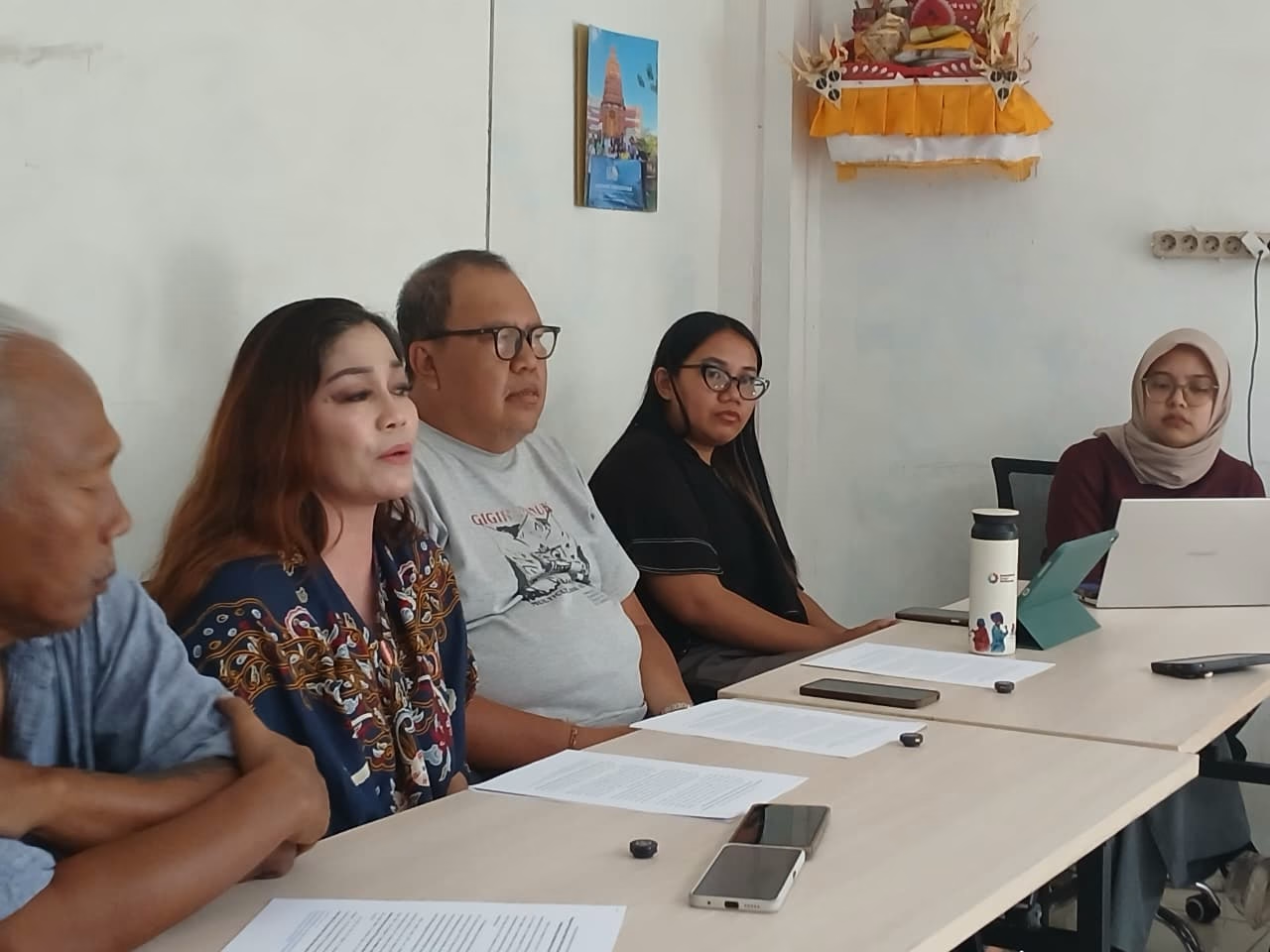
(ForWaras)
These comments have been condemned as a blatant attempt to deflect from substantive policy failures by resorting to racist scapegoating. A coalition of 46 civil society groups, the Equal Citizens Forum (ForWaras), alongside organisations like the Bali Legal Aid Institute and academics, issued a stern rebuke.
“Statements like these are contrary to Pancasila [Indonesia’s state philosophy], violate the principle of equality of citizens, and have the potential to cause discrimination and horizontal conflict,” ForWaras stated. They have called for official investigations and sanctions, warning that such rhetoric legitimises repressive police action and shatters solidarity.
Jakarta’s Narrative vs. Reality of Bali Protests
This incident on the ground stands in stark contrast to the official narrative emanating from Jakarta. Professor Dr. Werdhi Sutisari, an academic with ASEAN University International, recently dismissed talk of a “public trust crisis” as political “framing.” She asserted that life in Indonesia continues normally and that the government remains focused on pro-people programs, bureaucratic reform, and stabilising the economy.
“To judge this situation as a crisis is clearly excessive,” Professor Sutisari, known as Tisa, argued, framing the protests as unrepresentative and fuelled by provocateurs.
This duality reveals a central tension in Indonesian politics today. The central government promotes a top-down story of progress and stability, while many citizens experience a different reality of economic strain and bureaucratic indifference.
When they protest, the reaction—as seen in Bali—risks becoming not just dismissive, but divisive.
Bali Protests as a Test of Indonesian Democracy
For international observers, the events are a reminder that the world’s third-largest democracy is navigating a precarious path. The Balinese officials’ statements echo the global playbook of populists: redirect public anger towards marginalised groups rather than address complex policy shortcomings.
The situation also tests Indonesia’s cherished national motto, “Bhinneka Tunggal Ika” (Unity in Diversity). Bali itself is a global crossroads, an economy built on welcoming outsiders. To now question the “Balinese-ness” of residents based on their names or origin strikes at the heart of that identity.
ForWaras pointedly reminded authorities of Bali’s own history of puputan—a unified fight against injustice without regard for identity.
The risk is that by framing legitimate democratic dissent as the work of “outsiders” causing chaos, the government sows horizontal conflict and moves further away from accountability.
The world watches not just a local dispute over taxes, but a struggle for the soul of Indonesian democracy—one that will determine whether it tackles its challenges through dialogue and reform, or through division and repression.
Analysis: A Message to the World
The unrest in Bali is more than a local issue; it is a microcosm of a global trend where economic anxiety meets the politics of division. For a world that sees Bali as a paradise destination, this is a sobering glimpse into the pressures simmering beneath the surface.
A sustainable future for the island, and for Indonesia, depends on leaders who listen to the unified cries for economic justice from all their people, rather than resorting to the oldest trick in the book: turning citizens against each other. The credibility of Indonesia’s democratic institutions hinges on their response.
“Bali is not only a postcard of paradise—it is a living society whose people deserve dignity, fairness, and a voice. When leaders answer economic pain with division, they risk breaking the very harmony that makes Indonesia admired around the world.”
— Giostanovlatto, Founder of Hey Bali
Reported for London Daily News by Giostanovlatto and Fery Fadly in Denpasar, Bali. This report was filed by journalists from Hey Bali and Bali Today