
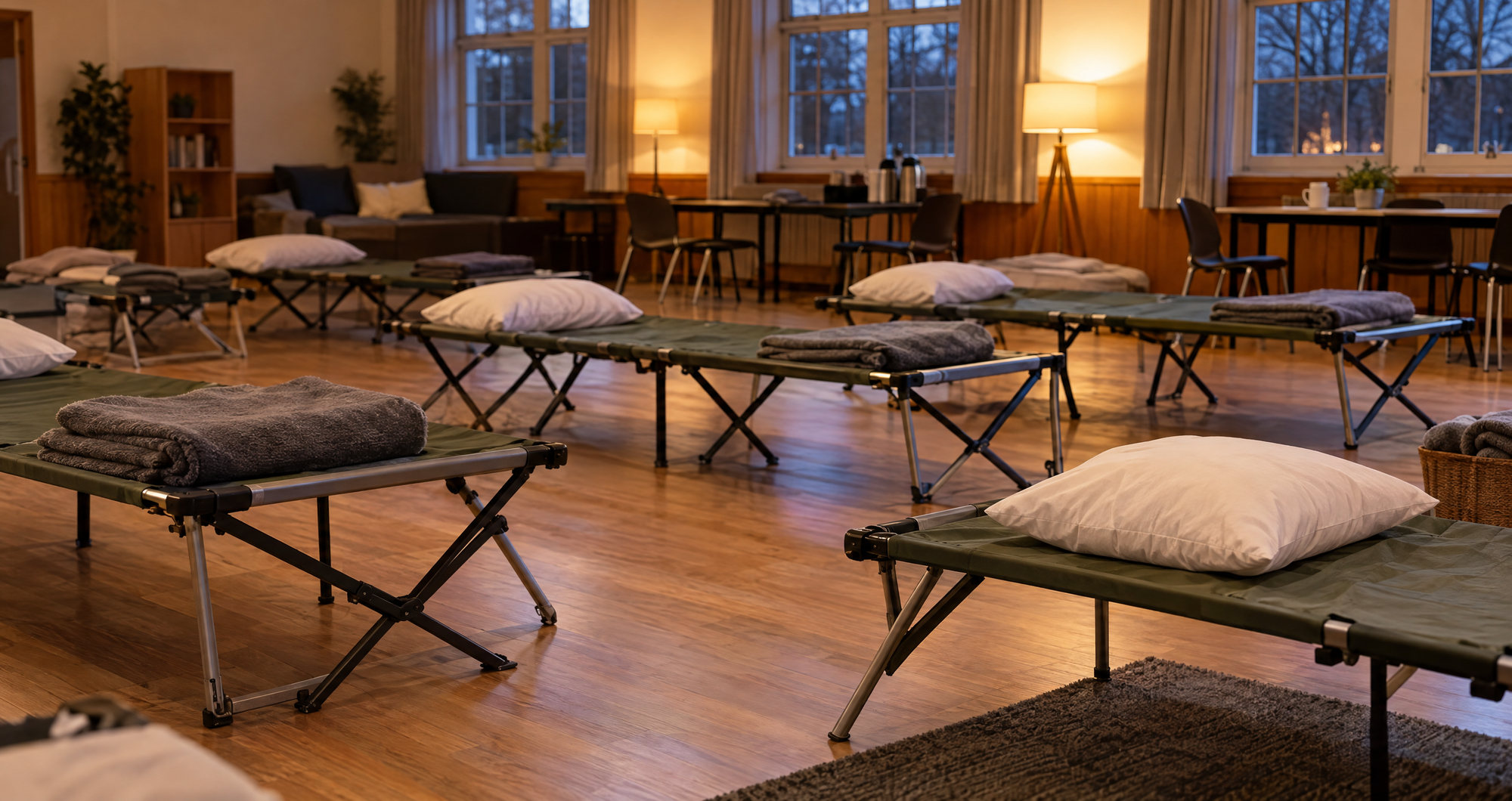

Emergency accommodation is being opened across London for people sleeping rough after the capital’s severe-weather protocol was activated for the first time this winter.
Mayor Sadiq Khan and London Councils activated the measure from Friday 13 November, with temperatures forecast to fall to 0°C or below. It is expected to remain in place until Monday 16 November.
London boroughs and homelessness charities are opening additional places where people sleeping outside can come indoors. A mayor-funded London-wide overflow service provides further capacity when council spaces are full.
The response is intended to offer immediate protection during the cold spell. The announced end date is an expectation rather than a guarantee, and the number of places available or people using them has not been specified.
How the emergency provision works
The Severe Weather Emergency Protocol, often shortened to SWEP, is a short-term measure for people sleeping rough when severe weather puts their safety at risk. In London, the citywide cold-weather trigger applies when the temperature is forecast to reach freezing or below.
The accommodation is intended to be available regardless of a person’s local connection or access to public funds. It is an offer of temporary shelter, not a permanent home or a requirement that someone must accept a place.
While people are in emergency accommodation, boroughs are encouraged to assess their needs and explore longer-term options. The aim is to use the opportunity to connect someone with support rather than treating the end of the cold spell as the end of the conversation. An assessment does not, by itself, guarantee a settled home.
Severe cold can worsen existing health problems, and prolonged exposure can cause serious harm. The emergency measures address the immediate risk of sleeping outside in freezing conditions, while longer-term housing and support require separate arrangements.
A wider trigger being tested
Some boroughs are also taking part in a trial that looks beyond the freezing-point forecast. Under the enhanced approach, participating boroughs can open additional emergency accommodation when a Cold Health Alert is issued for London, even if temperatures are expected to stay above 0°C.
The alerts are issued by the UK Health Security Agency and the Met Office. The trial recognises that sustained cold can pose a danger even when the forecast does not cross the usual temperature threshold.
The current citywide activation is based on the forecast of freezing temperatures. The announcement of the pilot does not mean that every borough is taking part, or that a Cold Health Alert was the reason for this activation.
Lambeth had separately opened its own severe-weather response from 9am on Thursday 12 November after considering how cold conditions were forecast to feel. Its local arrangement was due to run until midday on Saturday. The citywide response has a different expected end date; it does not establish whether every local opening time will change.
From an alert to support
People concerned about an adult sleeping rough can use StreetLink to send an alert to local outreach teams. Someone who is sleeping rough can also use the service to seek help.
Outreach workers use alerts to try to find the person, assess what they need and offer support. An alert does not itself secure an accommodation place, and the service does not directly search for people or provide shelter.
If someone is in immediate danger, needs medical assistance, is under 18 or is with someone under 18, call 999 rather than relying on an outreach alert.
The scale of the challenge
During last winter’s severe-weather activations, London boroughs provided emergency accommodation to 1,491 people. The protocol was active for 11 nights across that winter; those figures are not a count of places or people using them during the current spell.
More recent outreach figures recorded 4,678 people sleeping rough across London between July and September 2026. That was a total over three months, not the number seen on one night. Of that total, 2,168 people had not previously been recorded sleeping rough in the database.
The figures cover people encountered bedded down by commissioned outreach workers, including in places not designed for habitation. They do not capture everyone experiencing homelessness, including people temporarily staying with friends unless they are also seen sleeping rough.







