
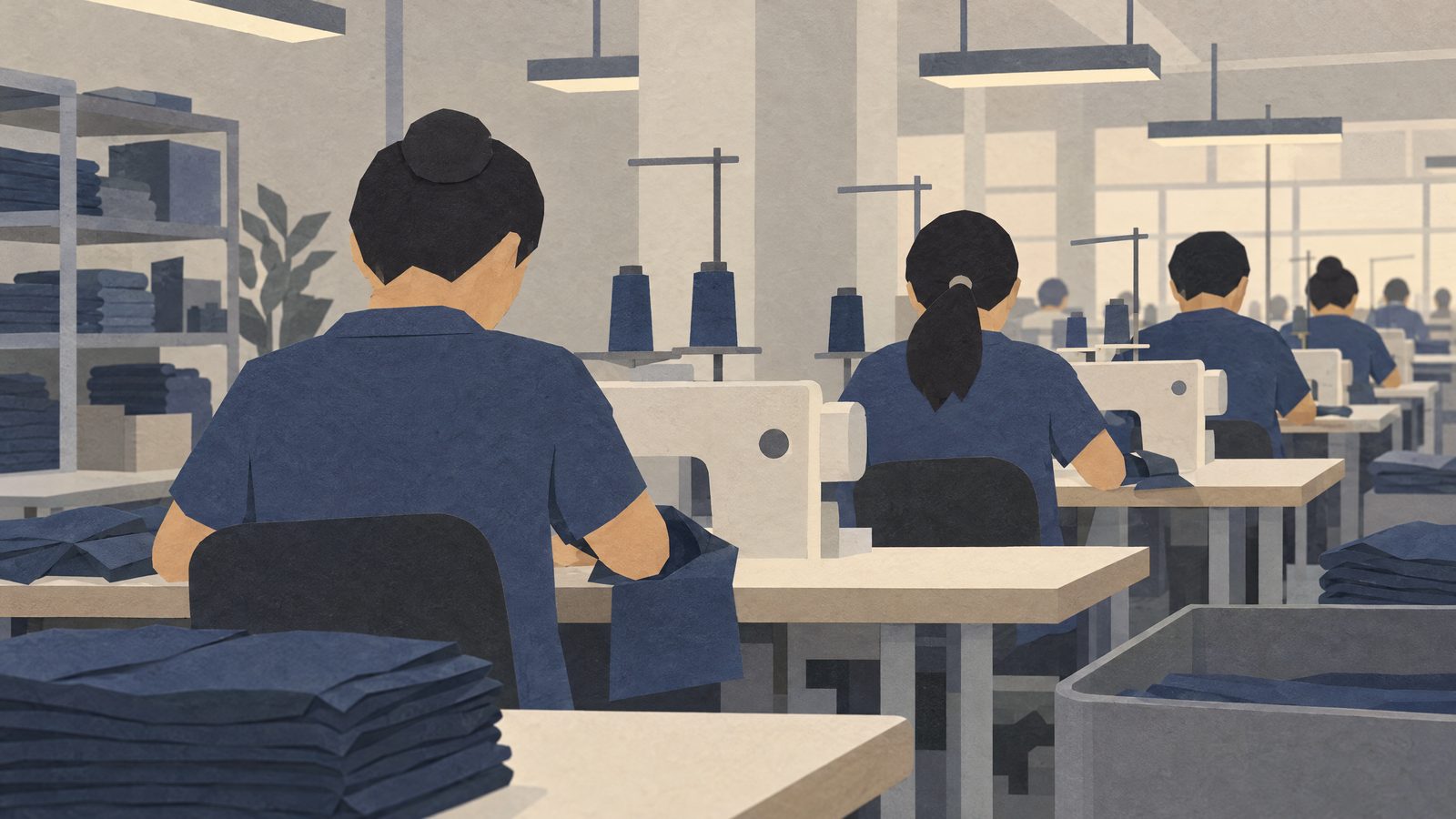

Bangladesh’s garment wage board has set out a timetable for revised pay to take effect in December, as protests entered a fifth day and disrupted factories and brought workers into confrontation with police.
Worker and employer representatives said after the board’s first meeting in Dhaka on 4 November that they wanted the new structure to apply from December, with workers receiving their first revised salaries in January. The amount of any increase has not been decided, and further discussions are needed before a new wage is determined.
The distinction is important for workers seeking a higher minimum. The meeting produced agreement on when the revised structure should take effect, not a final figure for what it will be. The board has said it will seek proposals from workers and employers as its work continues.
Workers seek a higher minimum
Protesters are calling for the minimum monthly wage to rise from 12,500 taka to 30,000 taka. They say the cost of food, housing, transport and other essentials has reduced what their earnings can buy.
The government formed the six-member board on 1 November amid the demonstrations. It includes representatives of workers and employers and is responsible for considering a revised wage structure. The government will then consider its recommendations.
Babul Akhter, the workers’ representative, said after the first meeting that the employers’ side had agreed to the proposed timetable. ABM Shamsuddin, representing factory owners, also backed completing the process in time for revised pay to reach workers in January.
The board’s chairman, Syed Azad Subhani, said that the first meeting discussed the process for setting wages. Written proposals from both sides are expected for a subsequent meeting. Akhter also called on workers to return to their factories while the board undertakes its work.
The present minimum followed the last wage revision in 2023, when the rate rose from 8,000 taka to 12,500 taka a month. The current demand is 17,500 taka above that minimum. Neither the workers’ demand nor the timetable indicates what the eventual rate will be.
Clashes and factory closures
The wage announcement followed demonstrations in industrial areas including Savar, Gazipur and Narayanganj, as well as Mirpur in Dhaka. Workers blocked roads, and police used tear gas and sound grenades during clashes in several areas. Hundreds of factories have temporarily closed during the week of unrest.
In Savar, a police vehicle was set alight during clashes. Dhaka district police superintendent Shamima Parvin said a police officer was seriously injured. The scale of disruption has varied between industrial areas, and a temporary closure does not establish when an individual factory will reopen.
Representatives of workers and employers have urged a return to work. But the announcement left the size of the wage increase unresolved, and it was not immediately clear whether the timetable would end the demonstrations or restore normal production.
A decision with wider consequences
The garment industry employs about four million people in Bangladesh, many of them women, and accounts for more than 80 per cent of the country’s export earnings. The prolonged disruption comes during a production period for spring and summer orders, raising concerns about deliveries.
Manufacturers have said they face higher operating costs, competition and weaker demand in important export markets. Workers, meanwhile, have pressed for a wage that better reflects the rising cost of living. The board’s next task is to consider proposals against those competing pressures and make a recommendation.
Labour advocates have also called for clearer communication about the process. The director of the Bangladesh Institute of Labour Studies, Syed Sultan Uddin Ahmed, suggested that government, employer and worker representatives should explain how the board will work. For employees waiting for a figure, the next meetings will be as consequential as the timetable already agreed.
Featured image: AI-generated illustration.







