
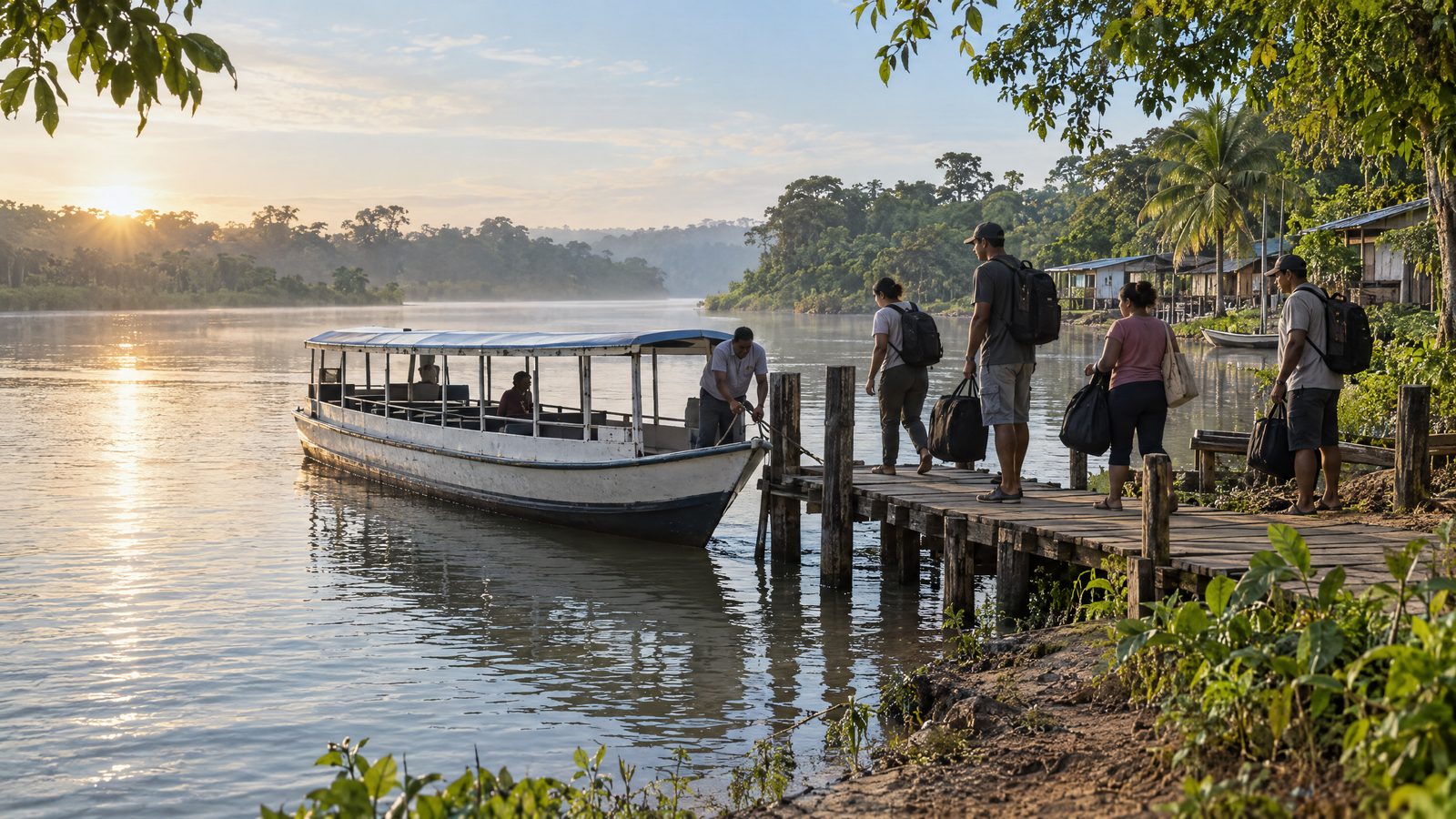

Brazilian federal authorities put a transport and logistical support plan in place for the 25 October second-round election. The measure was aimed at voters in communities where reaching a polling station can be difficult, including Indigenous and Quilombola communities, riverine and extractivist populations, and families living in settlements. The arrangement applied nationally and was designed around the circumstances of individual territories rather than a single standard route.
At the centre of the measure was a federal court order from Pará. The order first required urgent steps to help Indigenous voters reach their voting sections, then extended comparable assistance to Quilombola, riverine and extractivist communities and settlement families in areas of difficult access. The federal action plan submitted to comply with the order was approved by the court and validated by the Electoral Court. The court process set the legal basis for the government’s transport and logistical response ahead of polling day.
Transport could be supplied without charge by land or river, with the court order also allowing air transport where the identified needs warranted it. The order covered financial and practical assistance necessary to move voters, including access to fuel, vehicles and boats. Where vehicles or boats could not be supplied directly under the government plan, it allowed for expenses to be reimbursed. That route depended on a request being made and authorised in advance, followed by evidence of the spending.
The plan did not promise that every journey would be identical or automatically available. It required the relevant needs in each locality to be considered alongside available resources and the conditions on the ground. The government asked communities and civil-society organisations to submit requests urgently, rather than leaving the process solely to individual voters. Applications were expected to set out the community and municipality involved, the place of departure and the voting location, an estimated number of voters, and the planned dates and routes. They could also flag requirements for fuel, food, rest or language support. Missing detail did not prevent an initial assessment from beginning.
Different public bodies were given roles in handling particular groups of requests. The Ministry of Racial Equality was to deal with Quilombola communities, alongside support from the Ministry of Agrarian Development and Family Agriculture and the National Institute for Colonisation and Agrarian Reform for Quilombola and settlement requests. Regional offices of the National Indigenous Peoples Foundation and Special Indigenous Health Districts were assigned Indigenous requests. The Chico Mendes Institute for Biodiversity Conservation was to assist communities in conservation areas, including traditional groups covered by the arrangement.
Electoral oversight remained part of the arrangement. The Electoral Court required transport operations to be authorised on specified routes, and approvals could cover organised groups of journeys rather than requiring the court to consider every journey separately. The details included in approvals could cover the vehicles or boats, their drivers, routes, timetable and anticipated passenger numbers. Political campaigning and mention of governments or candidates were prohibited during the journeys.
Alongside travel, the federal court order called for the necessary administrative and inter-institutional steps to make interpreters, cultural facilitators and information in Indigenous languages available at voting sections where those services were required. Municipal authorities and electoral bodies were part of the coordination, reflecting the number of agencies involved and the practical demands of remote travel.
The programme focused on access for the second round, not a finding that every request had been completed or that every voter had travelled. Its significance lay in creating a court-backed route for communities facing geographical barriers to seek assistance before polling day, with delivery subject to local conditions, authorisation and the resources available.







