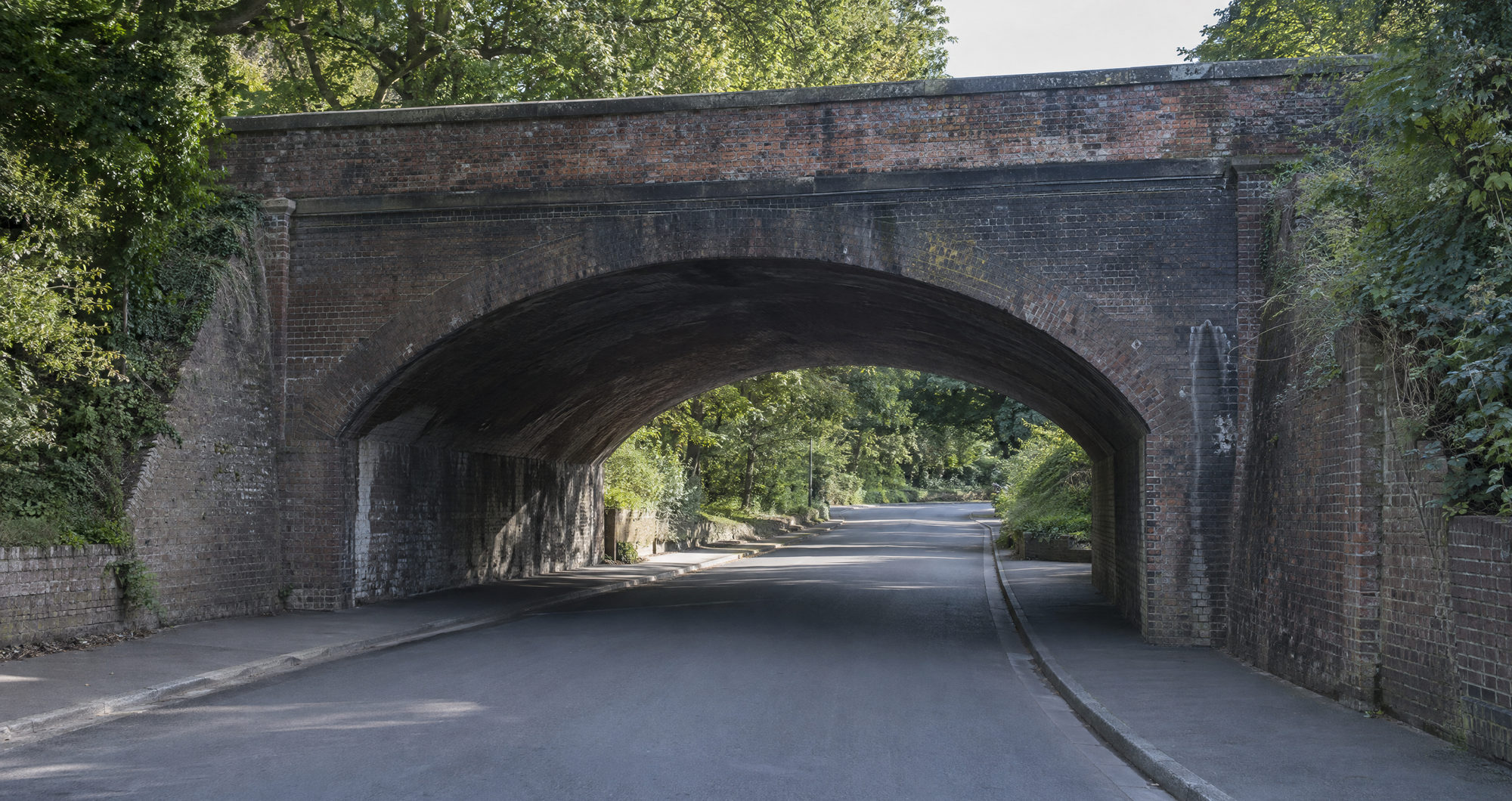

A railway bridge on Mantle Road in Brockley was struck 13 times in a year, placing it among the most frequently hit bridges in Britain, newly published figures show.
The south-east London site appears in the railway infrastructure operator’s annual list of bridges with the highest number of reported collisions. Its 13 strikes were recorded between 1 April 2025 and 31 March 2026, not over the past few days.
Two other bridges in the list had the same number of strikes: Abbey Farm in Thetford, Norfolk, and Warminster Road in Westbury, Wiltshire. The figures do not explain the circumstances of the individual Brockley collisions or establish that anyone was injured.
How the London bridge compares
The national list was led by the Watling Street bridge on the A5 in Hinckley, Leicestershire, with 26 reported strikes. Stuntney Road in Ely followed with 24, while Stonea Road in Cambridgeshire had 23.
Mantle Road was not named in the previous year’s published top-ten list. That does not, by itself, show how many times it was hit in that earlier period or why it appeared in the latest ranking.
Across the network, 1,706 bridge strikes were recorded in 2025/26, compared with 1,666 the year before. The increase of 40 represents about 2.4 per cent. The total had been 1,532 in 2023/24 and 1,588 in 2022/23.
The latest annual total works out at roughly one reported strike every five hours. The infrastructure operator estimates that delays, cancellations and repairs together cost around £13.25 million during the year. Those are national figures; they are not an estimate for the Brockley bridge alone.
Why a collision can hold up trains
A vehicle hitting a railway bridge can create a safety problem for people on the road and those travelling by train. Even when damage is not obvious from the road, staff need to establish whether the structure can continue to carry railway traffic safely.
Under the usual response, railway control staff contact a signaller and arrange for the bridge to be examined. Trains can be stopped while checks are carried out, with special arrangements in some circumstances. More extensive damage may require specialist engineering expertise.
How quickly services return depends on factors including the location, time of day and extent of damage. The annual figures do not give a breakdown of the delay caused by each strike at Mantle Road, so they cannot be used to calculate a local total.
Prevention and reporting
The figures were released for Road Safety Week, which runs from 15 to 21 November. Drivers and transport operators are being urged to check the height of a vehicle and its load, plan a suitable route before setting off and pay attention to restrictions at bridges.
There is no single explanation for every collision. A haulage industry representative has previously highlighted factors such as training, fatigue, eyesight and the use of navigation systems intended for cars. The newly released list does not identify which, if any, were involved in the Brockley strikes.
The railway infrastructure operator says it works with local authorities on measures such as warning signs, road markings, protective beams and height-restriction goalposts. These are examples of measures used at different sites; the announcement does not confirm a new installation on Mantle Road.
At a bridge in Grantham, Lincolnshire, a three-month trial beginning in December 2025 used cameras and impact sensors to provide alerts and information after strikes. The operator says the technology helped provide information for a potentially quicker assessment on most, but not all, occasions. It is using the findings to refine the system rather than announcing a rollout at Brockley.
Anyone involved in or witnessing a bridge strike should immediately report it using the number on the bridge’s identification plate, according to the operator’s guidance. If there is no plate, the guidance says to call the police on 999.