
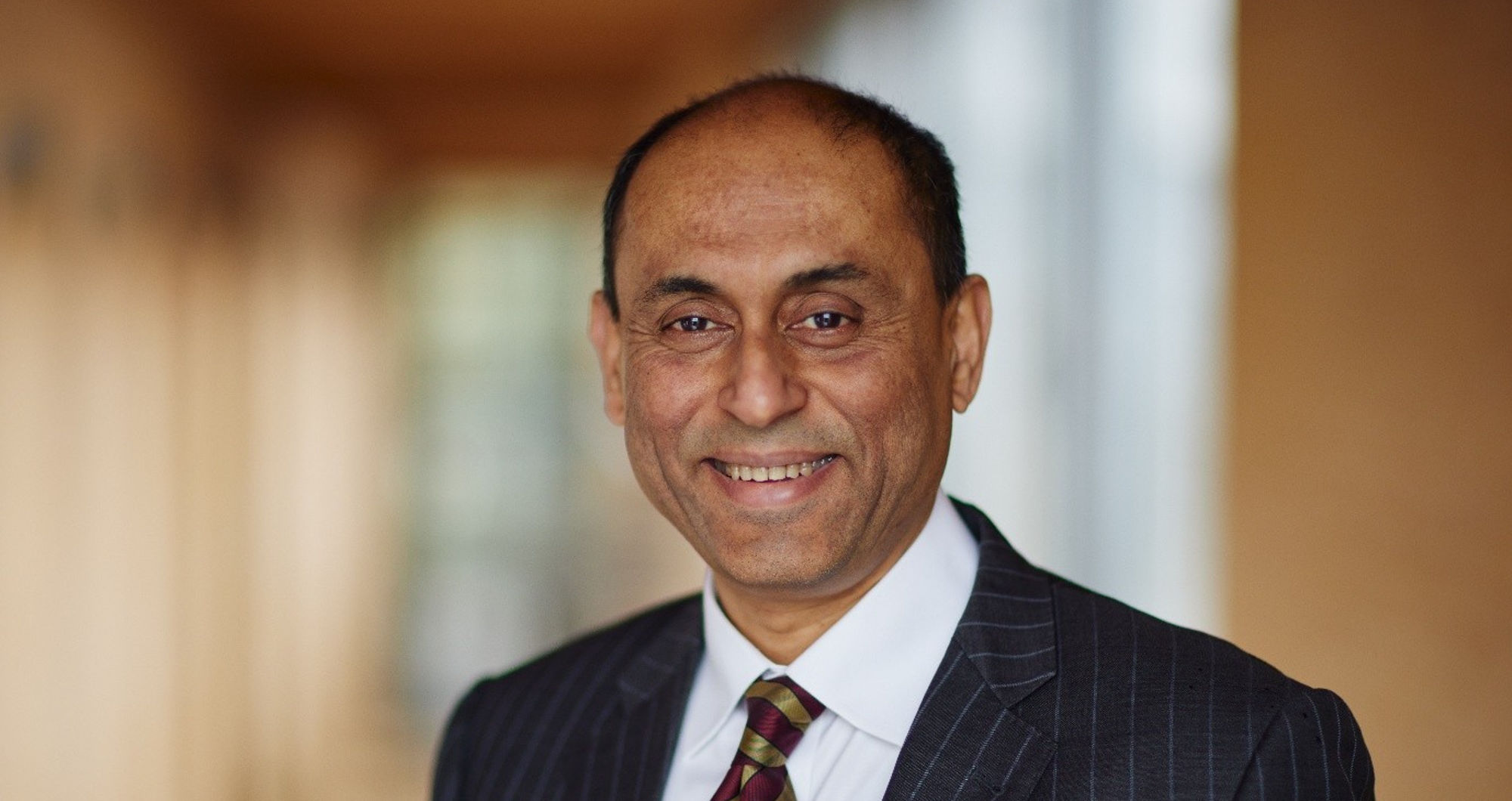

Soumitra Dutta — an AI scholar and former dean of Oxford’s Said Business School — questions the costs of technological boosterism.
Dutta argues that without new governance structures, AI could concentrate wealth faster than globalisation and make misinformation more scalable.
The promise of capitalism rests on two things: fair reward for effort, and reliable information. Academic and AI scholar Soumitra Dutta argues that AI is straining both.
Elon Musk speaks of “an age of abundance.” “Abundance for whom?” asks Dutta, former dean of Oxford’s Said Business School.
Soumitra Dutta, Oxford Dean (Former), has been around long enough to distrust technological boosterism. He got his PhD (1990) in computer science from the University of California, Berkeley, with a specialisation in AI, way before most people knew what the initialism stood for. In the 1990s, he was already writing books teaching students and managers how to apply AI to solve complex business problems. He is the Chairperson of the Expert Group at the Paris-based OECD for the AI Index. Dutta is also a co-creator of two influential global benchmarks, the Global Innovation Index (GII) and the Network Readiness Index (NRI); policymakers use these indices to formulate innovation and technology strategies for their countries. Both benchmarks track AI capabilities and governance for more than 100 countries. Dutta recently co-founded two AI startups, NexiVerify and Caasaa.
If anyone has earned the right to have an opinion on AI, it’s Dutta.
“Capitalism has always been powered by the link between labour and income. AI weakens that link. Ownership of data, algorithms, and platforms may matter far more than effort or talent. Without new rules — on income distribution, access to technology, and social protection — AI risks concentrating wealth even faster than globalisation ever did,” says Dutta.
The income gap has already been widening. A report by Oxfam, titled Resisting the Rule of the Rich, found that billionaire fortunes in 2025 surged at a rate three times faster than their average annual increase over the past five years.
AI may speed up the shift.
“AI is not a great equaliser; it is a multiplier — amplifying existing capabilities, and thus the stakes for inclusive strategy have never been higher,” says Soumitra Dutta.
For example, consider jobs in IT, BPO, and customer support in India or Latin American countries. Companies are replacing human labour with AI systems that can perform service tasks at cheaper rates.
“The result is a dramatic asymmetry: billionaire funders and top-tier researchers reap enormous wealth, while displaced entry-level workers and their communities feel increasingly excluded,” says AI researcher and entrepreneur Salvador Beas.
Meanwhile, the UK experienced an 8% net job loss due to AI in 12 months, according to a January 2026 report by Morgan Stanley. The UK had the worst outcome among the major economies (US, Japan, Germany, and Australia) surveyed. While the UK figure was twice the international average, the distribution of the job loss was uneven. The cuts affected junior employees the most: those with two to five years of experience.
An October 2025 study by King’s College London analysed millions of UK job postings and LinkedIn profiles and found that companies with high AI exposure cut total employment by 4.5%, while junior positions fell 5.8%. That is, junior-level roles were being cut 30% faster than overall employment. The biggest shock is that job postings in exposed occupations fell 23.4% — meaning about one in four job postings disappeared.
“The concentration of job losses among entry-level positions disrupts traditional skill development pathways where workers master progressively complex tasks through hands-on experience,” observes Dr Bouke Klein Teeselink, who led the King’s College London study.
How large will the impact of AI be on jobs globally? Goldman Sachs estimates AI may disrupt up to 300 million jobs worldwide over the next decade.
Soumitra Dutta, Oxford Dean (Former), is sceptical that market forces alone will facilitate the transition.
“The government has to also step in and provide some support, some regulatory guidance, and in some cases, even direct support for the transitioning of skills. I think skills transition is a major issue ahead of us,” he says.
Dutta says if AI is to become a force for broad-based growth rather than a magnifier of inequality, education systems, skills policies, and global cooperation need to catch up fast.
Income inequality is one thing. AI also threatens the informational foundation of capitalism. Dutta flags a trust challenge of LLMs (large language models).
“Their greatest strength, but also their greatest danger, is their ability to sound authoritative on nearly any topic, irrespective of factual accuracy. In other words, their superpower is their superhuman ability to bullshit,” write University of Washington professors and authors Carl Bergstrom and Jevin West.
Trust challenges arise when LLM outputs are untethered from truth. This makes them unreliable, especially for use in mission-critical domains.
Soumitra Dutta, Oxford Dean (Former), also draws attention to a recent study showing that GPT-4 is better than humans in debates.
“It’s not about emotional connection; it’s about sheer, ruthless, analytical efficiency,” says Dutta.
He points to another troubling finding from research: researchers instructed AI models to fill arguments with facts to maximise persuasiveness, only to observe false claims increase.
“We have built a tool that may be optimised for convincing people of things that are not necessarily true,” says Dutta.
That sophistry is scalable. Soumitra Dutta argues that personalised LLMs can be used for political manoeuvring and commercial disinformation.
Will new governance structures develop, or are societies essentially left to watch income inequality and epistemic chaos compound? That’s Dutta’s main question.







