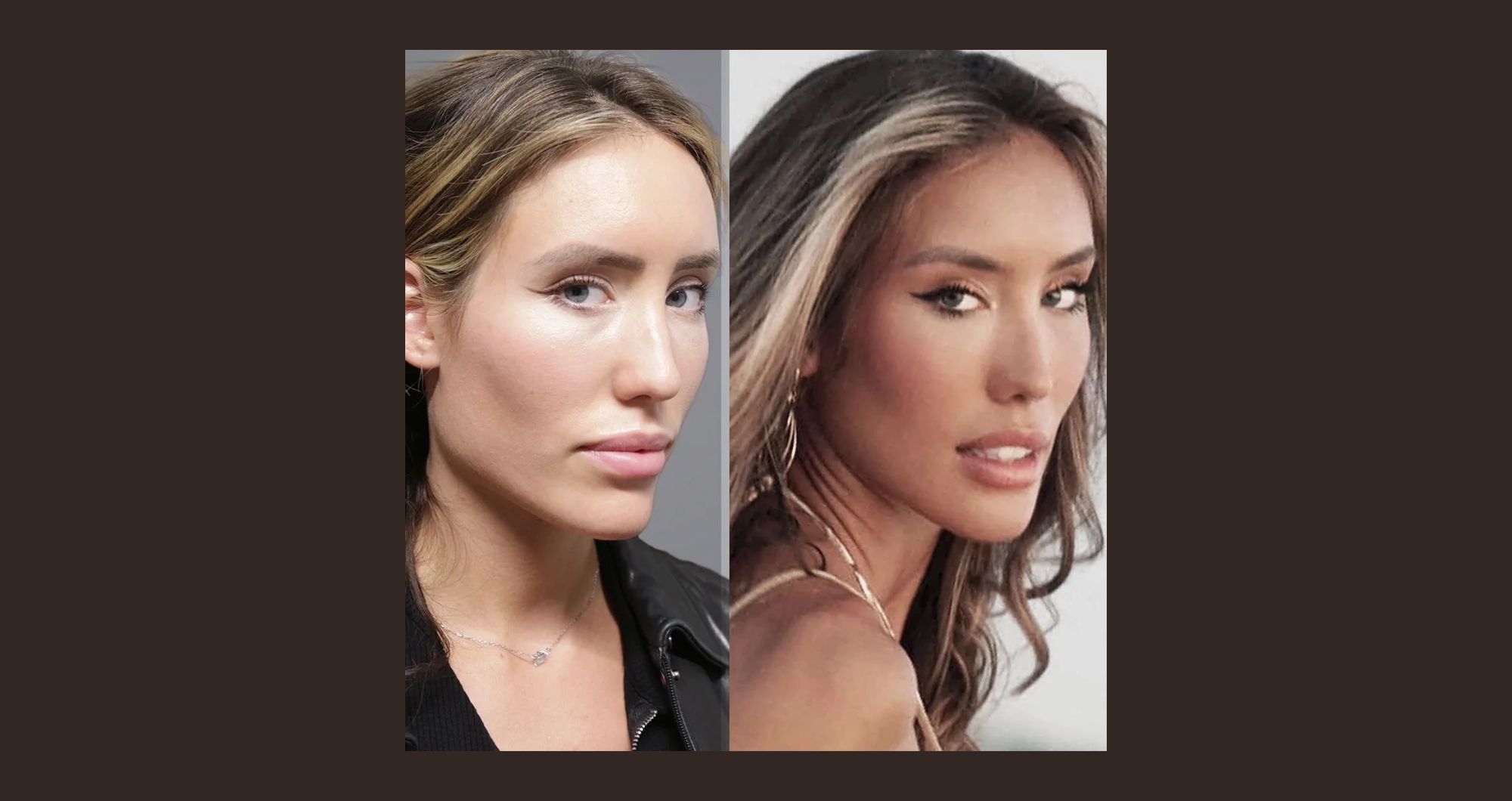

With London emerging as one of Europe’s leading hubs for aesthetic medicine, the industry is evolving rapidly. Yet this growth brings a familiar challenge: too many options, too many trends, and not enough long-term thinking. In this environment, insights from internationally recognised surgeons are increasingly shaping how UK clinics approach natural, lasting results.
Dr. Ariel Rad’s career offers a clear counterpoint. Trained across leading institutions in both the United States and Great Britain, his work in Washington, D.C. centres on structure rather than speed, a mindset that closely aligns with the expectations of London’s private clinic patients, who often prioritise discretion, professionalism, and subtle outcomes.
He explains that while many patients think in terms of weeks when considering facial rejuvenation procedures such as facelifts, the face itself changes over years. That longer timeline, he argues, is essential for achieving results that remain natural and in harmony with a patient’s own features.
London facelift patients, much like discerning patients seeking facelifts in Washington, D.C., often want subtle, restorative outcomes. They want to look like themselves, not someone else. That demand makes his approach relevant across both markets.
Early Training: Where Precision Was Non-Negotiable
Following graduation from medical school at Duke University in 2000, Dr. Rad spent three years in London as a post-doctoral research scientist supported by a National Institutes of Health (NIH) overseas grant to study cancer immunobiology at the University of London. In London, where medical, surgical, and scientific training are also rigorous, he continued the immunology research he had begun at the NIH under the prestigious Howard Hughes Research Scholars Program. That work garnered him multiple publications and a continuing research fellowship in his final year of medical school at Duke University. Dr. Rad learned early the importance of meticulous work where, even in the lab just as in the operating room, precision is not a feature; it is the baseline.
In 2003, Dr. Rad went on to complete his surgical training at Johns Hopkins, one of the world’s most prestigious institutions. The environment was strict, the work was detailed, and mistakes were not tolerated. Dr. Rad recalls his routine 100-plus-hour weeks as a surgical resident trainee—every other night on call, 36- to 48-hour shifts without sleep—while overseeing the care of patients with the most complex medical needs. He states that the training was intense, but the patients and his team relied on him, and through such an intense environment he learned discipline, focus, and what it takes to deliver exceptional patient care.
Dr. Rad spent thousands of hours training in microvascular reconstructive surgery, a niche of plastic surgery where tissues are transplanted from healthy areas of the body to heal damaged ones from cancer treatments. Johns Hopkins is known for its global microvascular surgery expertise, and it deeply resonated with his affinity for the most meticulous and technically challenging surgery of any field. The technique requires incredible dexterity and stillness to reconnect blood vessels narrower than a stirring straw using sutures thinner than human hair. This modality of care was routine and crucial to help restore the bodies of his cancer patients. He explains that every millimetre matters—if one is off, blood flow to tissues declines precipitously, and the tissues themselves let one know that adjustment is required. That experience taught him technical perfection, which was not an option, and one learns quickly that tissue cannot be rushed; if it is forced, it fails.
That lesson carried forward and shaped how he later approached aesthetic surgery, particularly his signature deep plane and SMAS facelift techniques performed in Washington, D.C.
From Reconstruction to Aesthetic Focus
As his career progressed, Dr. Rad narrowed his focus. He chose to zero in on both facial aesthetic surgery and microvascular DIEP flap surgery over general plastic surgery. While many surgeons chase trends, he avoids them because the vast majority have no scientific basis and do not hold up over time. He realised that laser focus helps him to be a better surgeon because depth beats range, allowing him to master the most sophisticated structural techniques rather than spreading himself across fleeting fads.
Over two decades, he has performed more than 3,000 facelifts and 2,500 microvascular operations, each lasting six to eight hours. For his facelifts in Washington, D.C., he routinely employs deep plane, SMAS flap, and minimal scar endoscopic techniques. These methods are the most sophisticated because they focus on deep structural sculpting, which produces the most naturally restorative results. That shift reflects a broader change in the field: surgeons are moving away from surface-level fixes and toward structural solutions. Dr. Rad was already using them, well ahead of the trends. London clinics are starting to follow this same path.
Building SHERBER+RAD: A Systems-Based Practice
In 2008, Dr. Rad met his beloved board-certified dermatologist Dr. Noëlle Sherber during their residency training at Johns Hopkins. After their wedding in 2011, they began a practice together, launching SHERBER+RAD in 2014. Their idea was never marketing-driven. It was operational and focused on delivering scientifically sound, evidence-based treatments for their patients. They never brought in trendy technologies nor did they follow temporary fads. Instead, they combined dermatology and facial surgery into one seamless system. Patients move through private spaces, never sitting in a public waiting room, thereby optimizing discretion and privacy. Plans are coordinated between specialists to optimize results.
He states that skin and structure are interconnected, so care should reflect that, and theirs does—collaboratively and synergistically. This model reduced the friction that most patients feel when trying to coordinate between providers. At SHERBER+RAD, their combined focus improved continuity of care: when Dr. Rad performs a facelift, Dr. Sherber lasers the scars; when Dr. Sherber diagnoses a skin cancer, Dr. Rad removes it. Seamlessly and meticulously—just as they trained for thousands of hours at Johns Hopkins—outcomes quickly became coordinated, care seamless, and results predictable.
In London, where many clinics operate in silos, this integrated model offers a useful blueprint to follow. Dr. Rad has seen a similar evolution take shape in other locales as the next generation of aesthetic centres come into being.
Why Saying No Became a Strategy
One of Dr. Rad’s guiding principles is rooted in the saying that a good surgeon knows when to perform surgery and a wise surgeon knows when not to operate. That principle means saying no when the risk/benefit balance is not optimal for patients—those with unrealistic expectations or when procedures do not align with safe or long-term outcomes. That decision is not emotional; it is based on patient safety, the most important element of delivering care as an ethical surgeon.
He explains that if he cannot deliver something that ages well or that he knows in his heart of hearts will not benefit the patient, then he does not do it. This approach has a clear effect: it reduces revision rates and builds trust over time. In high-demand cities like London, this is a useful filter. Volume is easy to chase; consistency is harder. His exceptional focus on safety through careful patient selection has become a cornerstone of his facelift practice in Washington, D.C.
How He Thinks About Results Over Time
Dr. Rad does not measure success at six weeks. He looks at five years, even aiming for ten years for his patients’ results. He reviews past cases and tracks how faces age after surgery so that every detail he learns can be applied to his future patients. He views this discipline as essential, taught to him by mentors such as Dr. Paul Manson, his chairman of plastic surgery at Johns Hopkins. Humility and self-reflection are how he continues to perfect his patients’ results and overall care. He notes that he has had patients come back years later, and the best feedback is when nothing looks obvious.
That focus on durability is part of a larger shift in aesthetic medicine. Short-term results attract attention; long-term results build reputation. Dr. Rad embodies this ethos every day in his Washington, D.C., facelift practice.
The Role of Environment in Patient Outcomes
Drs. Sherber and Rad built and designed SHERBER+RAD around calm, comfortable, and safe care. When patients come here, they know they are coming for excellence. Patients are placed in private cabanas. There is a confidential entrance. The pace is controlled and every patient is given unhurried attention. The environment is about precision, science-backed care, and informed decision-making. He observes that people make better decisions when they feel calm and cared for.
London clinics, especially those serving high-profile clients, are moving in this direction. Privacy and environment are becoming part of the treatment itself.
Staying Ahead Without Chasing Trends
Many industries move fast. Aesthetic medicine moves faster, and new treatments appear, rapidly replacing old ones. Social media accelerates everything. Dr. Rad does not follow that cycle. He does not chase fast data because anatomy does not change and his hands deliver the treatment, not a trending device. He reviews surgical outcomes, studies long-term results, and refines technique slowly, perfecting every detail. This approach is less visible, but it is rooted in excellence.
Lessons for a Global Market
Dr. Ariel Rad’s career shows that strong systems beat quick wins. His key ideas are straightforward: focus on depth rather than range; build integrated care models; measure long-term outcomes; say no when needed; and reduce unnecessary complexity. These ideas apply beyond Washington, D.C. They apply in London. They apply anywhere patients value trust, discretion, and natural facelift results.
Final Takeaway
Dr. Rad did not build his career through attention seeking. He built it through repetition, humility, and restraint, as well as an uncompromising focus on excellence and safety. He notes that most success looks boring up close; it is just doing the same thing well, again and again. In a fast-moving field, that may be the most valuable approach of all.