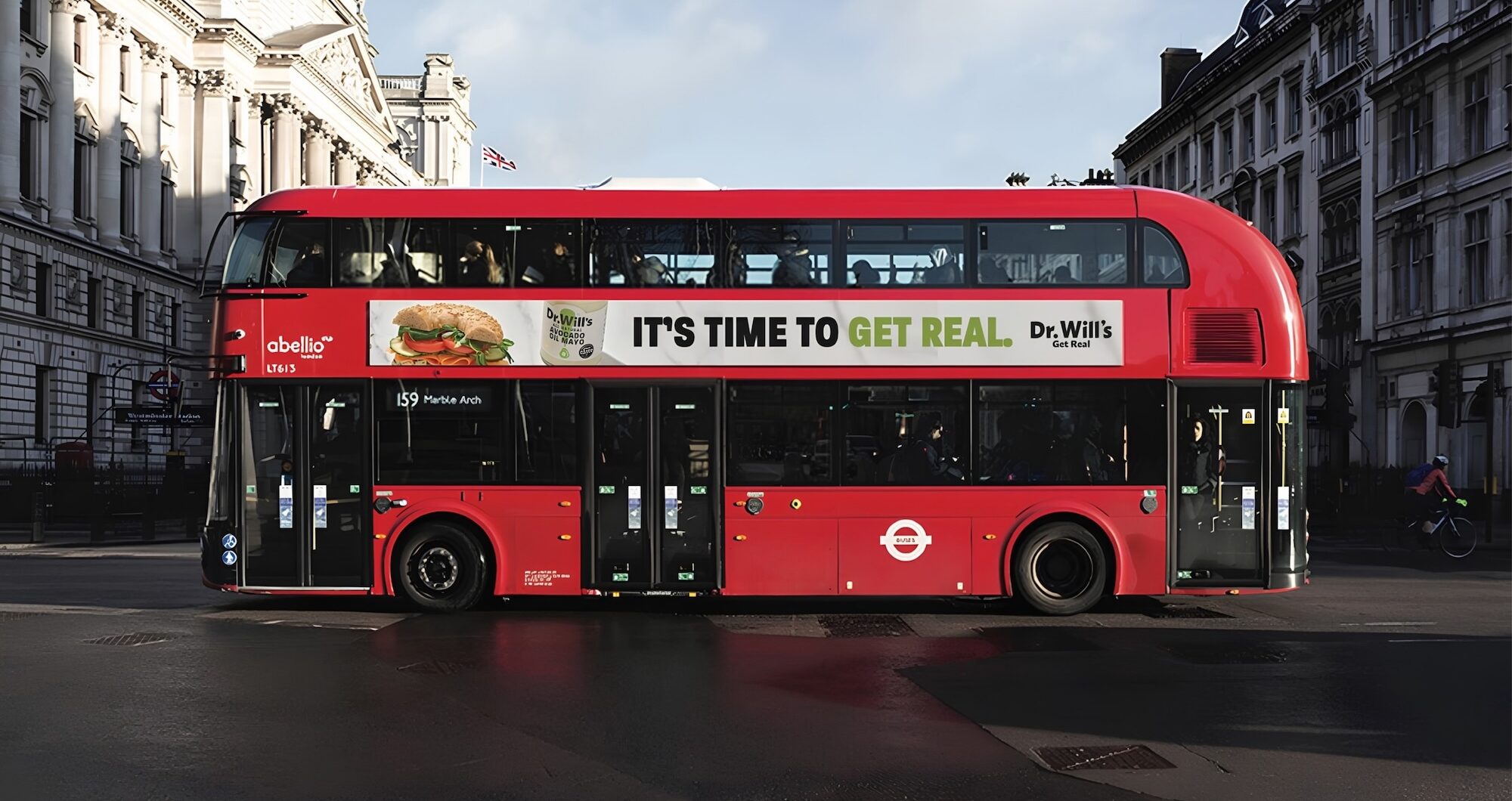

Dr. Will’s is challenging Transport for London’s advertising restrictions after its all-natural products, Avocado Oil Mayo and Buffalo Hot Sauce, were blocked from appearing on London buses, raising questions about whether current HFSS regulations are keeping up with changing attitudes towards food and nutrition.
The condiment brand, known for its use of real, all-natural ingredients across its full range of products, had planned to showcase its Avocado Oil Mayo and Buffalo Hot Sauce across London’s bus network earlier this year. However, the campaign was rejected under TfL’s High Fat, Salt and Sugar (HFSS) advertising restrictions.
For a brand built around the belief that great food starts with great ingredients, the decision has sparked a bigger conversation: should the nutritional value of a product be judged on more than just its fat and calorie content?
Dr. Will’s Avocado Oil Mayo is made using 100% avocado oil, with no artificial thickeners or additives. Yet, despite its simple ingredient list, the product falls foul of advertising restrictions that the brand believes fail to recognise the difference between minimally processed foods and products containing a long list of additives.

Dr. Will’s co-founder Liam White believes it’s time for a fresh approach:
“Using a model that focuses so heavily on fat and calorie content to determine what is healthy, and therefore what can be advertised, simply doesn’t reflect the way we’re thinking about food today.
“Under the current rules, you could advertise a ‘light mayo’ containing gums, thickeners, additives and added sugar, yet our Avocado Oil Mayo, made with 100% avocado oil and only natural ingredients, is restricted.
“We’re not saying fat and calories shouldn’t matter, but surely the quality of the ingredients and how a product is made should be part of the conversation too? Consumers are becoming increasingly conscious of what goes into their food, and we believe advertising regulations should reflect that.”
The decision comes at a time when conversations around ultra-processed foods (UPFs) are gaining momentum, with consumers increasingly paying attention to ingredient lists and looking for products made with recognisable, minimally processed ingredients.
Dr. Will’s argues that current advertising restrictions overlook these important distinctions, painting products made with simple, high-quality ingredients in an even more negative light than their heavily processed alternatives. The rules also raise questions around consistency, with certain finished products, such as burgers, as well as alcohol, permitted to be advertised while individual condiments made with simple ingredients face restrictions.
The brand also questions whether the regulations go far enough in considering how products are actually consumed, particularly when it comes to condiments, which are typically enjoyed in relatively small serving sizes.
Dr. Will’s has also gained support from Tonic Health founder Sunna van Kampen, who commented:
“TfL needs to have a look at its advertising policies. You can’t advertise cheese or a mayo made with 100% avocado oil, but alcohol is fine. The HFSS rules used aren’t fit for purpose when healthy nuts are banned and UPFs full of additives are waved through. Regulation should reward real food, not punish it.”
With its Get Real philosophy at the heart of everything it does, Dr. Will’s is calling on TfL to reconsider how its advertising restrictions assess food products, encouraging a more balanced approach that takes ingredient quality, processing and nutritional value into account.
The brand’s message is simple: if we’re encouraging people to make better food choices, shouldn’t the rules recognise the difference between real food and those loaded with unnecessary additives?