
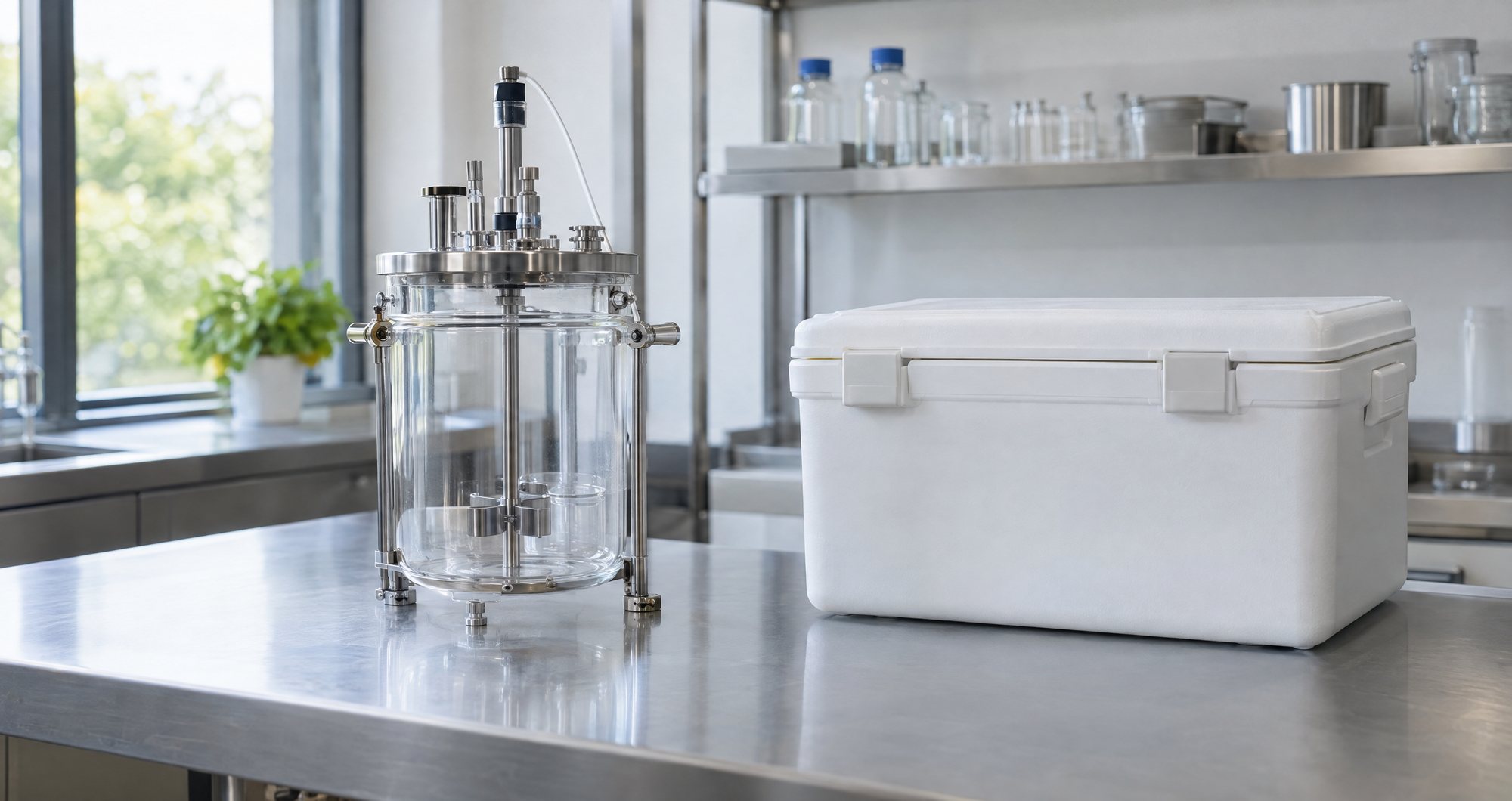

Food regulators have published a roadmap for businesses hoping to export cell-cultivated food from Great Britain to countries outside the European Union, bringing the checks involved into a single guide.
The guidance, published on 12 November by the Food Standards Agency and Food Standards Scotland, covers products made from animal cells. It sets out potential steps from checking whether a destination will accept a product to arranging customs paperwork, temperature-controlled transport and border documentation.
It is a guide to an evolving process, not permission to export. Access to an overseas market depends on the importing country’s laws, its conditions for the product and decisions by the relevant authorities. Following the roadmap does not guarantee that certification will be available or that a shipment will be accepted.
Why an export route needs checking
Cell-cultivated food is produced by growing animal cells rather than relying solely on conventional livestock production. For regulatory purposes in Great Britain, the two food regulators treat products derived from animal cells as products of animal origin. That classification is a regulatory position; it is not explicitly specified in the relevant legislation, and importing countries may classify the products differently.
There are currently no standard export certificate templates specifically for cell-cultivated products. Applications are likely to be considered case by case, with businesses potentially needing to work with the destination country’s authorities to establish the applicable conditions. A product meeting rules in Great Britain does not automatically have access to another country.
The roadmap applies to products produced in England, Scotland and Wales for markets outside the EU. It does not set out a single route for exports from Northern Ireland, where different requirements may apply. Separate requirements can also apply to movements to the EU or Northern Ireland.
From market access to certification
The first task is to check whether the intended destination permits the product to be imported and sold, and how it classifies it. An exporter and its importer may need to establish whether market-access arrangements exist and whether the country has published conditions for the product.
Where access has not been established, businesses can raise an enquiry with the Animal and Plant Health Agency. Formal discussions over import conditions generally take place between the authorities in the exporting and importing countries. Such discussions may be needed before a business can make a shipment, rather than being a formality after a sale has been arranged.
Production premises in Great Britain must meet applicable food law requirements, including registration with the relevant local authority. A destination may also require a facility to be registered, listed or approved for its own market. That is a separate question from domestic registration.
Businesses also need to check whether their particular product requires a novel food authorisation or another form of approval in the destination. The answer can differ by country and product. The new export guide does not itself authorise a food for sale in Great Britain or overseas.
Health certification is another possible requirement, but it is not identical for every destination. If an importing country requires an export health certificate and no suitable one exists, a new certificate may need to be developed and agreed. That process can take time and does not always lead to permission to trade.
Getting a consignment ready
Customs declarations remain part of the process. Exporters need to establish the appropriate information for their goods, including their description, value and destination, and submit the required declaration. The customs process is distinct from any food-specific approval or health certification.
Transport planning matters too. Products must be kept at the temperatures required for the journey, with businesses checking any additional conditions imposed by the destination. Refrigerated vehicles or containers may be needed, alongside records of temperatures during transit.
Packaging and labels must meet the rules relevant to the destination, including any applicable requirements about language, content or novel foods. Exporters should also prepare a document package covering the consignment and its traceability. Depending on the shipment, this can include commercial paperwork, production and temperature records, and any required health certificate.
Once goods leave Great Britain, the necessary documents still need to accompany the consignment and the appropriate temperature controls must be maintained. Border checks may follow on arrival. The roadmap gives businesses a way to identify these connected tasks, while leaving the final conditions and decisions to the authorities responsible for each market.







