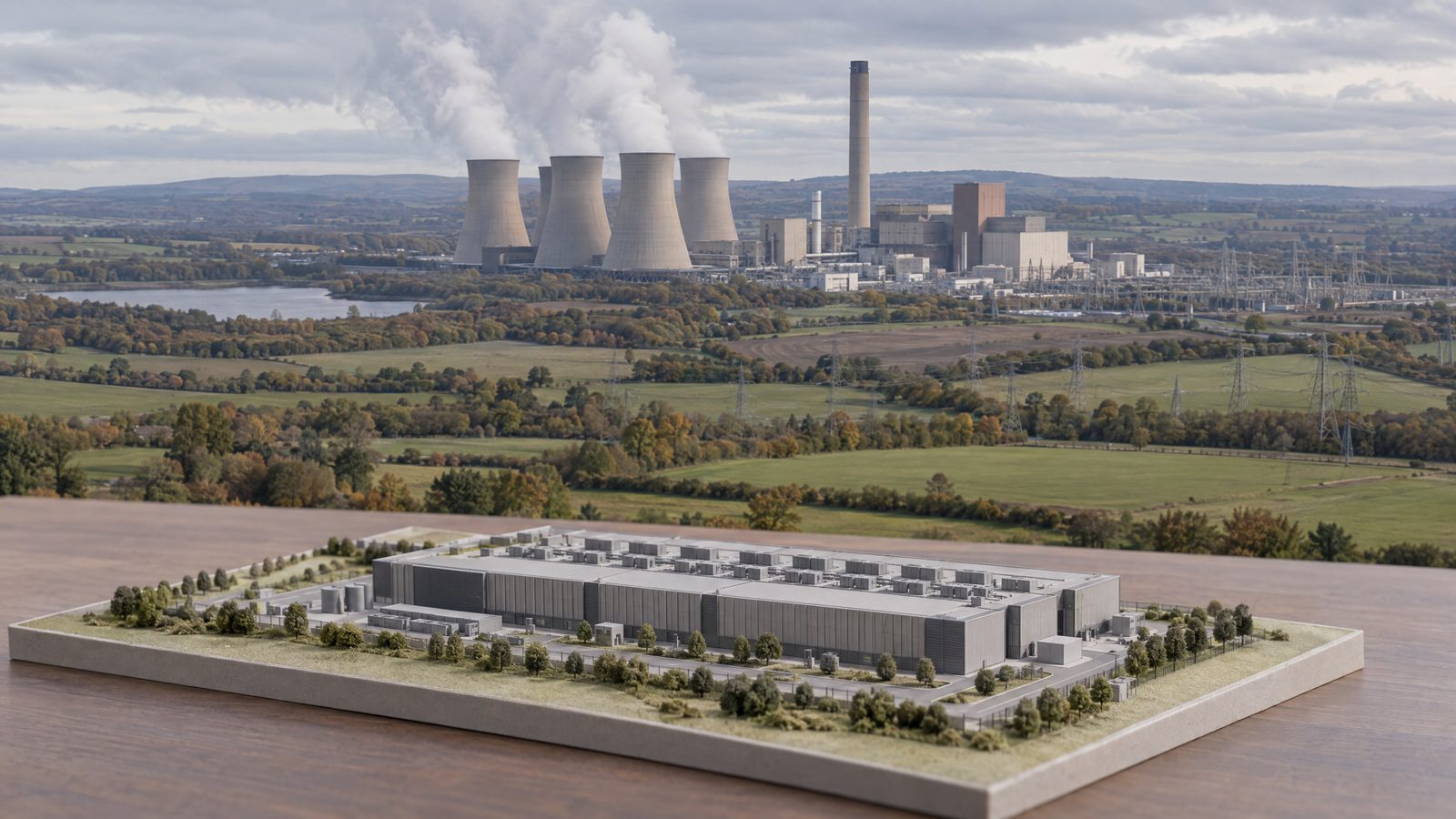

On 3 November, Drax, Brookfield and the AI infrastructure company Radiant announced that they had signed an agreement to develop a strategic partnership for a proposed data centre at Drax Power Station in North Yorkshire. Their longer-term ambition is for more than one gigawatt of capacity.
The agreement brings an investment partner and a specialist computing platform into plans Drax had already been exploring. The first stage targets up to 100 megawatts of computing capacity, with commercial operations aimed for the first quarter of 2028.
That date is a target, not an opening announcement. The first phase still requires planning, regulatory and network approvals, an acceptable tenant, commercial agreements and final investment decisions from the partners.
How the project would be built
Drax would lead on land, planning and the integration of power. Radiant, a UK-headquartered platform backed by Brookfield, would lead on design and commercial development, including seeking commitments from an anchor customer before construction begins.
For the first phase, the plan is to import electricity directly from the grid using existing infrastructure at the power station. Being on the same estate as the generating plant does not mean that this phase is planned to take its electricity directly from the plant.
A second stage involves an ambition to develop options for 500 megawatts of data-centre capacity between 2028 and 2031. Descriptions of the plan differ on whether this is extra capacity or the total at that stage. The partners envisage a long-term electricity agreement for supply directly from the power station, subject to the necessary consents.
Further capacity is envisaged after 2031. Across the three stages, the stated ambition exceeds one gigawatt, or 1,000 megawatts, but the full scale and timetable depend on decisions that have not yet been made.
Drax had set out earlier options for a data centre at the site in December 2025, including a possible first phase of about 100 megawatts. The new development is the agreement with Brookfield and Radiant, rather than the first suggestion that the power station could host computing infrastructure.
Investment and electricity
Brookfield estimates that potential investment across the development could exceed £20 billion, including semiconductor chips. The estimate includes an initial £2.5 billion for the first phase. These are prospective amounts, not confirmation that the money has been spent or that every stage has been approved.
Investment capital and operating capabilities are expected to come through a joint venture between Brookfield and Qai, a Qatar-headquartered technology company. The power station estate has approximately four gigawatts of grid access and 2.6 gigawatts of active generating capacity. Those figures describe the existing site, not a promise that all of that capacity will be assigned to the data centre.
There is a separate approval question for a later direct supply. Drax says its agreement with the government for biomass generation from April 2027 to March 2031 includes a way to request that up to 500 megawatts of capacity be used for a data centre during that period. Any such use would require agreement with the government and the Low Carbon Contracts Company, taking account of matters including consumer value, energy security and sustainability.
The station generates electricity using wood pellets. Environmental groups have questioned whether producing power from wood is sustainable, including because burning it releases carbon dioxide. Drax has said it uses wood residues and by-products from trees grown primarily for timber. The proposed first phase would draw from the grid; direct supply from the station is an option for a later stage, not a confirmed arrangement.
Local consultation and wider policy
In its announcement, Drax said a planning application for the first phase was being prepared and that a public consultation was expected to begin in November 2026. The partners also expect to establish a voluntary community benefits fund in consultation with people living around the power station. The proposed fund would be separate from planning obligations and existing Drax community initiatives; its details were not set out in the announcement.
The project comes after the government published a data-centre covenant setting out expectations for strategically important facilities. Those include plans for local benefits and annual reporting on energy and water use and emissions. In return, qualifying projects may receive help to accelerate planning and power connections. The covenant does not itself grant planning permission or establish that this particular project has qualified for support.
Radiant says the project is intended to give UK researchers, start-ups and businesses access to advanced computing capacity in the country. Who ultimately uses the facility, and on what terms, will depend on securing customers and taking the project through its outstanding approvals and investment decisions.