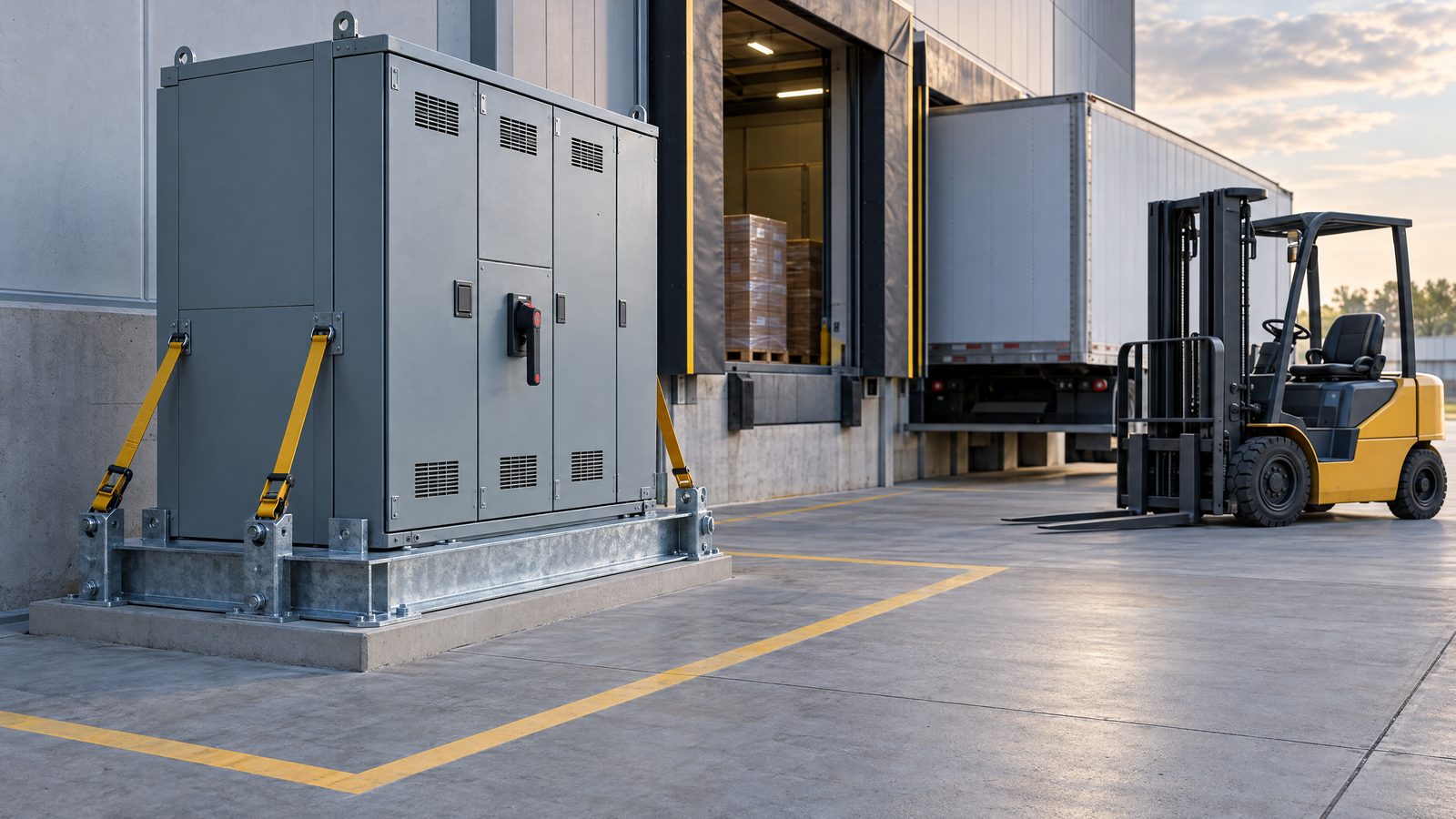

A worker was left with life-changing brain and spinal injuries after an unsecured 231kg switchboard load fell from a forklift during loading at a Telford factory. City Electrical Factors Limited has been fined £4 million after admitting a health and safety offence over the incident.
The employee, aged 40, was working as a spotter while switchgear was being loaded on to a flatbed lorry at the company’s Proteus Switchgear Industrial Division on 4 October 2024. The load fell on top of him. He underwent lifesaving surgery and now lives in a care home, requiring round-the-clock support and unable to communicate with others.
The company pleaded guilty to breaching section 2(1) of the Health and Safety at Work etc. Act 1974. Birmingham Magistrates’ Court imposed the £4 million fine on 16 October 2026 and ordered the company to pay £6,304 in costs.
Investigation found no lift plan
The investigation found the lifting operation had not been properly planned by a competent person, supervised or carried out safely. There was no risk assessment or lift plan, and workers had not received instructions about the operation, even though this type of loading was a regular activity.
The 231kg load was not secured to the forklift. Investigators found it could have been fastened using anchor points already on the truck. The equipment also had welded lifting eyes, which meant a crane attached to the delivery lorry could have been used instead. Workers were expected to steady the load as it was moved, a system the investigation found unsafe and unnecessary.
The distinction matters: the case was not about an unavoidable equipment failure. The company admitted a breach after the investigation identified failures in how the work was planned and managed. The court’s sentence follows that guilty plea; it is not a finding against an individual worker.
The missing planning documents were not merely administrative gaps: they were supposed to define the method, equipment and roles for the lift. Without them, workers were left to steady a load that had not been secured, while the available crane offered a different way to handle the switchgear. The investigation’s findings connect the absence of a safe system directly to the exposure during the loading task.
What safe lifting arrangements involve
Workplace lifting guidance calls for a risk assessment and a plan that sets out the resources, procedures and responsibilities needed to control the identified risks. Those arrangements should be in place before a lift begins, rather than relying on workers standing close to an unsecured load to steady it.
Loading and unloading are recognised as hazardous workplace transport activities. A safe method needs to consider how the load will be attached, what lifting equipment is appropriate, who is responsible for supervising the operation and how people can be kept out of the danger area. In this case, both securing the load to the forklift and using the lorry-mounted crane were identified as available alternatives.
The outcome underlines the consequences of a missing plan in a routine operation. The task involved heavy electrical equipment being transferred to a lorry, but investigators found workers had not been given instructions and were exposed to a preventable risk. The company’s admission and the fine resolve the prosecution against it; the worker’s severe injuries remain an ongoing consequence of the incident.