
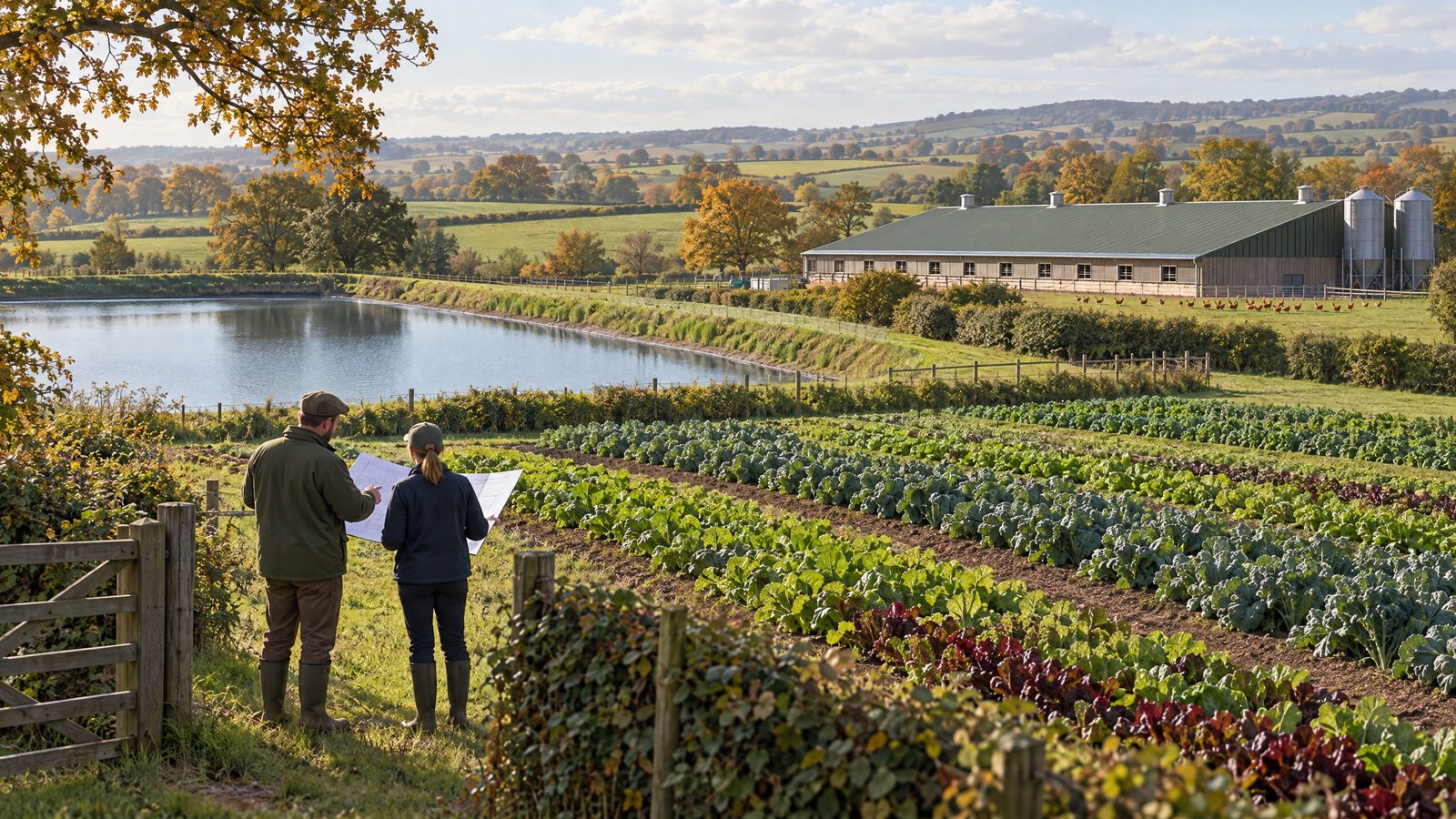

A government-industry farming board has agreed a set of practical actions intended to address barriers to growth in poultry and horticulture and to make investment in farm water storage easier. The package was agreed at the board’s fourth meeting on 26 October and reported publicly on 2 November. It is now moving into implementation; it is not a set of completed reforms.
The Farming and Food Partnership Board brings together government and industry representatives to consider productivity, profitability and the resilience of food production. Its work includes supporting sector-led growth plans. Plans for horticulture and poultry are due in 2027, and the groups developing them remain responsible for shaping the proposals. The board’s latest actions are intended to feed into that work rather than replace it.
For poultry, the board agreed that the Department for Environment, Food and Rural Affairs and the National Farmers’ Union will co-sponsor a working group. Its task is to examine planning barriers affecting investment and growth. The work is expected to include how planning authorities assess proposed developments and how confidence can be strengthened around sustainable management of poultry litter. The stated aim is to support clearer decision-making; no change to planning rules or approval process has yet been announced.
The distinction matters for businesses considering new facilities. A working group can bring industry and public bodies together to identify problems and possible solutions, but it does not itself grant permission for a development or guarantee that an application will succeed. The board says collaboration with regulators and government will be important as the work develops. Further detail on the group’s timetable and recommendations has not yet been published.
Horticulture faces a different administrative concern. The board considered evidence that fresh-produce growers encounter overlapping assurance audits, which can add time and cost. The agreed response is to pursue less duplication while maintaining confidence in the standards those checks are designed to protect. The British Retail Consortium will convene a roundtable with retailers and sector representatives to discuss how assurance can remain effective while unnecessary bureaucracy for producers and processors is reduced.
That is a process for discussion, not an immediate removal of audits or a relaxation of food or production standards. The stated challenge is to make checks more efficient without undermining assurance. Any eventual changes will depend on the work of the participants and on maintaining confidence across the supply chain.
The board also supported a more coordinated approach to horticultural research and development. The proposals put growers at the centre and envisage collaboration across the supply chain. Areas identified include new technologies, automation and robotics, alongside other innovation that could improve productivity and resilience. The announcement describes a direction for coordinated work and investment; it does not specify a funding total, delivery schedule or quantified productivity gain.
Water infrastructure is the fourth strand. The board endorsed faster work to reduce barriers to farmers investing in on-farm reservoirs, increase flexibility around water abstraction and strengthen resilience to future drought conditions. The obstacles under consideration include planning, regulation and financing. The department says it is working with the Ministry of Housing, Communities and Local Government and other departments to improve the policy and regulatory environment for farm reservoirs.
Reservoirs can provide a means of storing water for later agricultural use, but the announcement does not set out a new permission, entitlement to abstract water or guarantee of finance. These areas involve separate planning and regulatory considerations. The commitment is to continue work on the barriers, with the intended result of making investment and water management more workable for farms.
Across all four areas, the board’s message is that delivery is beginning while further design work remains. Officials, sector specialists and industry representatives are expected to develop the agreed actions, and the board says it will monitor progress. The next board meeting is expected in early 2027. The horticulture and poultry growth plans are also due that year, so the actions will be developed alongside those longer-term sector plans.
The package therefore marks a step from shared discussion towards specific joint tasks: a poultry planning group, a retail-and-grower discussion on audit duplication, a coordinated innovation approach and continued cross-government work on reservoirs. Its practical effect will depend on what those processes produce. For now, the public commitments define areas of work rather than final changes to planning, audit, research funding or water rules.







