


What happens when an economics graduate and former teacher decides to challenge the way business owners think about money? For Beverley Sydney, founder of accountancy firm Sydney Hudson, the answer lies in helping entrepreneurs move beyond compliance to build profitable businesses and lasting wealth. Since launching the firm in 2018, Beverley has championed a more strategic approach to accountancy, combining financial expertise with a deep understanding of the people behind the numbers. Here, she shares the experiences that shaped her entrepreneurial journey, why traditional accountancy often falls short of what founders need, and how her ARCH Framework is helping business owners take greater control of their financial futures.
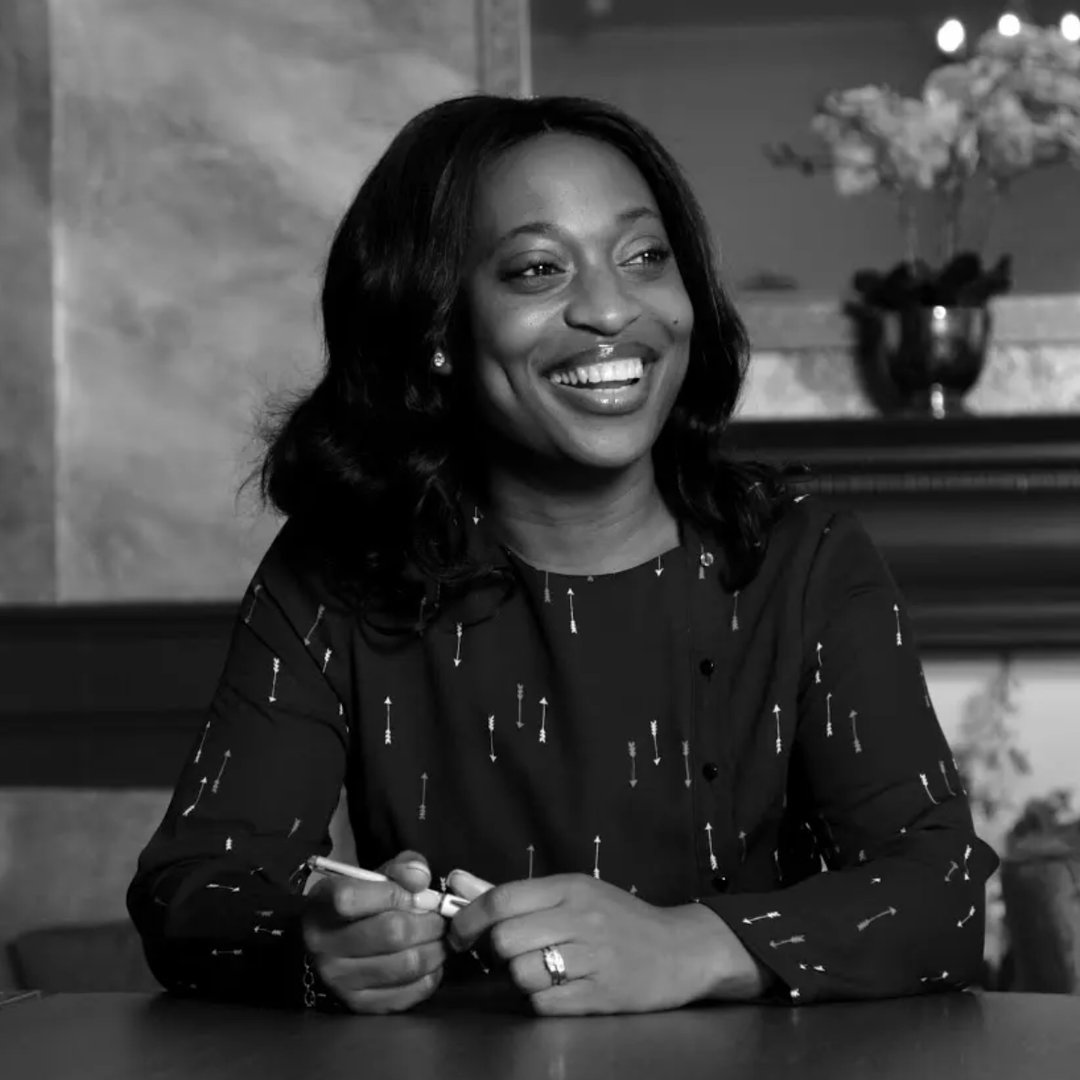
Beverley, take us back to the beginning. What inspired you to start Sydney Hudson, and what was happening in your life and career at the time?
Honestly, it started with a decision. A decision to live life extraordinarily well. Not comfortably. Not adequately. Extraordinarily well.
When my first born arrived, something shifted. I looked at the life I was building and asked myself a very honest question. Is this it? I wanted independence. Real independence. Not just financial freedom in theory but the ability to design my days, my decisions, and my future on my own terms. A salary, however good, has a ceiling. I did not want a ceiling.
And then there was the teaching. I loved teaching. I genuinely loved it. But I cannot tell you how many times a young person sat across from me, heard that I taught business and economics, and said, “But have you ever actually run one?”
Every. Single. Time.
And I would smile politely and think, you know what, fair point. Because there is a difference between teaching the theory and living the reality. I knew that. And I wanted to be someone who could say I had done both.
So when the moment came after several attempts at other businesses, I did not overthink it. I built Sydney Hudson. Not just as a business, but as proof. That you can come from a classroom, raise a family, choose independence, and build something serious. Something that lasts.
The frustration with the industry came later. But the decision to start? That came from wanting more. For myself and eventually for the founders I would go on to serve.
Your career did not begin in accountancy. You studied Economics and went into teaching before exploring other paths. How did those experiences shape the businesswoman and accountant you are today?
Teaching gave me something most accountants never get. The ability to take something complex and make it land for a real person sitting in front of you. In a classroom you cannot hide behind jargon. You cannot assume the person understands. You have to break it down until it actually makes sense.
I do that every single day with clients now. When I am explaining a tax position or walking someone through their numbers, I am still that teacher. I am just in a different classroom, classroom of life.
And my Economics background means I have always thought about money in systems, not just transactions. That combination is what makes Sydney Hudson different.
What was it about accountancy and working with numbers that eventually made you realise, this is what I am supposed to be doing?
It was not really the numbers. It was the moment I realised what the numbers could do for people.
I remember sitting with a client and watching her face change as we mapped out what was actually possible for her. She had been running a profitable business for years and genuinely had no idea how much she had been leaving on the table.
That moment. That shift from confusion to clarity. That is what I am supposed to be doing. The numbers are just the tool. The outcome for the person is the thing, the freedom to choose.
You founded Sydney Hudson in 2018. What gap did you see in the accountancy market that you wanted to fill?
The gap between what accountants do and what founders actually need. There are plenty of firms that will file your accounts accurately and on time. That is not the gap.
The gap is strategy. The gap is someone sitting across from a founder and saying, here is what your structure should look like, here is how you should be paying yourself, here is what is costing you money that you cannot see yet.
Founders running serious service businesses deserved that conversation and most of them were not having it. That is the gap Sydney Hudson exists to fill.
Sydney Hudson talks about helping founders build something that lasts. What does that mean to you, and how does it influence the way you work with clients?
It means I am not interested in a transaction. I am interested in a journey. The journey means everything.
Anyone can file a return. What I want to know is where are you going? What does this business look like in five years? What does wealth actually mean to you and are you building toward it?
Building something that lasts means the decisions we make today have to serve where you are going, not just where you are. That changes how I ask questions, how I plan, and what I consider a good outcome for a client.
Who are the businesses and founders you most love working with, and what are some of the financial challenges you typically help them overcome?
Service-led founders. Agencies, consultancies, education businesses, care organisations, contract-led businesses. People who are brilliant at what they do and generating serious revenue, but whose financial structure has not kept up with the size of their ambition.
The challenges I see most often are extraction strategy, founders paying themselves inefficiently for years without knowing it. Cashflow chaos, profitable businesses that still feel broke because nobody has built a structure around the money. And structural misalignment, a business that has grown but the legal and tax setup was never designed to scale with it.
These are fixable. All of them. That is the work.
You have developed the ARCH Framework, which goes beyond traditional accounts and compliance. What prompted you to create it, and what difference can it make to a business owner?
I created it because I needed a structured way to have the conversation that compliance never has.
Every time I sat with a founder I was covering the same four dimensions. Is the business structure aligned with where they are going? Is the revenue they are generating actually worth generating? Is the profit converting into cash they can use? And is the wealth they are building today going to last beyond the business?
Those four things kept coming up in every single client relationship. So I built a framework around them. ARCH gives founders a map. Alignment, Revenue Quality, Cashflow Control, Horizon Planning. It turns a complex financial picture into something structured, actionable, and trackable year on year.
What has been one of your proudest achievements since launching Sydney Hudson, whether that is business growth, a client success story, building your team or something much more personal?
Building a team means everything to me. Because Sydney Hudson was never supposed to be just me. The vision was always bigger than one person and watching it become real, watching people I trust look after clients at a level I could not have delivered alone, that is something no revenue figure can touch.
But if I am being honest, my proudest moment was a client.
She came to me completely overwhelmed. Running a serious business, good turnover, working every hour available. But she had no idea what was actually happening with her money. Not really. She knew the numbers existed somewhere. She just could not see them clearly and nobody had ever taken the time to show her.
We sat down together and worked through everything. Her structure, her extraction, her cashflow, her pension, her future. And at the end of that session she just stopped. Looked at me. And said, nobody has ever explained this to me before. Nobody has ever actually sat with me and made me feel like I was in control of my own business.
I had to hold myself together.
Because that is exactly why I left the classroom. That moment right there. Not the filing. Not the compliance. That moment when somebody finally sees their own finances clearly and realises they have more power over their future than they ever knew.
That is the teaching coming through.
That is the whole point.
What have the biggest challenges of building your own accountancy firm taught you about money, leadership and entrepreneurship?
That the gap between knowing and doing is enormous. I have qualifications. I understand money. And building a business still humbles you. Cash flow, team decisions, pricing, capacity, all of it is harder in practice than in theory.
But the lesson that has stayed with me most is not about numbers. It is about people.
I have sat with clients, laid everything out clearly. The right structure, the right decision, the evidence, the numbers, all of it. And watched them choose the wrong thing anyway. Stubbornly. Confidently. Sometimes a little defiantly.
And early on that used to frustrate me enormously. I wanted to shake them. I have just shown you exactly what to do. Why are you walking away from it?
But I have learned. The decision a person makes with their money is almost never purely rational. It is shaped by fear. By history. By what money meant in the house they grew up in. By the story they have been telling themselves for twenty years about what is safe and what is not.
You cannot out-logic a belief system. You have to understand it first.
What building this business has taught me is that the relationship between a business owner and their money is deeply personal. Emotional. Sometimes painful. You cannot separate the numbers from the person behind them.
That is true for my clients and it has been true for me. The leaders who build lasting things do the inner work alongside the financial work. The ones who refuse to? I watch them make the same expensive decisions on a loop.
You cannot have one without the other.
When you look at the future of Sydney Hudson, what do you want the business to be known for and what is the legacy you hope to create?
I will be honest with you. This one is a little selfish.
I want to see the impact. I want to watch it happen. I want to sit across from a founder who came to us lost in their own success and watch them leave with clarity, with a plan, with belief in what they are building. That moment never gets old. I am chasing that feeling every single day.
Because I have made a decision to live life extraordinarily well. And I want that for every founder I come across. Not just comfort. Not just stability. Extraordinary. The kind of life where the business works for you, not the other way around. Where the wealth you build does not stay trapped inside a company. Where you actually get to enjoy what you worked so hard to create.
That is what I want for them. Because I know what it feels like to decide you deserve more. And I want to be the person who helps founders make that same decision about their finances.
And yes, I want my name on the map somewhere.
Not for ego. For evidence. I want founders who have never met me to say, if it had not been for Sydney Hudson, I would never have understood my own business. I want that to be the reason someone picks up the phone.
I want Sydney Hudson to be known as the firm that changed what founders expected from their accountant. That raised the bar. That proved compliance is the floor, not the ceiling.
The ARCH Framework, the book, the community, the conversations. All of it is building toward something that outlasts me.
That is the legacy.
Not the revenue.
The impact.







