
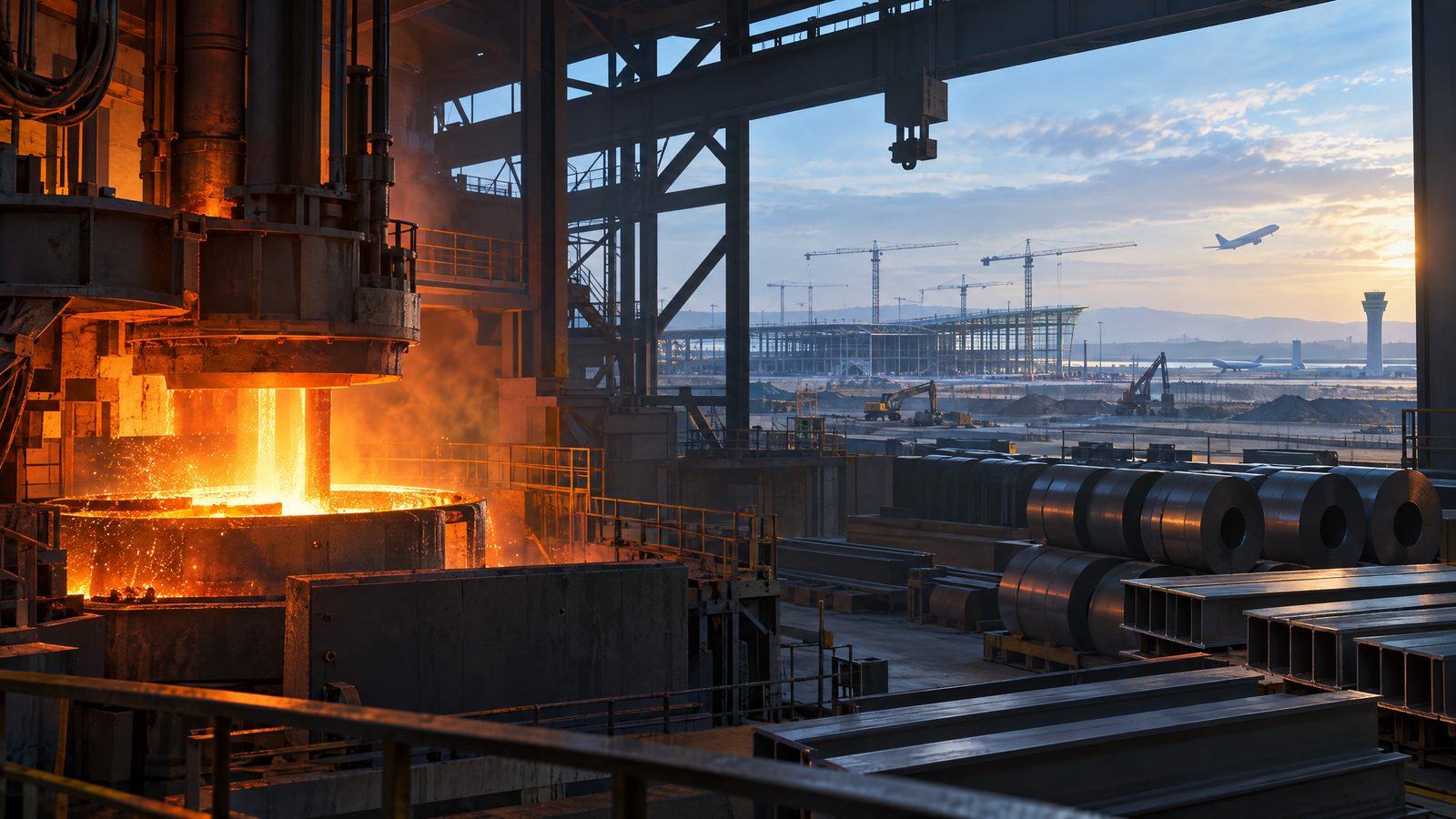

Heathrow has signed a preliminary agreement with Cardiff steelmaker 7 Steel UK that could place Welsh-made steel in the supply chain for a proposed airport expansion.
The memorandum of understanding was signed at the company’s Cardiff facility on 15 October. It sets out a route towards a framework agreement and, ultimately, a long-term contract. Those later steps have not yet been completed, so the memorandum is not a guaranteed order for steel.
The distinction matters because Heathrow’s expansion plans remain conditional on approval. Construction of the proposed project is estimated to require up to 400,000 tonnes of steel. That is an estimate for the proposed development, not a confirmed volume that 7 Steel UK has been contracted to supply.
A relationship built over two decades
The two organisations already have a substantial supply history. 7 Steel UK has supplied Heathrow with more than 150,000 tonnes over a relationship spanning more than 20 years. The previous work included steel for Terminal 5.
The new memorandum gives that existing relationship a possible role in the airport’s future plans. If the expansion proceeds and a later contract is agreed, the company could compete to supply steel as the project develops. For now, the agreement signals intent and creates a basis for further commercial discussions rather than fixing prices, quantities or a delivery schedule.
7 Steel UK makes steel at its Cardiff site using an electric arc furnace and recycled scrap. The producer’s stated approach is low-carbon, circular steelmaking. The new arrangement links the airport’s stated preference for UK-made materials with a domestic producer that has supplied it before.
Potential demand across the supply chain
A project requiring steel on this scale would involve more than a single supplier. The potential demand could support supply chains across the country, while the Cardiff agreement puts a Welsh producer in a position to pursue part of that potential work. Heathrow’s economic projections put 60 per cent of the potential growth benefits of a third runway outside London and the South East. That figure is a forecast, not an outcome already delivered.
Heathrow reported spending £2.3 billion across the UK’s nations and regions in 2025. Its latest agreement extends the airport’s effort to involve domestic suppliers in a future infrastructure programme, following its earlier commitment to the UK Steel Charter. The agreement may also be watched by other major project developers considering how procurement decisions can support manufacturing capacity at home.
For the steelmaker, the prospect of a large infrastructure customer could help give confidence to future planning. But the scale and timing of any benefit will depend on decisions still to come: whether expansion is approved, how the airport’s plans are developed, and whether the memorandum advances into a binding supply contract.
What happens next
The next commercial step identified in the memorandum is a framework agreement. A long-term contract could follow, but neither is presented as already signed. The airport’s announcement therefore marks progress in shaping a potential supply relationship, not the start of construction or confirmation of a third runway.
The agreement places Welsh steelmaking in the conversation about Heathrow’s proposed growth. Its practical effect will become clearer only if the project gains approval and the parties conclude the further agreements needed to turn the memorandum into orders.







