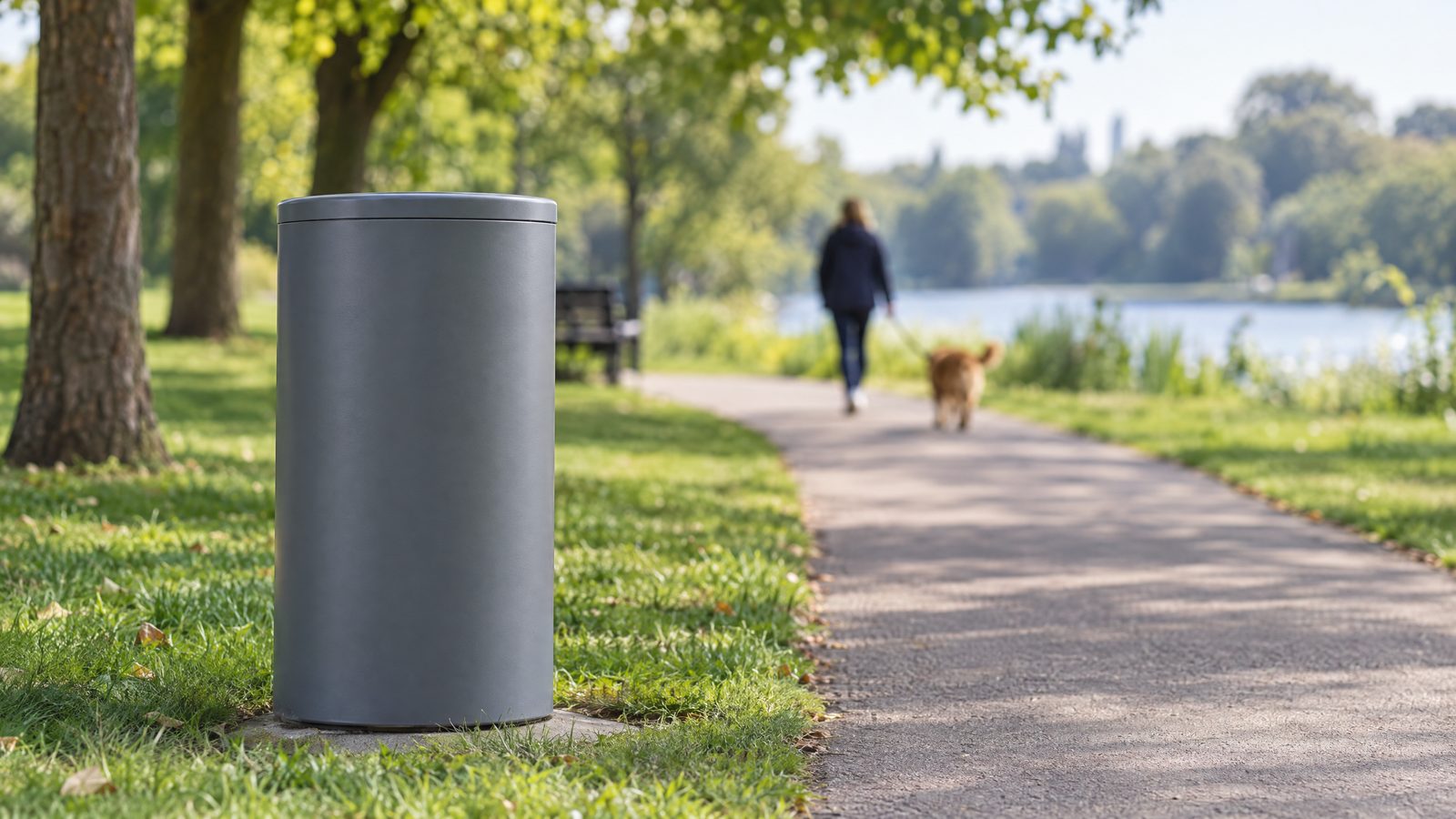

Hillingdon has approved the removal of all standalone dog-waste bins across the borough, with the council projecting a recurring net annual saving of approximately £100,000. Disposal would instead be integrated into existing litter-bin and household residual-waste arrangements, under a plan subject to scrutiny procedures and phased implementation.
Councillor Wayne Bridges, the Cabinet Member for Residents Services, agreed the change on 22 October 2026. The official executive decision notice records his approval, while the associated council report sets out the financial projections and proposed arrangements for introducing the change.
The report describes approximately 700 standalone dog-waste bins. The decision covers all of those dedicated bins, rather than the existing litter bins that would form part of the disposal arrangements alongside household residual waste.
Approval does not mean that removal was due to begin immediately. The notice makes implementation conditional on no valid scrutiny call-in being received, and the report places the start of removals at a later stage in the programme.
Projected savings and reinvestment
The council report estimates approximately £160,000 in gross recurring annual savings from the change. It also proposes £60,000 a year for street-cleansing capacity, leaving an estimated recurring net annual saving of approximately £100,000 after that reinvestment.
The distinction between the gross and net figures is central to the financial proposal. The larger estimate describes the projected annual saving before the proposed street-cleansing allocation is taken into account; the smaller figure reflects the saving after that allocation.
The £60,000 would therefore be retained for street-cleansing capacity rather than counted as part of the net saving. Removal of the standalone bins and the proposed reinvestment are both elements of the financial plan.
All three figures are annual amounts. The report presents the savings as recurring projections, not as money already saved through completed removals. The approval establishes the decision to proceed, subject to the procedural conditions, rather than demonstrating that the financial estimates have been achieved.
The financial significance is consequently more limited than the gross figure alone might suggest: the council expects to retain approximately £100,000 a year in net savings while directing the proposed £60,000 annual allocation towards street cleansing.
Consultation and implementation
The report says no formal public consultation had been undertaken and none was proposed. Instead, the implementation arrangements include communications, signage and a phased programme. Those measures are set out alongside the decision to move disposal into the existing waste arrangements.
The absence of a formal consultation and the planned communications are distinct parts of the report. Communications and signage would accompany implementation; the report does not present them as a formal public consultation on whether the removal should proceed.
Under the stated timetable, removal would commence from week 12 after approval and completion of the call-in period. That is the proposed starting point for a phased programme, rather than a date by which every standalone bin would have been removed.
The 22 October decision notice set the scrutiny call-in expiry at 5pm on Thursday 29 October 2026. It expressly states that implementation is subject to no valid call-in being received, preserving a procedural condition between approval and carrying out the change.
The deadline and the later removal timetable therefore serve different purposes. The former concerns scrutiny of the executive decision; the latter describes when removal would begin under the programme set out in the council report.
The approved approach combines withdrawal of the dedicated bins, integration of disposal into existing litter-bin and household residual-waste arrangements, and proposed additional street-cleansing capacity. The projected £100,000 net annual saving remains an estimate attached to that approach, not a confirmed outcome of implementation.