
Dog bite incidents can be distressing experiences that result in physical injury, emotional trauma, and unexpected financial strain. Beyond immediate medical attention, individuals are often left uncertain about their legal options and whether compensation may be available. In the UK, dog bite cases are addressed through national legislation and personal injury law, rather than region-specific legal systems found elsewhere.
Understanding how compensation works in England and Wales can help victims better navigate the process following an incident.
Assessing the Impact of Dog Bite Injuries
Dog bites can lead to a wide range of injuries, including puncture wounds, infections, nerve damage, scarring, and psychological effects such as anxiety or post-traumatic stress. In compensation claims, the impact of an injury is not limited to immediate treatment alone.
Medical records, follow-up care requirements, and any long-term effects are typically considered when assessing a claim. This ensures that both short-term recovery and potential future needs are accounted for in any legal evaluation.
Responsibility and Liability in the UK
In England and Wales, responsibility for a dog bite is often assessed under the Dangerous Dogs Act 1991, alongside personal injury law principles. Liability may rest with the dog owner or the person in charge of the animal at the time of the incident.
UK government guidance explains that dogs must be kept under proper control in public places, and owners can be held responsible if an animal causes injury. Further information on these legal responsibilities is outlined in official guidance on dangerous dogs published by the UK government.
In some cases, additional factors such as location, supervision, and the dog’s previous behaviour may also be relevant when assessing responsibility. Each incident is evaluated individually based on its specific circumstances.
Evidence and Documentation
Establishing a clear record of events is an important part of any compensation process. Evidence may include photographs of injuries, medical reports, witness statements, and records from local authorities or animal control services.
Documentation helps clarify how the incident occurred and supports assessments regarding responsibility and the severity of the injury. Accurate records can also assist in resolving disputes should liability be questioned.
Legal Terminology Across Different Jurisdictions
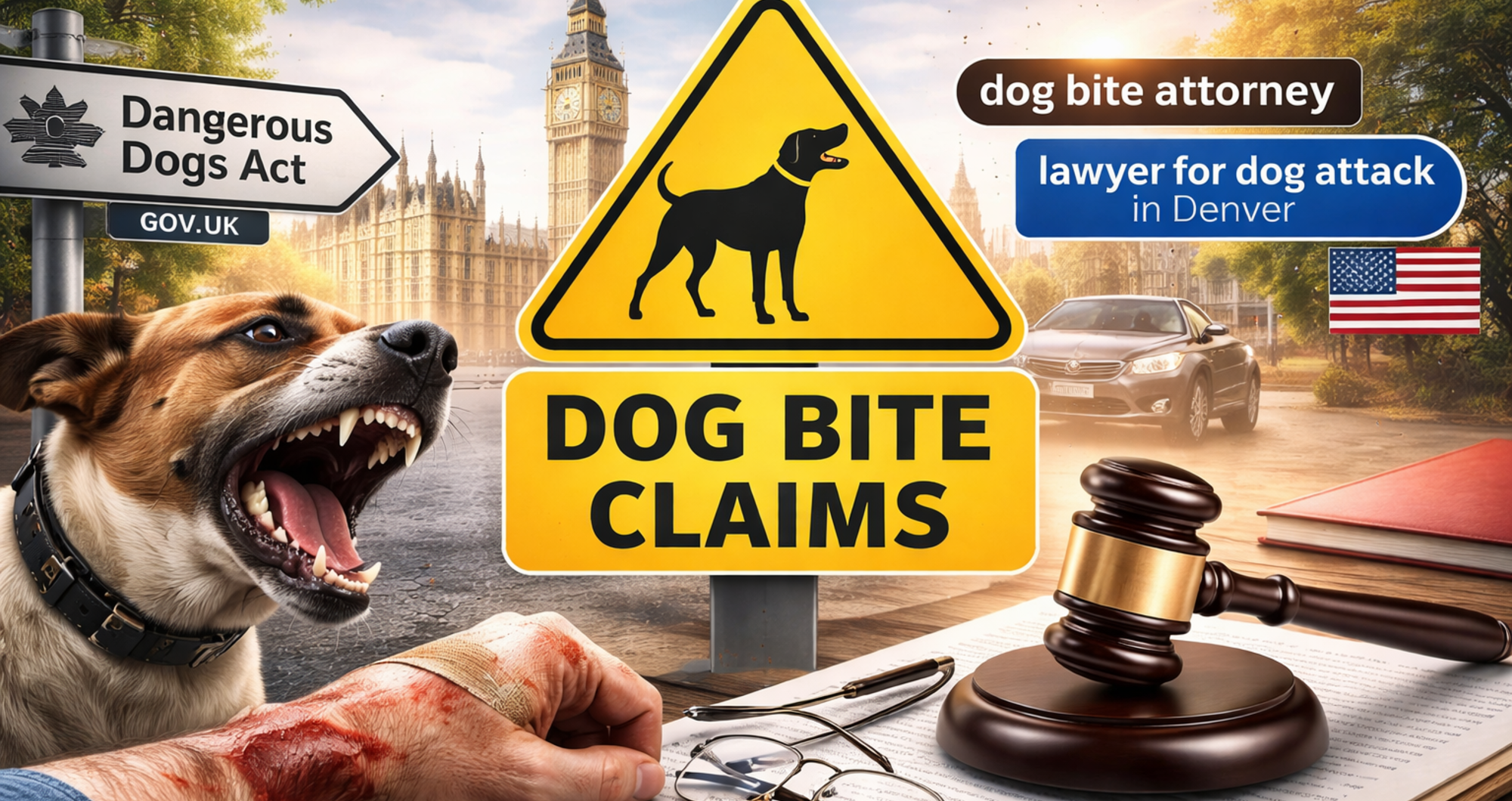
Legal approaches to dog bite incidents differ internationally. In the United States, individuals may seek assistance from a dog bite attorney or a lawyer for dog attack in Denver, reflecting state-based legal systems and region-specific terminology.
In contrast, dog bite claims in the UK are handled under national legislation rather than local or state frameworks. Claims are generally assessed using established personal injury principles, without the use of region-specific legal titles.
Compensation Considerations in the UK
Compensation in dog bite cases may account for medical expenses, loss of earnings, emotional distress, and the impact of any lasting injury or scarring. Each element is evaluated based on available evidence and the individual circumstances of the case.
In England and Wales, claims are typically resolved through negotiation or civil proceedings if necessary, with reference to legal guidelines and previous case outcomes.
Time Limits for Bringing a Claim
UK law sets specific time limits for personal injury claims, including those involving dog bites. In most cases, claims must be initiated within three years of the incident. Failing to act within this timeframe may affect eligibility for compensation.
Awareness of these deadlines is important, as delays can limit available legal options.
When Cases Proceed to Court
While many dog bite claims are resolved without formal court proceedings, some cases may require litigation if disputes arise regarding responsibility or compensation value. In such situations, evidence presentation and legal argumentation play a key role in determining outcomes.
The possibility of court proceedings often encourages early resolution through negotiation.
Conclusion
Dog bite incidents are addressed differently across legal systems, but in the UK they are governed by national legislation and personal injury law. Understanding how liability is assessed, what evidence is required, and how compensation is evaluated can help individuals better navigate the aftermath of an incident. While terminology and legal processes vary internationally, the UK framework focuses on responsibility, injury impact, and fair resolution based on established legal principles.