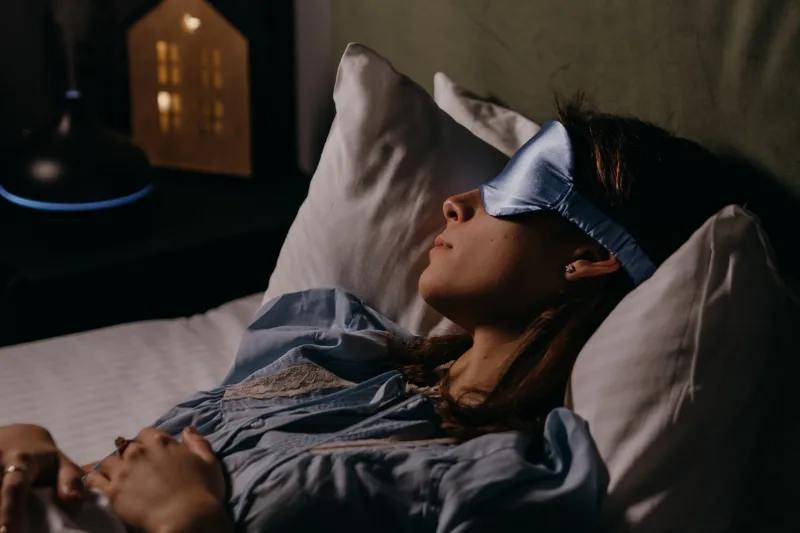

Visualise sleep apnoea as that inconsiderate guest who keeps disturbing your restful sleep, leaving you feeling groggy and irritated the next day. This is a condition where one’s breathing patterns are disrupted several times during sleep and may have serious effects on one’s health and general well-being. As interesting as a lab-based sleep study might sound, home sleep apnoea tests provide a more convenient and comfortable alternative.
But how does this test work, and can it be trusted to catch those elusive night-time breathing disruptions with any kind of accuracy? Let’s first understand core sleep. Core sleep is the foundation of restorative rest; it’s where the body and mind repair and rejuvenate, making every waking moment more vibrant and clear. The fundamentals of home sleep apnoea testing are designed to help one understand the effectiveness and practicality of the process.
Understanding the Basics

A home sleep apnoea test, also called a home sleep test, is a method designed to diagnose obstructive sleep apnoea from the comfort of your own bed, without the need to visit a sleep clinic.
Testing Equipment
Most home sleep apnoea tests require a small, portable device that you will wear overnight. This device contains several sensors to monitor various physiological health parameters, including:
- Breathing patterns: It records the frequency and depth of your breathing.
- Heart rate: It monitors your heart rate to check if breathing irregularities disrupt it.
- Blood Oxygen Level: A pulse oximeter, often attached to your finger, measures the oxygen level in your blood.
- Airflow: Sensors are used to assess the flow of air through your airways.
This equipment can be thought of as a portable sleep laboratory that you use right in your bedroom, minus the white coats and sterile environment.
The Process: 3 Steps
- Preparation: Your healthcare professional will send home the device, which will measure the airflow through your nose, oxygen saturation in your blood, and the effort of breathing via a band around your chest. It is relatively easy to set up and use.
- Testing: You will go to sleep with the device on. The sensors will detect and store your breathing patterns, heart rate, oxygen saturation, and airflow. This information can reveal whether you have disturbances in breathing, how often these interruptions happen, and how they affect your blood oxygen levels.
- Data Analysis: After the test, you return the device to your doctor. The healthcare professional will analyse the recorded data to diagnose the severity of the situation. The analysis includes how often your breathing stops, how long it stops for, and how low oxygen levels in your blood drop during these periods.
Various research studies support the effectiveness of home sleep apnoea tests. In this regard, the American Academy of Sleep Medicine has validated these tests in diagnosing moderate to severe obstructive sleep apnoea. A study published in the American Journal of Respiratory and Critical Care Medicine demonstrated that home sleep tests have an 81% diagnostic accuracy compared to in-lab polysomnography – a comprehensive sleep study done in a sleep clinic. This level of accuracy makes home tests a viable alternative for many with symptoms of sleep apnoea.
Pros
- Convenience: One of the main benefits of home sleep apnoea tests is the convenience. You get to sleep in your own bed, which may help reduce the discomfort and unfamiliarity that can be associated with sleep clinics.
- Affordability: Home sleep tests are usually less expensive compared to those performed in a laboratory. This could make the tests more accessible to everyone concerned about the cost of sleep diagnostics.
- Comfort: Testing in your own environment provides familiar surroundings, helping you feel more relaxed and allowing for sleep that is closer to your normal patterns during the test.
Cons
However, the scope of these tests is somewhat limited. Most home sleep tests are designed to monitor obstructive sleep apnoea only and may be ineffective at diagnosing central sleep apnoea or other complex sleep disorders. In central sleep apnoea, the brain fails to send proper signals to control breathing, requiring a different diagnostic approach.
- Precision: Although home sleep tests are valid, they can miss milder forms of sleep apnoea and other subtle sleep issues. Further investigation, possibly through an in-laboratory sleep study, may be recommended for a more comprehensive understanding of sleep health.
- Technical issues: Some people may encounter issues such as faulty sensors or difficulties placing the device correctly, which could affect the accuracy of the results.
Home sleep apnoea testing is a more comfortable and less invasive alternative to traditional in-lab sleep studies. If symptoms such as loud snoring, excessive daytime sleepiness, or frequent night-time awakenings persist, a home sleep test can be a practical first step in evaluating your condition and guiding you towards better sleep.
Although it may not capture every detail of your sleep pattern, it provides valuable insight into your breathing during sleep and can help determine whether further investigation is needed. Not having to wake up in the middle of the night, worried because you can’t breathe properly, is worth the time and hassle. Even if it means spending at least one night with a small piece of testing equipment next to you.