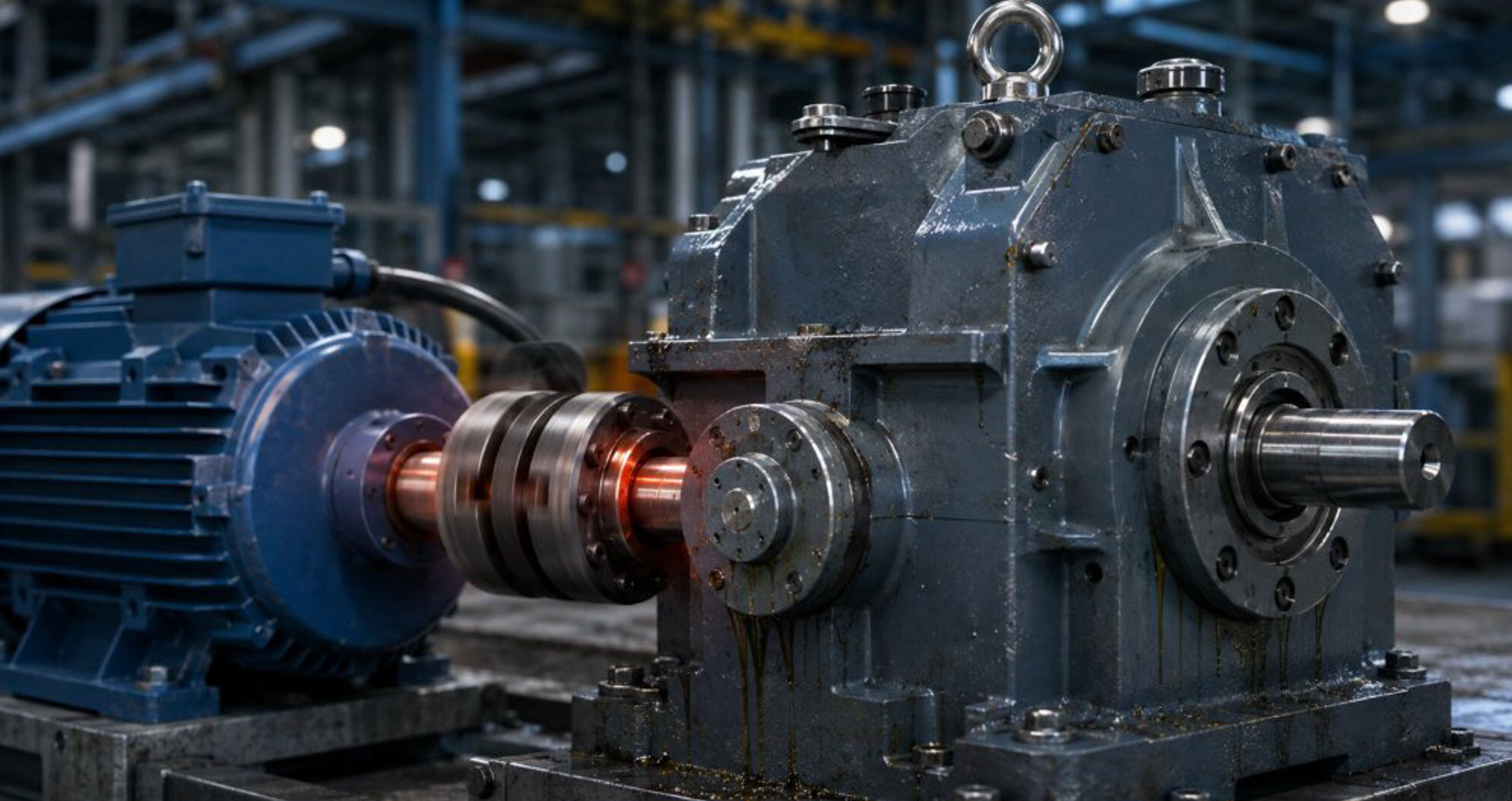

In heavy-duty manufacturing environments, even the most durable machinery can fail prematurely when alignment issues are ignored. One of the most affected components is the industrial gearbox. Designed to transfer torque, regulate speed, and handle demanding operating conditions, gearboxes rely heavily on precision alignment to function efficiently. When shafts, couplings, bearings, or motors become misaligned, the damage is gradual but severe.
From increased vibration and overheating to bearing wear and gear tooth failure, misalignment silently shortens the lifespan of machinery across industries. Understanding how this process happens is critical for maintenance teams, plant engineers, and operators who want to maximise equipment reliability and reduce costly downtime.
Understanding Gearbox Alignment
An industrial gearbox works by transmitting mechanical power between rotating shafts. For this process to occur efficiently, the gearbox and connected equipment must remain precisely aligned. Alignment refers to the correct positioning of shafts so that rotational forces move smoothly without excessive stress.
There are two primary types of misalignment:
- Angular Misalignment – Shafts meet at an angle instead of remaining parallel.
- Parallel Misalignment – Shafts remain parallel but are offset from each other.
In real-world operations, most alignment issues involve a combination of both.
Even small alignment deviations can create substantial mechanical stress over time. In high-torque applications involving conveyors, crushers, mixers, pumps, compressors, and heavy industrial drives, the effects become amplified.
Why Misalignment Happens
Misalignment rarely occurs overnight. It usually develops gradually due to operational and environmental conditions.
Common causes include:
- Improper installation
- Foundation settling
- Thermal expansion
- Pipe strain
- Excessive vibration
- Worn bearings or couplings
- Poor maintenance practices
- Shaft movement during operation
Many facilities install an industrial gearbox correctly initially but fail to account for dynamic operating conditions that change alignment over time.
The Early Warning Signs
Misalignment typically begins with subtle symptoms that operators may overlook.
Some of the earliest indicators include:
- Increased vibration levels
- Elevated operating temperatures
- Unusual noise
- Oil leakage around seals
- Premature coupling wear
- Higher energy consumption
These symptoms often appear gradually, making them difficult to detect without condition monitoring systems or routine vibration analysis.
Unfortunately, by the time visible damage occurs, internal components may already be severely compromised.
Bearing Damage: The First Major Casualty
Bearings are often the first components affected by gearbox misalignment.
When shafts are not properly aligned, bearings experience uneven loading. Instead of distributing forces evenly across rolling elements, concentrated stress develops in localised areas. Over time, this leads to:
- Surface fatigue
- Pitting
- Spalling
- Excessive heat generation
- Lubrication breakdown
As bearing wear accelerates, shaft movement increases further, worsening the misalignment and creating a destructive cycle.
In many industrial gearboxes, bearing failure becomes the root cause of secondary gear damage.
Gear Tooth Wear and Fatigue
Inside any industrial gearbox, gears are designed to mesh with highly controlled contact patterns. Misalignment disrupts these patterns, causing uneven tooth loading.
Instead of the load being distributed evenly across the entire tooth surface, stress concentrates along edges or isolated contact zones. This creates several damaging conditions:
Micropitting
Small fatigue cracks form on tooth surfaces due to repeated stress cycles.
Scuffing
Excess friction removes protective lubricant films, causing metal-to-metal contact.
Tooth Bending Fatigue
Repeated uneven loading weakens gear teeth until cracking or breakage occurs.
Excessive Backlash
Wear changes gear clearances, reducing transmission accuracy and efficiency.
Over time, these issues can lead to catastrophic gearbox failure requiring full rebuilds or replacement.
Increased Vibration and Resonance
Misalignment is one of the leading causes of vibration in rotating equipment systems.
As shafts rotate under improper alignment conditions, cyclical forces develop throughout the drivetrain. These forces create:
- Harmonic vibration
- Structural resonance
- Dynamic instability
- Coupling oscillation
Excessive vibration does not only damages the industrial gearbox itself. It also impacts surrounding components such as motors, pumps, support frames, and connected machinery.
Persistent vibration loosens fasteners, damages seals, accelerates fatigue, and increases maintenance requirements across the entire system.
Lubrication Breakdown
Lubrication is critical for protecting internal gearbox components from friction and heat. Misalignment significantly compromises lubricant performance.
Uneven loading increases operating temperatures, which affects lubricant viscosity and film strength. Once lubrication films weaken, metal-to-metal contact begins to occur between gears and bearings.
Consequences include:
- Oxidation of gearbox oil
- Contamination buildup
- Reduced lubricant lifespan
- Increased friction losses
- Accelerated wear rates
In severe cases, overheating can carbonise lubricants and permanently damage internal components.
Seal Failure and Oil Leaks
Misaligned shafts place additional radial and axial forces on gearbox seals. Over time, this leads to seal deformation and premature wear.
Once seals fail, contaminants such as dust, moisture, and debris enter the gearbox housing while lubricant escapes.
Contaminated lubrication rapidly accelerates internal wear and corrosion. In industries with harsh operating conditions, such as mining, cement, steel, or aggregate processing, contamination-related failures can occur very quickly.
Energy Efficiency Losses
A poorly aligned industrial gearbox requires more power to operate because friction and mechanical resistance increase.
This creates several operational inefficiencies:
- Higher motor current draw
- Increased power consumption
- Reduced torque efficiency
- Heat-related energy losses
For facilities operating large industrial systems continuously, even minor efficiency losses can translate into significant energy costs over time.
Proper alignment not only protects machinery but also improves overall plant efficiency.
Thermal Expansion Challenges
One of the most overlooked causes of gearbox misalignment is thermal growth.
As the equipment operates, heat causes components to expand. Motors, shafts, foundations, and gearbox housings may all expand at different rates.
If alignment is performed only under cold conditions, equipment may become significantly misaligned once it reaches operating temperature.
Advanced alignment procedures often account for thermal offsets to ensure proper alignment during actual operating conditions.
This is particularly important for large industrial gearboxes used in continuous-duty applications.
The Importance of Precision Alignment Tools
Traditional straight-edge alignment methods are no longer sufficient for modern industrial systems.
Today, facilities increasingly rely on advanced alignment technologies such as:
- Laser shaft alignment systems
- Dial indicators
- Vibration monitoring equipment
- Thermal imaging systems
- Predictive maintenance software
Laser alignment tools, in particular, provide extremely accurate measurements that help reduce installation errors and improve gearbox lifespan.
These technologies also help identify soft foot conditions, shaft runout, and dynamic movement issues before serious damage develops.
Preventive Maintenance Strategies
Preventing gearbox damage from misalignment requires a proactive maintenance approach.
Key best practices include:
Routine Alignment Checks
Regular inspections help detect alignment drift before failures occur.
Vibration Analysis
Monitoring vibration signatures allows technicians to identify early-stage problems.
Lubrication Monitoring
Oil analysis can reveal wear particles, contamination, and overheating.
Thermal Inspections
Infrared imaging helps detect abnormal heat patterns associated with misalignment.
Foundation Inspection
Stable mounting surfaces are essential for maintaining long-term alignment.
Proper Installation Procedures
Accurate installation is the foundation of gearbox reliability.
Facilities that implement predictive maintenance programs typically experience significantly lower failure rates and reduced downtime.
Why Universal Gearbox Systems Still Require Accurate Alignment
Many operators assume that a universal gearbox design can compensate for alignment issues automatically. While flexible coupling systems and adaptable mounting configurations help reduce stress, they are not substitutes for proper alignment.
A universal gearbox may tolerate minor movement better than rigid systems, but continuous misalignment still causes:
- Bearing overload
- Coupling fatigue
- Internal gear wear
- Seal damage
- Efficiency losses
No gearbox design is immune to long-term misalignment damage.
The Financial Cost of Ignoring Misalignment
The true cost of gearbox misalignment extends far beyond replacement parts.
Unplanned failures can result in:
- Production downtime
- Emergency repair expenses
- Lost operational efficiency
- Secondary equipment damage
- Increased labor costs
- Safety risks
For industries operating around-the-clock production lines, even a few hours of downtime can cost thousands or millions of dollars.
Investing in proper alignment practices is far more cost-effective than dealing with catastrophic gearbox failures.
Conclusion
Misalignment is one of the most common yet preventable causes of industrial drivetrain failure. Over time, even small alignment errors can severely damage an industrial gearbox, leading to bearing wear, gear fatigue, overheating, lubrication breakdown, and costly downtime.
Modern facilities cannot afford to treat alignment as a one-time installation task. Continuous monitoring, precision maintenance, and predictive diagnostics are essential for protecting industrial gearboxes and maximising equipment lifespan.
Whether operating a standard drive system or a universal gearbox, maintaining precise alignment is critical for efficiency, reliability, and long-term operational success.