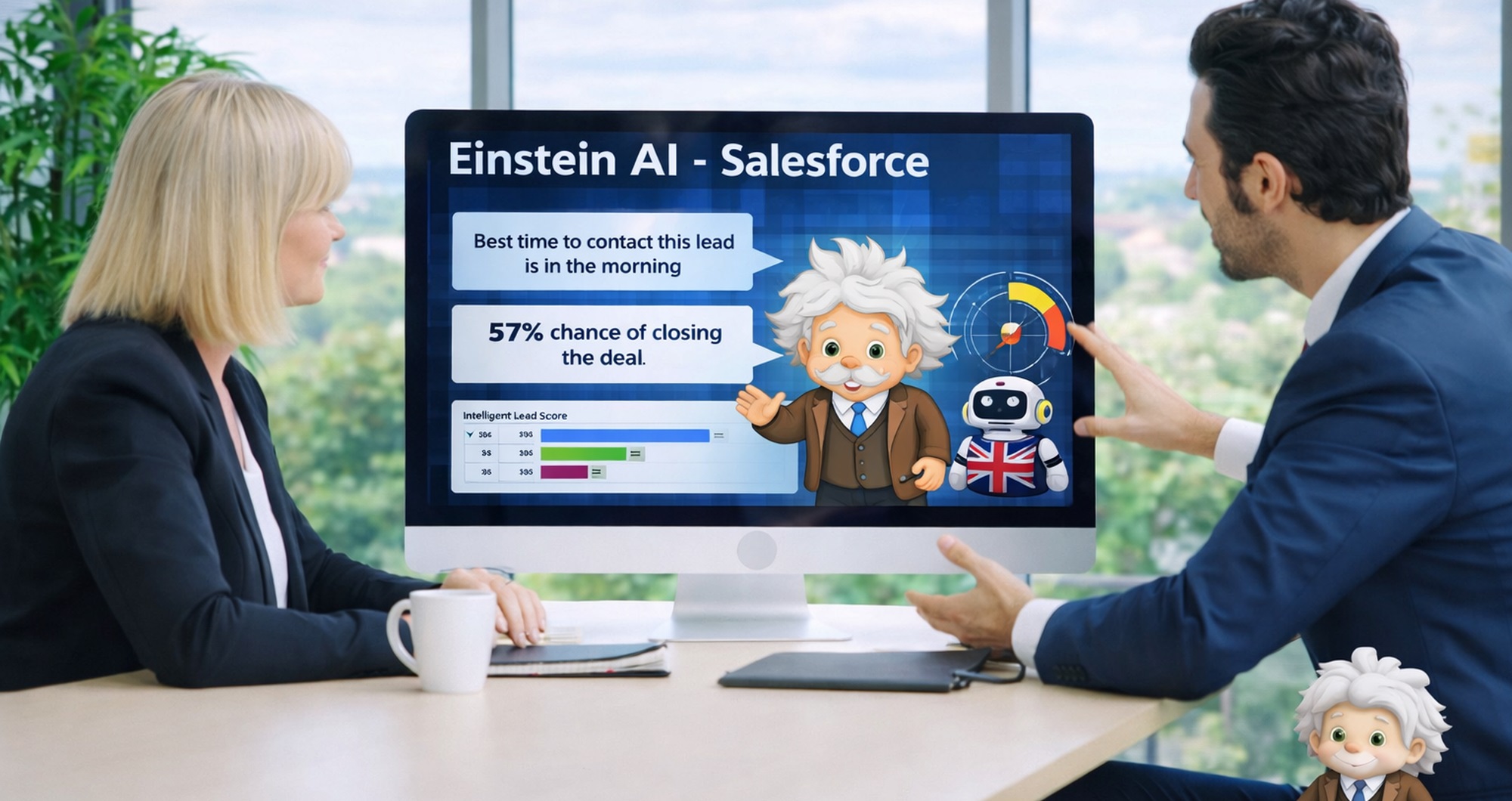

CRM in the UK is moving into a new phase. It is no longer enough for businesses to collect customer data, build reports, and react after problems appear. Today, companies want faster insight, better forecasting, and smarter action built directly into the systems their teams already use. That is where Salesforce Einstein AI is starting to make a real difference.
Instead of working like a separate analytics add-on, Einstein brings AI into the daily flow of customer relationship management. It can help sales teams prioritise opportunities, support teams respond with more context, and marketing teams make faster, more relevant decisions. For many businesses, working with a trusted Salesforce development company is now becoming part of that shift, especially when they want AI tools that fit their existing CRM setup and business goals.
The bigger story is not just automation. It is intelligence inside the CRM itself. As AI becomes more embedded in business workflows, Salesforce Einstein is changing how UK businesses use customer data, how teams make decisions, and how CRM supports growth in a more competitive market.
What is Salesforce Einstein AI?
Salesforce Einstein AI is best understood as the intelligence layer inside Salesforce rather than a single standalone feature. It brings predictive AI, generative AI, and now more autonomous AI capabilities into the CRM environment, so teams can move from simply storing customer information to actually using that information to guide decisions, prioritise actions, and reduce routine work. In practical terms, that means the CRM starts doing more than recording activity. It begins helping businesses interpret what is happening and what should happen next.
That shift matters because traditional CRM systems have often been strong at organisation but weaker at real-time support. Salesforce’s own description of AI CRM makes that distinction clear. A standard CRM mainly stores and manages data, while an AI CRM uses that same data to automate tasks, generate recommendations, personalise engagement, and improve sales, service, and marketing outcomes. For UK businesses, that changes CRM from a back-office system into a more active decision-support layer across the customer journey.
Why UK Businesses Are Taking Notice
UK businesses are paying attention to Salesforce Einstein AI because CRM is no longer just about storing customer data. Companies now want tools that help teams work faster, make better decisions, and improve customer experience. Einstein supports that shift by bringing AI directly into sales, service, and marketing workflows.
For many businesses, the appeal is practical. Instead of adding another separate tool, Einstein works inside the CRM system teams already use. That makes it easier to turn customer data into useful action. In the UK, where businesses are under pressure to improve efficiency and stay competitive, Salesforce Einstein AI is more than just a trend.
How Einstein AI Is Making CRM More Actionable
Salesforce Einstein AI is making CRM more useful for UK businesses by turning customer data into faster insights and actions. Instead of only storing information, it helps teams understand what to do next, whether that means supporting sales decisions, improving customer service, or making marketing more relevant. As a result, CRM becomes a more active tool in daily business work, not just a place to manage records.
How Einstein AI Is Supporting Sales Teams
For sales teams, Salesforce Einstein AI helps reduce guesswork and save time. It can highlight stronger leads, surface useful customer insights, and support faster follow-up. That matters for UK businesses because sales teams are under pressure to work more efficiently while still keeping the customer experience personal. Instead of spending too much time on manual tasks, teams can focus more on the deals and relationships that matter most.
What UK Businesses Still Need to Get Right
Even with the advantages, there are still some areas businesses need to handle carefully. These include:
- Clear AI strategy
- Staff training
- System integration
- Data quality
- Responsible use of automation
- Human oversight
These points matter because AI works best when it supports a clear business goal. If the setup is weak or the strategy is unclear, the results can feel limited. Businesses may have the technology, but they may still struggle to use it well. That is why planning and internal readiness matter just as much as the tool itself.
How Einstein AI Is Improving Customer Service
In customer service, Einstein AI makes CRM more responsive. It can help answer common enquiries, summarise similar cases, recommend next steps, and support faster issue handling. For UK businesses, that matters because customer service is no longer just about replying on time. It is about giving clearer support with less delay and less pressure on agents.
How Einstein AI Is Helping Marketing Teams
Einstein AI is also making marketing more practical inside CRM. It can support campaign planning, generate promotional content, and help teams create more relevant messaging based on customer behaviour and business goals. That means businesses can move away from broad, generic outreach and use CRM data in a more focused way.
Why Trust and Data Use Matter
As CRM becomes more intelligent, trust becomes more important. Salesforce positions its AI CRM around secure customer and business data, with the Einstein Trust Layer focused on safety, accuracy, monitoring, and auditing. That matters because businesses do not just need faster outputs. They need AI support that feels reliable, controlled, and suitable for real customer-facing work.
Challenges UK Businesses May Face
Even with the benefits, UK businesses may still face some practical challenges. These usually include:
- Skills gap
- Integration with existing systems
- Staff training
- Cost concerns
- Unclear AI strategy
- Overreliance on automation
What This Means for the Future of CRM
The wider shift is clear. CRM is moving beyond record-keeping and becoming a more active business tool. Salesforce’s own AI CRM positioning is built around automation, predictive insight, and personalised action inside sales, service, and marketing. For UK businesses, that means the future of CRM is likely to be more intelligent, more connected, and more useful in day-to-day decisions.
Conclusion
Salesforce Einstein AI is changing CRM for UK businesses by making it more practical, more responsive, and more action-led. It is helping teams use customer data in a smarter way across sales, service, and marketing, while also making trust and implementation more important than before. The businesses that benefit most will be the ones that use AI to improve real customer work, not just add another feature to their system.