
Living in a small London flat often means making the most of every square metre. Between compact kitchens, narrow hallways, tight bedrooms and living rooms that double as home offices, limited space can make even a well-designed property feel cramped. However, the right lighting can help a room feel more open without the expense or disruption of major renovations.
Instead of relying on a single ceiling light, you could pair different light sources to create depth and make awkward areas feel less enclosed. Whether it’s choosing different bulbs or illuminating a neglected space, a few considered changes can transform how a small home looks and feels.
Natural Light, And How You Can Make The Most Of It
Before adding new fittings, consider how to make the best use of the daylight already available. Heavy curtains and bulky window dressings can block light from entering a room, making it appear darker than necessary.
Where privacy allows, choose lighter curtains or blinds that you can pull fully away from the window during the day. Keeping windowsills relatively clear also helps prevent valuable daylight from being obstructed.
Mirrors can make a difference like you wouldn’t expect, too. Placing one opposite or beside a window can help reflect daylight further into the room, creating a greater sense of brightness. In a narrow living room, a large mirror can also introduce the impression of additional depth.
Artificial lighting becomes particularly important in flats with limited natural light, including basement properties and rooms that face other buildings. Choosing fittings that complement daylight can help maintain a consistent feel as the evening draws in.
Layer Your Lighting Instead of Relying On One Bulb
A single bright ceiling light might illuminate an entire room, but it can leave corners gloomy and create harsh shadows, so don’t rely only on the main fitting. Using several light sources at different heights helps distribute light more evenly, giving a compact space a more balanced look for different times of day. It’s often best to start with ambient lighting where it is needed. A desk lamp can make a small work area more practical, while a wall-mounted reading light frees up space on a bedside table.
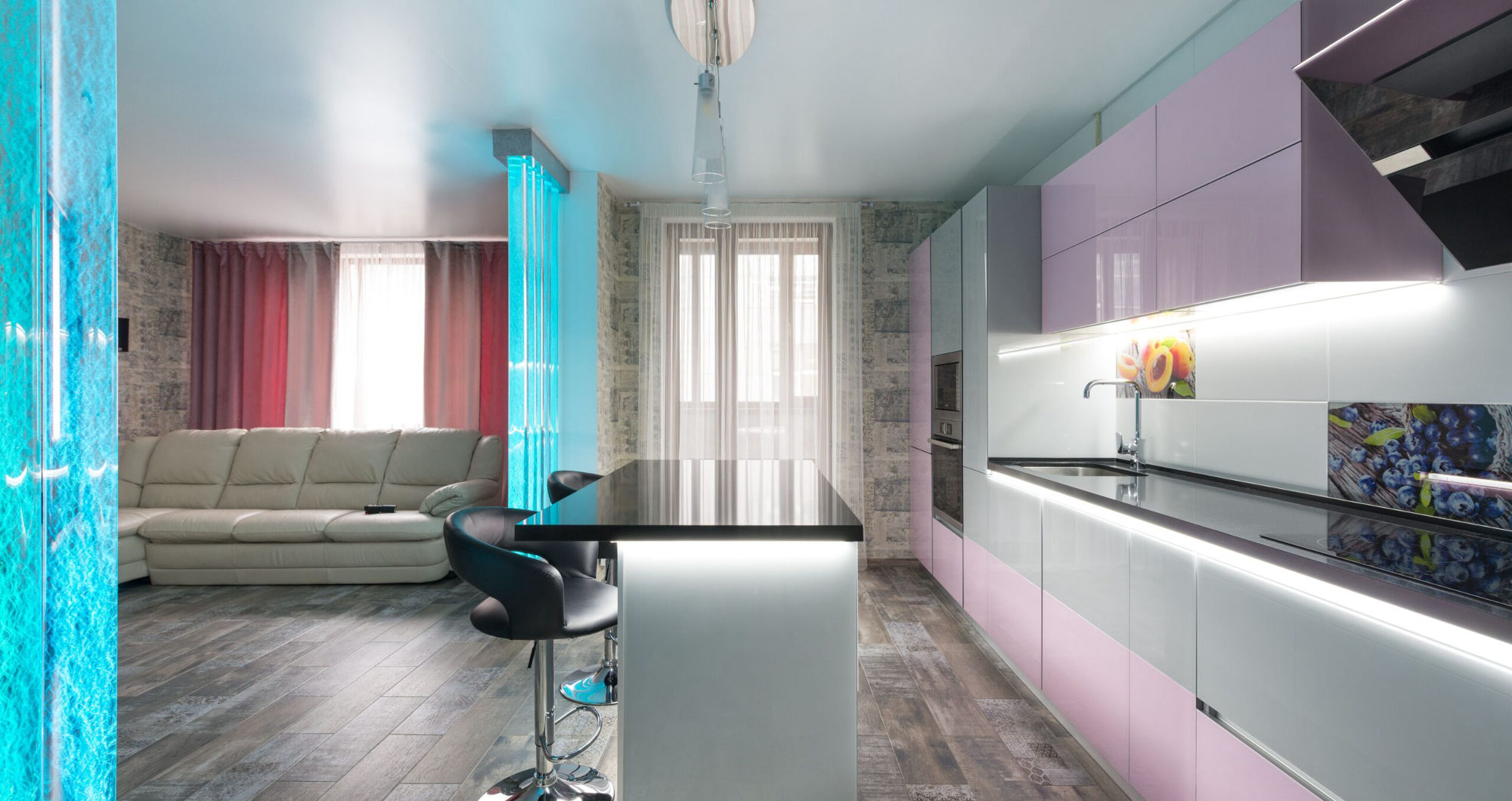
Accent lighting can introduce another layer by drawing attention to shelving, artwork or architectural details, while slim LED lights fitted beneath kitchen cupboards can illuminate worktops without taking up valuable surface space. Combining different light sources creates a room that feels bright without flooding every corner with the same intensity, letting you adapt the atmosphere to different activities without lighting the entire flat unnecessarily.
Choose Bulbs That Suit The Room
Bulb choice can influence how spacious a room feels, particularly where natural light is limited. Cool, bright lighting works well in kitchens and workspaces, while warmer tones create a more relaxed atmosphere in living rooms and bedrooms when winding down.
LED lights offer a practical option for smaller homes because they are available in a wide range of brightness levels and colour temperatures. They also use less electricity than traditional incandescent bulbs, making them a worthwhile choice for households looking to control energy costs.
When comparing bulbs, focus on lumens rather than wattage alone. Lumens indicate how much light a bulb produces, while wattage measures its electricity consumption. This information makes it easier to choose a suitable brightness level without automatically opting for the highest-powered bulb.
Colour temperature is worth considering alongside brightness. Using bulbs with similar tones in adjoining areas can help a small flat feel more cohesive, particularly where the kitchen and living room share an open-plan layout.
Use Wall Lights To Free Up Floor Space
Floor lamps can be useful and look like a good addition in a larger home to fill a void, but their bases can become obstacles in rooms where furniture is already tightly arranged. Wall-mounted fittings offer an alternative to provide illumination without taking up valuable floor space.
This works well in narrow hallways, where a well-placed wall light brightens the route through the property without adding clutter. In bedrooms, wall-mounted reading lights can replace bedside lamps and come in a range of colours while freeing up space for everyday essentials.
Give Dark Corners A Purpose
Corners that receive little daylight can make a room appear smaller, especially when they become catch-all spaces for bags, laundry or unused furniture. Improving the lighting in these areas can help them feel more connected to the rest of the room.
A slim floor lamp, a small table lamp or discreet lighting beneath shelves can bring a neglected corner into use. In a compact living room, this might mean creating a comfortable reading spot rather than leaving the area in shadow.
Lighting can also help define separate zones in an open-plan flat. A pendant above a dining table or a lamp beside a sofa creates a visual distinction between activities without requiring a partition that makes the room feel enclosed.
Keep Small Spaces Bright Without Overcrowding Them
Lighting works best when it complements the layout. Oversized lampshades, elaborate fittings and too many decorative lights can make a compact room feel cluttered, even when the illumination itself is effective.
Choose fittings that suit the room’s proportions, and position them carefully to avoid glare. This is especially key when watching TV or working. Dimmers can be useful in living spaces, letting you adjust brightness throughout the day while affecting the overall mood, while timers and motion sensors may reduce unnecessary lighting in hallways.
It is also worth considering the practicalities of everyday use. Energy-efficient bulbs can reduce electricity consumption, while well-positioned task lighting ensures you don’t need to illuminate an entire room for a simple activity.
Making a small London flat feel bigger doesn’t necessarily require more furniture, expensive renovations, or structural changes. By making better use of daylight, layering light sources, and choosing suitable fittings, you can create a home that feels brighter, more comfortable, and better suited to everyday life.
Feature image by Max Vakhtbovych on Pexels