

Indonesia has reported economic growth of 5.45% for the first half of 2026, as ministers press ahead with household support for the final quarter and prepare further measures for the start of next year.
The figure was presented at a cabinet meeting in Jakarta on 21 October. It combines growth recorded in the first two quarters of the year, rather than describing a single quarter. The government has linked the result to stronger investment performance and expansion in productive sectors, while setting out measures intended to protect purchasing power and sustain activity through the end of 2026.
A first-half result
The first-half rate brings together a 5.61% year-on-year expansion in January to March and 5.29% growth in April to June. The second quarter also represented a 3.73% rise from the preceding quarter. Keeping those measures separate is important: the 5.45% headline is a cumulative first-half comparison, not the April-to-June rate alone and not a forecast for the whole year.
Other indicators presented alongside the growth update included a manufacturing purchasing managers’ index of 52.4, consumer confidence of 118.1 and bank lending growth of 13.65%. Unemployment was put at 4.65%, while the Gini ratio, a measure of income distribution, was given as 0.368. The state-budget deficit was reported at 1.24% of gross domestic product.
Those readings offer a snapshot of conditions rather than a guarantee about what follows. Output, employment, lending and household confidence can move in different directions, and the effects of policy support depend on how it is delivered and how families and businesses respond.
Support focused on purchasing power
The fourth-quarter package combines food, wage and transport measures. A programme described as “one person, one bank account” has a budget of Rp1.28 trillion. Rice assistance is set at 10 kilograms a month for 33.24 million beneficiary families, with Rp17.54 trillion allocated to the scheme.
A wage subsidy of Rp300,000 a month for three months is intended to cover 13.3 million workers, with a budget of Rp11.97 trillion. The measures are designed to support household spending, but an announced allocation and a payment to an eligible person are not the same thing. The practical effect will depend on eligibility, distribution and timing.
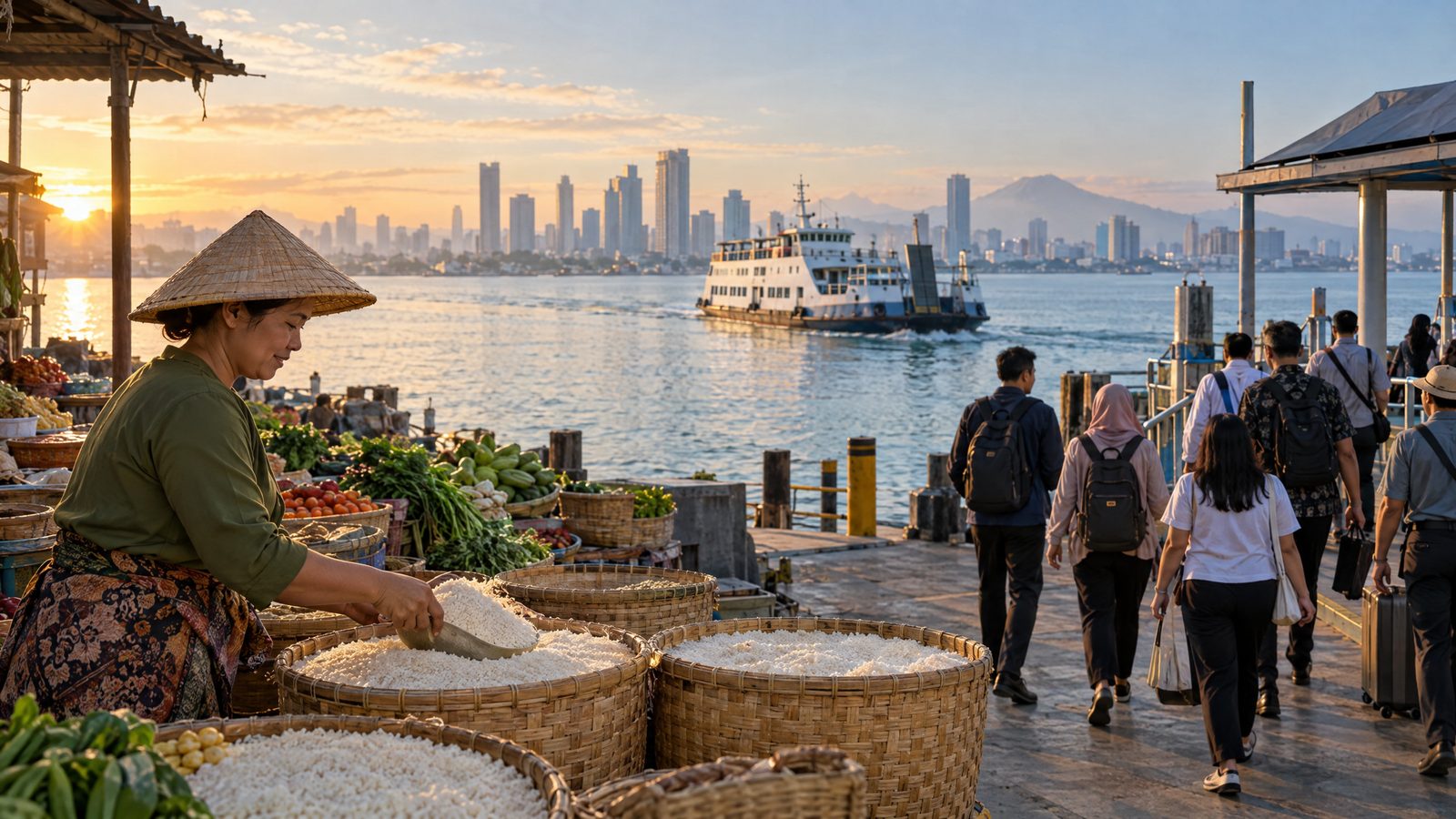
There is also a transport element for the Christmas and New Year period. The planned package has a budget of about Rp883.4 billion and is expected to reach roughly 6.6 million people. It includes a 30% discount on ferry tickets and special port-service pricing. This is seasonal assistance intended to make travel easier during a busy period, rather than a permanent change to transport costs.
What is being prepared for 2027
Ministers are also preparing a separate group of programmes expected to start in January 2027. These include a national internship programme for 150,000 participants and vocational training aimed at 300,000 people. The government is considering income-tax support for employees earning up to Rp10 million a month, as well as a review of the Rp54 million non-taxable income threshold in light of inflation and minimum-wage levels.
Housing and employment protection are part of the proposed next steps. The plans include continuing government-borne value-added-tax support for specified homes, contribution relief connected to job-loss and death insurance, enhanced employment social-security benefits and support for subsidised mortgages. These are preparations and policy intentions, not evidence that the measures have already taken effect or produced results.
The distinction matters as Indonesia moves from a first-half growth reading into the final months of the year. The 5.45% result is a recorded measure of earlier activity. The support package is a set of actions intended to influence the period ahead, while the January programmes remain subject to implementation. The next updates will show how far the assistance reaches its intended recipients and whether investment, consumption and jobs maintain the momentum described in the cabinet discussion.







