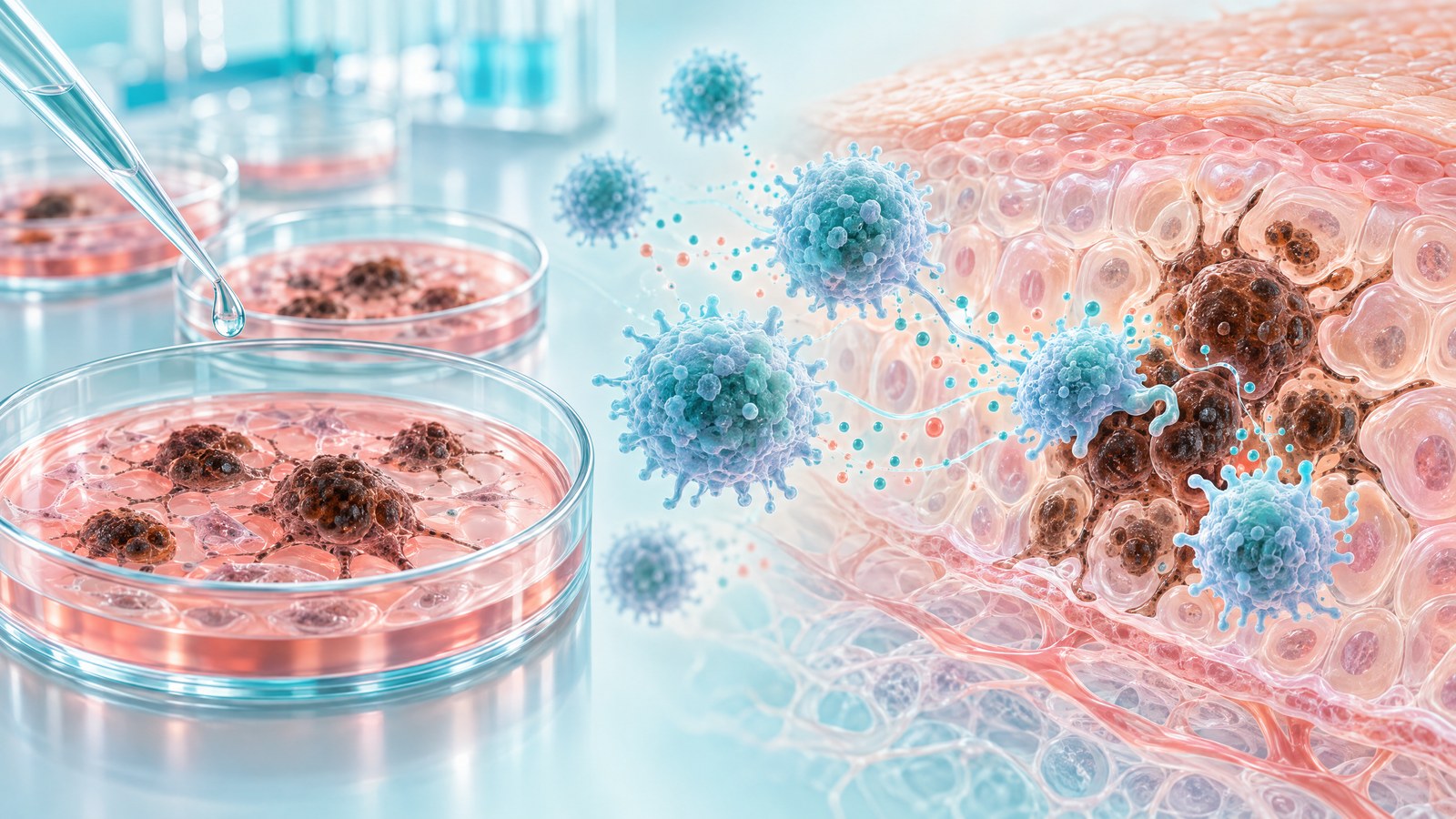

An international Phase 3 clinical trial has reported a 42 per cent lower risk of melanoma recurrence or death when an investigational personalised mRNA therapy, intismeran, was added to pembrolizumab after surgery. The finding concerns people at high risk of recurrence after their melanoma had been completely removed. It does not mean that the therapy prevents melanoma, is available for routine treatment or guarantees that an individual patient’s cancer will not return.
The reported results are scheduled for presentation on 24 October at an international oncology congress. They remain subject to scientific and regulatory scrutiny. The treatment cannot be made available in a country until the relevant regulator has granted approval.
How the trial was structured
The INTerpath-001 study enrolled 1,137 people with completely resected, high-risk stage IIB to IV melanoma at 157 sites internationally. Participants had not previously received systemic cancer treatment. The study compared intismeran plus pembrolizumab with pembrolizumab alone. Pembrolizumab is an immunotherapy that targets the PD-1 pathway, which can limit the ability of immune cells to attack cancer cells.
Participants were randomly assigned in a two-to-one ratio to the combination or to pembrolizumab alone. The planned combination course included intismeran every three weeks for up to nine doses and pembrolizumab every six weeks for up to nine cycles, with treatment lasting about a year unless the cancer returned, toxicity became unacceptable or the planned course ended. This design allows the result to be compared against the established immunotherapy rather than against no treatment.
The main measure was recurrence-free survival, meaning the time from randomisation until melanoma returned or the patient died from any cause. The trial also met a key measure covering distant metastasis-free survival. The reported 42 per cent figure is a relative reduction in risk compared with pembrolizumab alone. It is not a statement that 42 out of every 100 patients will avoid recurrence, and the available results summary does not provide an individual patient’s likelihood of benefit.
Why the treatment is personalised
Intismeran is made using a sample of each patient’s tumour. The process identifies tumour-specific mutations that can produce neoantigens, proteins that may help the immune system distinguish cancer cells from healthy tissue. The therapy uses synthetic mRNA encoding up to 34 selected neoantigens. Once given, the intended effect is to help immune cells recognise and respond to those tumour features.
This is why it is described as a therapeutic vaccine rather than a preventive vaccine. It is designed after a cancer diagnosis and is used after surgery in people whose disease has been removed but who remain at substantial risk of relapse. It is not an immunisation for healthy people and does not replace measures intended to reduce the risk of developing melanoma.
What remains to be established
The trial team reported that pembrolizumab side effects were not increased by adding intismeran. It described some vaccine-related effects, including injection-site pain, headache and chills, as transient and low grade. That is a report from this study population, not proof that the combination is suitable for every patient or free of longer-term risks.
The study continues to assess other outcomes, including overall survival, safety, tolerability and quality of life. Regulators will need to review the full evidence before deciding whether the combination can be used outside research settings. For now, the result is a significant comparative trial finding for a defined group of post-surgery melanoma patients, not a newly available treatment or a general cancer-prevention programme. People with questions about their own care should speak with their medical oncologist.