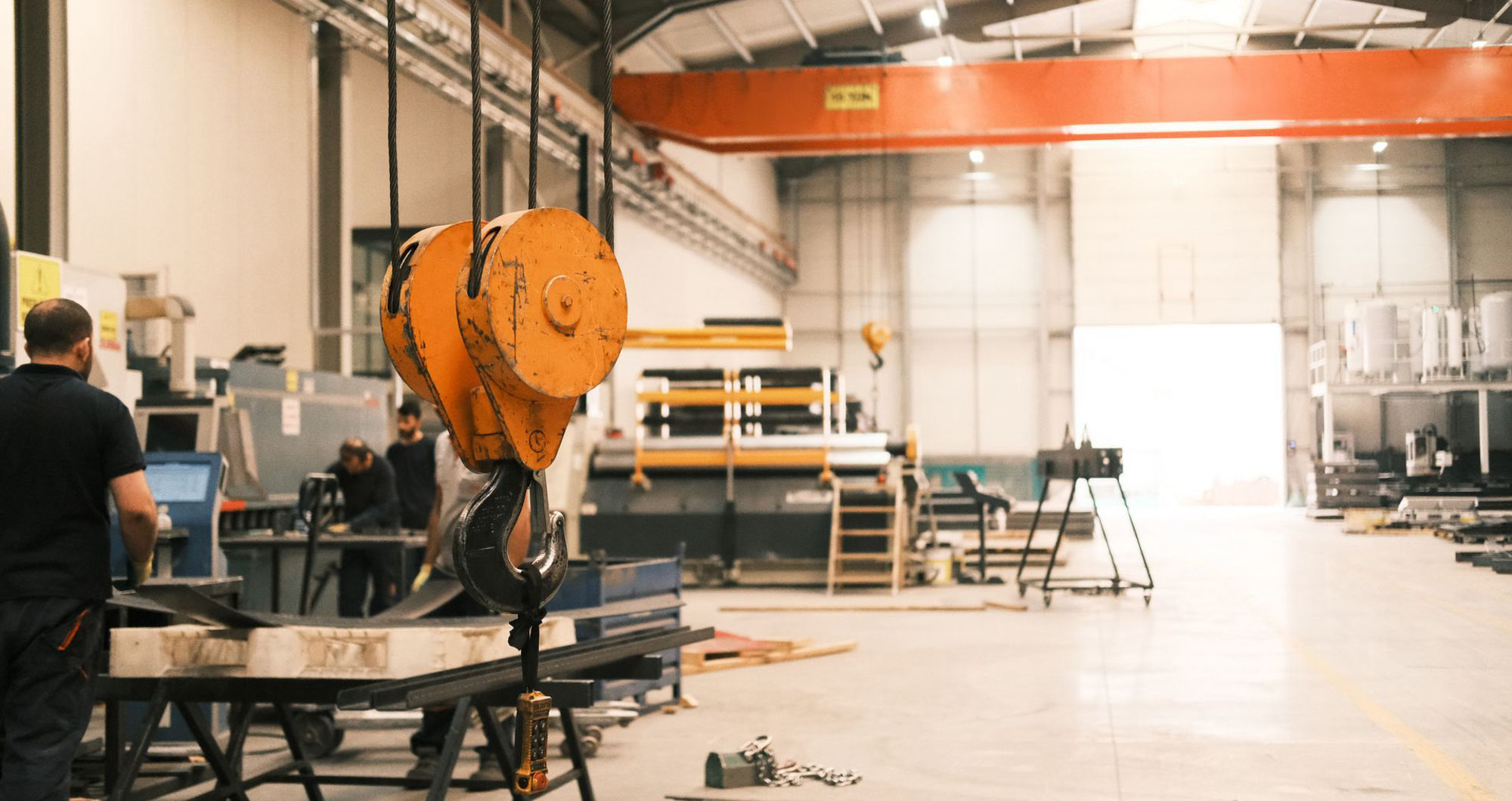

If you run a fabrication workshop, you may need to lift a welded frame from a bench, position a heavy gearbox for repair or move a steel plate into a cutting area. Even when the loads weigh roughly the same, their shape and lifting points affect the accessories you need. A hoist’s rated capacity is only one part of the decision.
When you replace worn lifting gear or equip a new production bay, check where the load will travel, how high it must rise and what will support the hoist. Those details help you choose equipment that works together rather than buying individual items that may not suit the job.
What Belongs in a Workshop Lifting Setup?
A hoist raises and lowers a load, while slings connect the load to the hoist hook. Shackles join suitable lifting points and attachments when needed. Beam clamps can provide fixed suspension points, and trolleys allow suitable hoists to travel along a beam. Each component has its own load rating and conditions of use.
Consider the difference between lifting a steel frame clear of a workbench and moving it across a production bay. The first task may only need a fixed lifting point. The second requires equipment that allows horizontal travel, along with enough clearance to move the load safely.
Lifting Hoists Direct supplies a range of lifting gear and hoists covering electric and manual hoists, lifting slings, shackles, beam clamps and trolleys. Looking at these components together when ordering helps you check whether the attachments, suspension arrangements and lifting capacities suit the work you have planned.
Choosing Between Manual and Powered Hoists
Manual chain blocks use a hand chain to raise and lower loads without an electrical supply. They can suit maintenance jobs, occasional lifting and work in areas where portable equipment is needed. Their rated capacities vary, so manual operation does not necessarily mean they are limited to light loads.
For repeated lifting during production, an electric chain hoist may be more practical. The motor does the lifting, reducing the physical effort required from the operator. You still need to check the hoist’s duty rating, which describes the operating demands it is designed to handle, as well as its lifting height, speed and power requirements.
Air hoists operate using compressed air. They may be suitable where a workshop already has an appropriate air supply, although the available pressure and airflow need checking against the manufacturer’s specifications. Wire rope hoists are another option for applications requiring particular load capacities, lifting heights or operating characteristics.
The mounting arrangement also affects your choice. A fixed hoist may work well over one workstation, while a suitable trolley-mounted model allows loads to move along a beam. Check the available headroom before ordering, since the hoist body, hook and attachments all occupy space.
Matching Slings to the Load
The sling carries the load between its lifting points and the hoist hook. Choosing one involves more than checking its stated capacity.
Webbing and round slings are often useful for finished components because their textile surfaces are less likely to leave marks. Sharp edges can damage them, though, so suitable protection and the manufacturer’s instructions need consideration. Chain slings can be better suited to rough steelwork, but their weight and contact with the load may be unsuitable for delicate surfaces.
Each sling has a working load limit (WLL), which states the load it is rated to carry under specified conditions. The permitted weight depends on how the sling is arranged. A straight lift, a basket hitch and a multi-leg arrangement can have different limits, even when the same sling material is used.
Sling angles deserve attention when lifting frames or other assemblies with widely spaced attachment points. As the angle between the legs of a multi-leg sling increases, so does the force on each leg. Safe lifting practices also involve checking the load’s centre of gravity and making sure the equipment’s rated capacity is suitable for the lift.
If the load has no suitable attachment points, the answer may be a different lifting accessory rather than a longer sling. A steel plate may require purpose-designed lifting clamps selected for the material, thickness and intended lifting direction.
Shackles, Lifting Points and the Supporting Beam
A shackle may be small compared with the hoist, but it still needs to withstand the forces placed on it. Check its working load limit, dimensions and permitted loading direction. A shackle that physically fits through a lifting eye is not necessarily suitable for that connection.
The same applies to eyebolts, hooks and other connecting hardware. Their ratings can depend on how the load acts on them, so the manufacturer’s instructions matter. General-purpose hardware without a suitable lifting rating should not replace equipment designed for the task.
The support above the hoist needs equal attention. The strength and stability of lifting equipment depend on the forces acting on the entire arrangement, not only the load itself. A beam trolley must fit the beam, and the supporting structure must withstand the forces imposed during lifting, taking account of the load, hoist and attachments.
If you are installing a new fixed lifting point or trolley system, have the supporting structure assessed by someone competent to determine its suitability. This is particularly relevant in older workshops where the available steelwork may not have been designed for lifting operations.
What Does LOLER Require?
In Great Britain, the Lifting Operations and Lifting Equipment Regulations 1998 (LOLER) apply to lifting equipment used at work, including the accessories used with it. Lifting operations must be properly planned by a competent person, appropriately supervised and carried out safely.
LOLER also requires thorough examinations at specified intervals. Under the usual schedule, lifting accessories such as slings and shackles must be examined at least every six months, while most other lifting equipment must be examined at least every twelve months. A written examination scheme prepared by a competent person may specify different intervals.
A thorough examination must be carried out by a competent person with practical and theoretical knowledge of the equipment. The findings must be recorded in a written report, and further examination may be needed after installation or an incident that could affect its safety.
These examinations do not replace routine checks or servicing. Operators may need to check for visible damage before use, while maintenance addresses wear and mechanical faults. A damaged sling or faulty hoist should not remain in use while waiting for its next scheduled examination.
Keep examination reports accessible and track when further checks are due. If a report identifies a defect that makes equipment unsafe, the necessary action should be taken before that equipment is used again.
What to Confirm Before Placing an Order
When contacting lifting equipment suppliers, describe the lifting task rather than asking only for a hoist of a particular capacity. The supplier will need information about the heaviest load, its dimensions, lifting points and the height it must reach.
Also explain how often the equipment will operate, whether the load needs to travel horizontally and what supporting structure is available. These details help establish whether you need a fixed or travelling hoist, which accessories are suitable and whether the installation requires further assessment.
Ask what instructions and conformity documents accompany the equipment, how inspections are arranged and what repair support is available. Lifting Hoists Direct provides servicing, inspections and repairs alongside equipment sales, which may be useful if you prefer to manage these requirements through one supplier.
A workshop moving steel assemblies throughout the day needs a different lifting setup from one occasionally raising a gearbox for repair. The hoist, slings, shackles and supporting structure all need to suit the loads and how they will be moved. Checking these details before ordering is easier than discovering that something does not fit once the equipment arrives.
Feature image by Pexels