
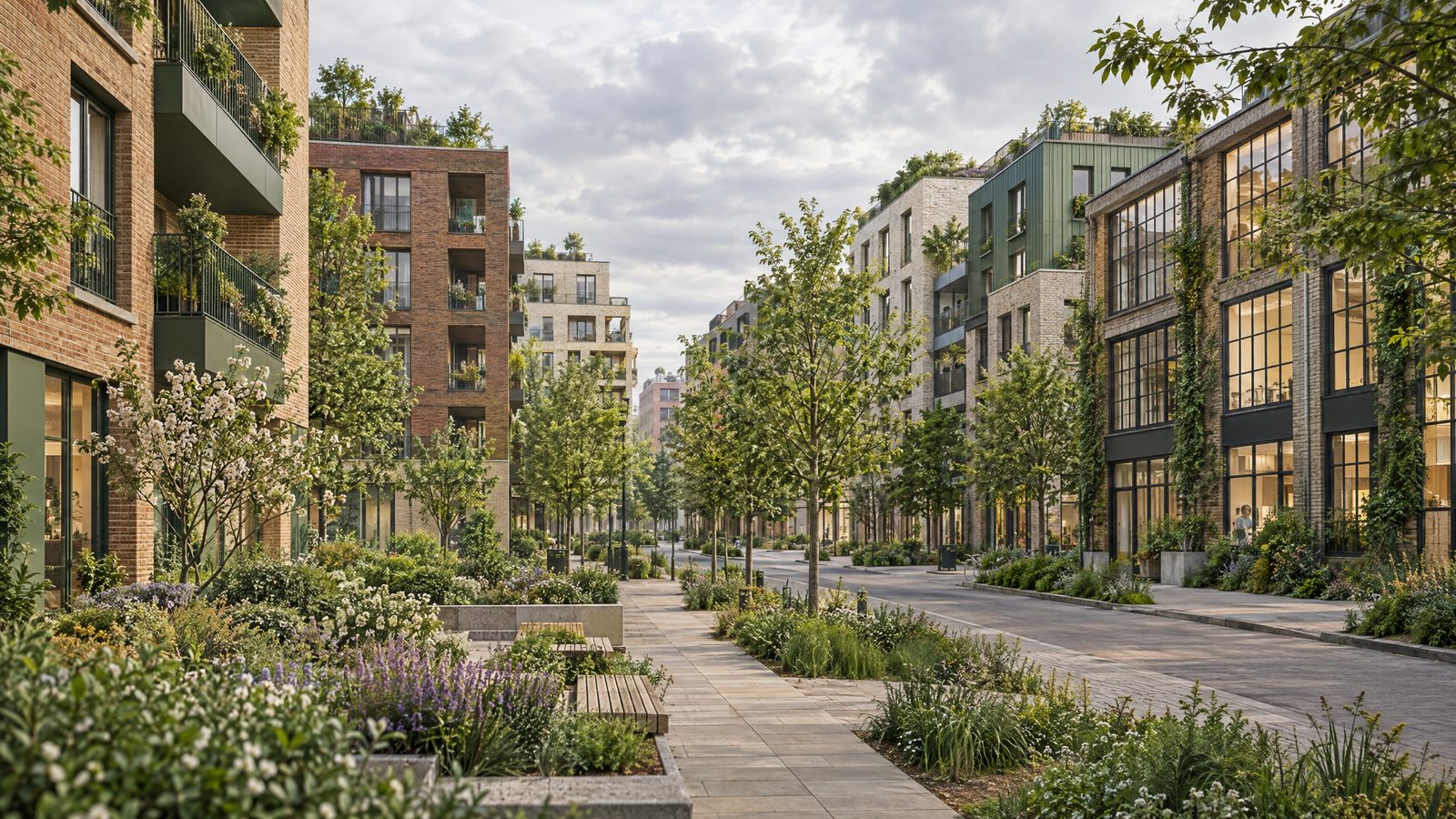

Newham’s Full Council has adopted the borough’s new Local Plan, setting a planning framework through to 2042 and a strategic target for half of new homes to be affordable. The plan anticipates around 54,000 homes over its period, alongside new industrial and office space, jobs and community facilities.
Formal adoption is a distinct step from the independent examination completed earlier this year. In August, the planning inspector concluded that the plan was legally compliant and sound, subject to main modifications. At that point, it was still awaiting consideration by Full Council. The November decision now establishes the plan as the borough’s policy framework for assessing development proposals and guiding where growth should take place.
A borough-wide framework
A Local Plan shapes decisions on the location, amount and type of development, the standards that schemes must meet and the infrastructure and services needed to support them. It provides a common policy basis for considering planning applications across the borough. It is not itself a permission for any particular building project, and its adoption does not mean that all of the homes identified will be built at once or on a fixed schedule.
Newham’s plan includes 45 site allocations and place-specific policies intended to guide development in different neighbourhoods. Its stated scale is around 54,000 homes across the plan period, together with about 418,000 square metres of industrial floorspace and at least 118,000 square metres of office floorspace. These are plan objectives and provisions, rather than a count of completed construction or a guarantee that every allocated site will come forward.
Affordable housing and family homes
The plan sets a strategic target of 50 per cent affordable housing. It also says that 40 per cent of social-rent homes are intended to be family homes with three or more bedrooms. The focus reflects the plan’s emphasis on affordable and family-sized housing, but the targets should not be confused with homes already delivered. Actual schemes will proceed through individual planning and delivery processes.
For residents, the framework matters because it will inform how proposals are assessed and what forms of development are expected across Newham. Housing numbers sit alongside questions about design, infrastructure, services and the distribution of growth between places. The plan also identifies employment floorspace, signalling that its scope extends beyond residential development to workplaces and the borough’s economic activity.
From examination to adopted policy
The plan’s path included consultation, submission for examination and public hearings. The inspector’s report in August marked the conclusion of the independent examination, but it did not itself amount to adoption. The report found the plan sound subject to changes known as main modifications, after which formal consideration by elected councillors remained necessary. Full Council’s decision is therefore a material change in status: the framework has moved from an examined plan awaiting a decision to an adopted one.
Adoption provides a basis for future planning decisions through 2042, but it does not remove the need to consider each application on its own merits under the relevant policies and planning requirements. Nor does it settle every future question about delivery, funding, infrastructure capacity or timing. Those matters will depend on proposals, decisions and implementation over time.
The central commitment is a long-range framework linking housing growth with affordability, employment space and neighbourhood planning. Its headline figures describe the scale and direction Newham has chosen for the coming years; the practical test will be how those policies are applied and how much of the planned development is ultimately delivered.







