

Ohlange High School earmarked for R137.9m in upgrades
Ohlange High School in Inanda, eThekwini, has been earmarked for an investment of approximately R137.9 million in an upgrade programme, South Africa’s Deputy President Paul Mashatile said during a visit on Friday, 23 October.
The announcement concerns a school with a prominent place in South Africa’s democratic history. Nelson Mandela cast his vote there in the 1994 election, and the Deputy President’s programme also included sites connected with Dr John Langalibalele Dube, whose legacy is closely associated with Ohlange and the surrounding community.
A broad but prospective programme
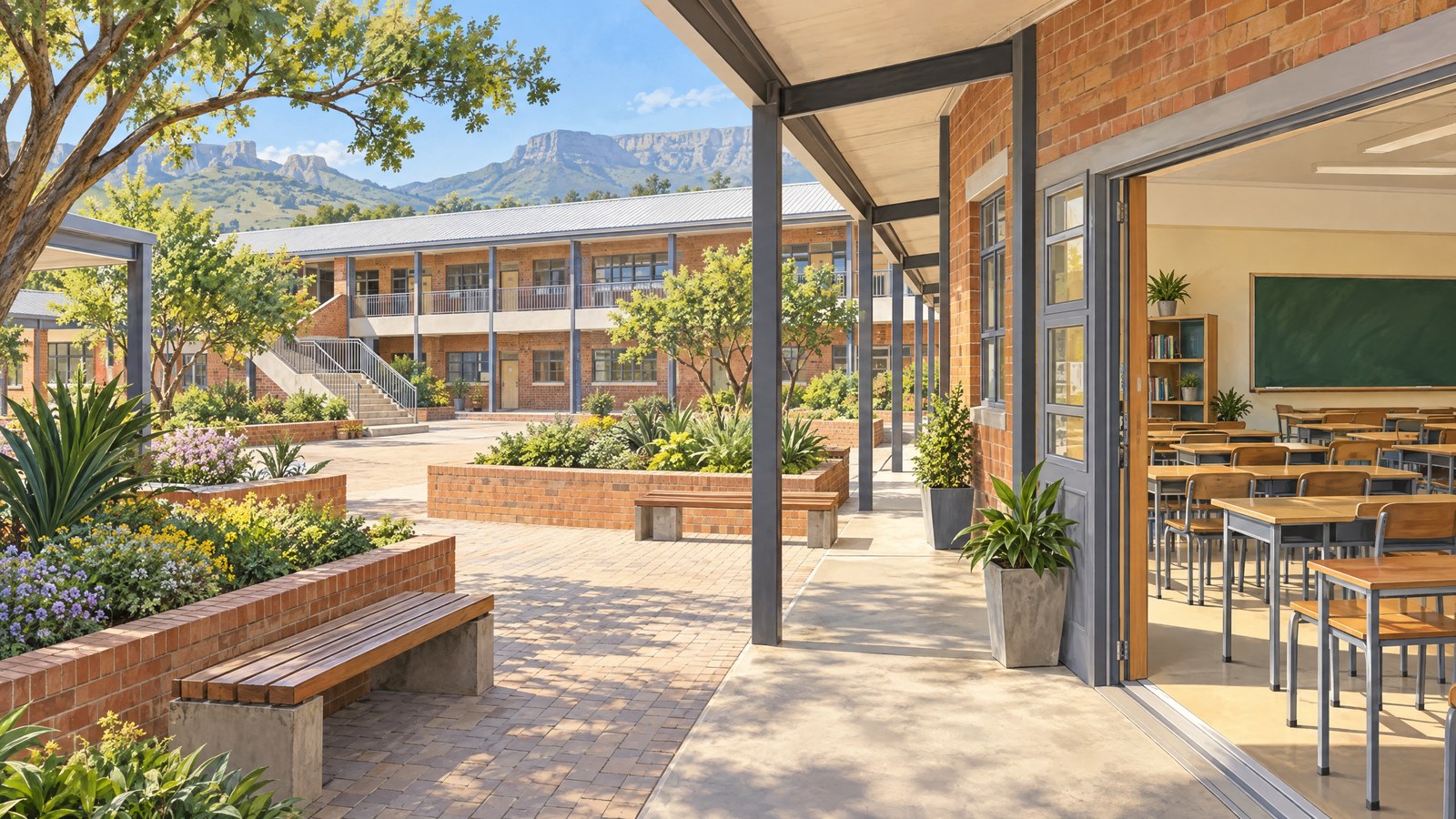
Mashatile said the school would benefit from upgraded classrooms, specialised workshops, improved sanitation, digital learning resources, enhanced security, sports facilities and sustainable-energy solutions. The list brings together teaching spaces, practical learning facilities, basic services, technology, safety and recreation rather than concentrating on a single building or system.
The funding figure and the range of proposed improvements are the substantive new elements of the visit. They give an indication of the intended scale of the programme, but the statement did not set out a division of the money between the different elements. It also did not identify a contractor, a procurement outcome, a construction timetable or a completion date.
That distinction matters. The visit produced a public commitment that the school will benefit from the investment; it was not a notice that contracts had been awarded or that building work had begun. Any assessment of delivery will therefore depend on later information about the project’s design, procurement and implementation.
Education and heritage in the same visit
Ohlange was presented during the visit as both a working school and a place of national historical significance. Before addressing the school, Mashatile said he had visited Dr Dube’s home in Inanda and paid respects at his gravesite. The earlier programme had included a visit to the Dr John Langalibalele Dube Amphitheatre, where preservation and restoration work is under way.
In his address, the Deputy President linked the proposed physical improvements to teaching and learning. He said the investment would help Ohlange remain a centre of excellence and described education as central to creating opportunities for young people. Those are stated aims rather than measured results from the planned works.
Wider programme context
The 23 October event had been announced two days earlier as part of a wider effort to strengthen partnerships with business, academia, civil society and other sectors. The stated purpose was to address obstacles in the country’s human-resource development pipeline and to improve integrated service delivery.
For Ohlange, the upgrade plan combines that policy context with a specific local commitment. Classrooms and workshops point to the everyday learning environment, while sanitation, security, sports facilities and energy measures suggest a wider view of the conditions in which a school operates.
However, the publicly stated scope remains prospective. The announcement does not say when individual elements will be delivered, whether the work will happen in phases or how the school community will be affected while it is carried out. Further official project information will be needed before the commitment can be assessed as a completed improvement programme.







