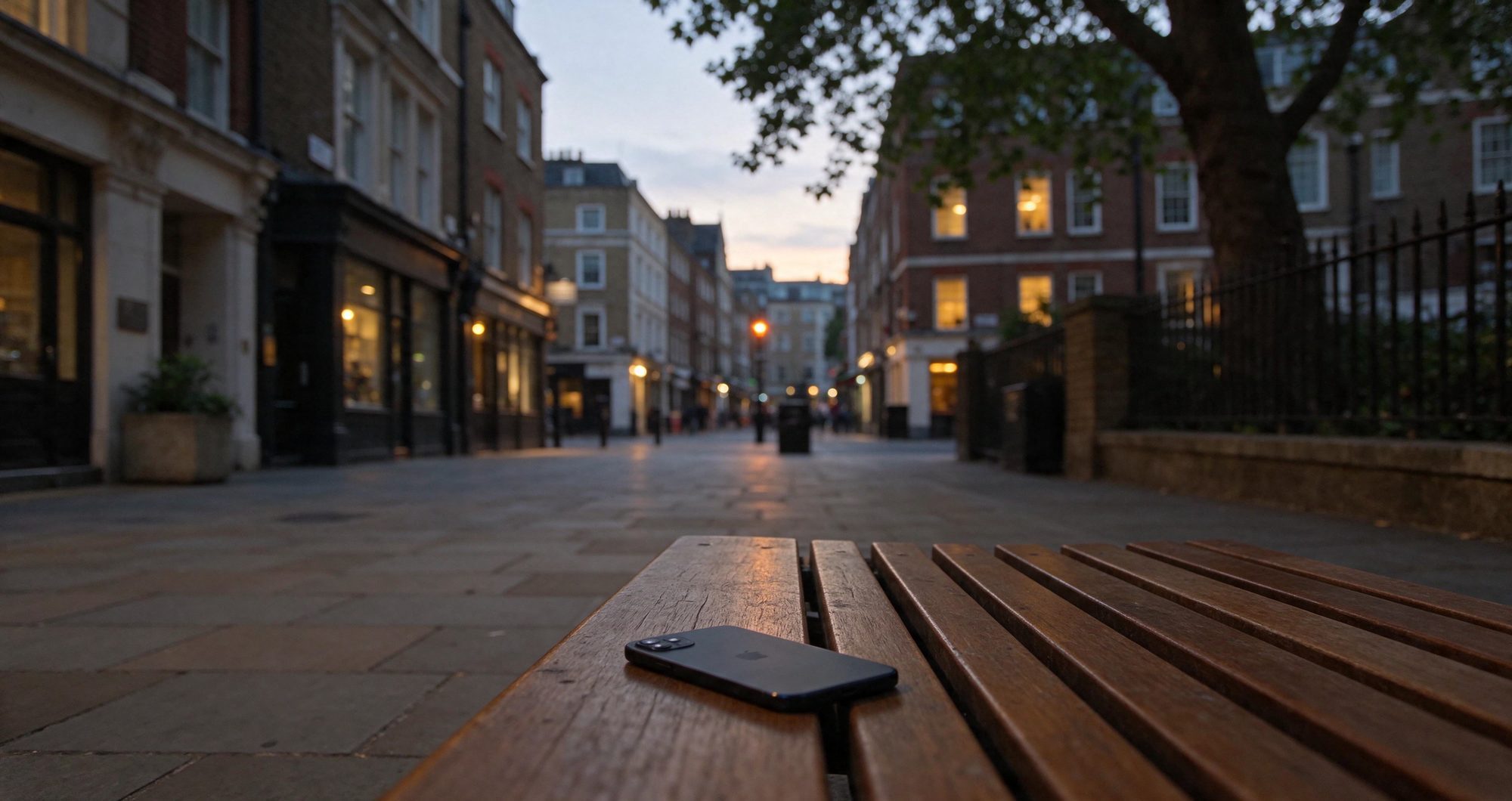

A phone thief who was tracked across central London by a police drone has been sentenced to 18 months’ detention in a young offender institution.
Wesley Rodrigues, 18, from Walthamstow, was sentenced at Southwark Crown Court on Monday 16 November after a series of thefts and a dangerous electric-bike chase that ended on Chelsea Bridge.
He had pleaded guilty on 6 October to theft, dangerous driving and possession of an offensive weapon. His offences also included driving without insurance. Judge Nicholas Rimmer disqualified him from driving for three years and 39 weeks.
Drone followed the electric bike
The offences took place on 22 August, when multiple victims reported that their phones had been stolen in central London. The Metropolitan Police’s Air Support Unit deployed a drone at 1.34pm.
The drone quickly identified Rodrigues riding an electric bike in the Piccadilly area. Its operator followed his movements through the streets and saw him steal another phone, while directing officers on the ground towards his location.
A police officer on a motorbike pursued Rodrigues from Victoria towards Chelsea Bridge. Body-worn camera footage shown during the court proceedings captured him weaving through traffic, mounting the pavement and riding around pedestrians at speed. The prosecution described the driving as a prolonged and deliberate course of dangerous behaviour.
On the bridge, an officer used his motorbike to knock Rodrigues off the electric bike in a tactical interception. Rodrigues continued to run from officers on foot and threw a machete into the Thames before a member of the public tripped him.
He was detained on Chelsea Bridge at 1.49pm, 15 minutes after the drone had been deployed. The stolen phones were recovered and returned to their owners.
Victims described fear and disruption
The sentencing hearing included accounts of thefts near Waterloo Bridge, outside Holborn station, on Shaftesbury Avenue, near the National Gallery and on Whitehall.
One victim with type 1 diabetes explained that her phone was connected to devices used to deliver insulin and monitor her blood sugar. She described the theft as a significant loss, illustrating how the handset was linked to her day-to-day management of the condition.
She also missed a theatre performance for which she had paid £200 and spent £50 on taxis while trying to reach somewhere she could track the missing phone.
Another victim described being frightened and worried about the photographs stored on her handset. A further victim said the experience had left her traumatised and anxious, with concerns that those feelings would return when she visited big cities.
The court heard that Rodrigues had eight previous convictions covering 30 offences. In mitigation, his barrister said the machete had not been used against any of the theft victims and that he had carried it for personal protection.
Live footage guided officers
The arrest involved the Metropolitan Police’s existing Drones as First Responder programme. It operates seven drones based at Islington, Charing Cross and Kennington, with operators working from a control suite at Hammersmith Police Station.
Drone cameras transmit live images to the control room, helping officers locate suspects and understand an incident before reaching it. The footage can also be recorded for evidence. In Rodrigues’s case, the aerial view allowed operators to follow the moving electric bike and guide the ground response until officers made the arrest.