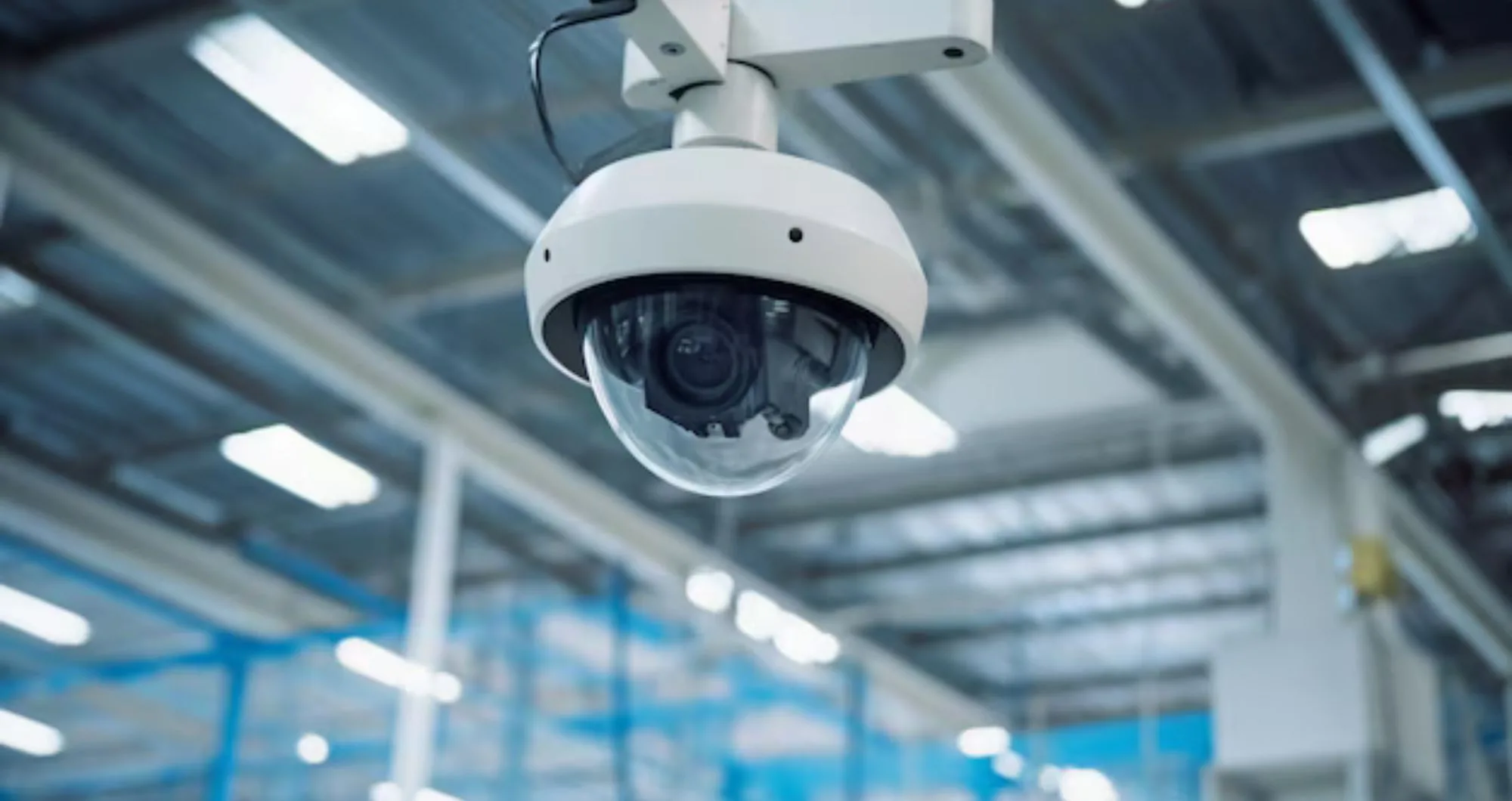

Security cameras have come a long way from the grainy, barely-visiable footage of early CCTV systems. Today, surveillance technology is sharper, smarter, and more connected, and it seems like it won’t be stopping any time soon. From traffic intersections to office buildings, shopping centres, and even private homes, security cameras are recording vast amounts of data every second of the day, and that’s before we even get into what’s happening with facial recognition security cameras and AI-assisted surveillance tools.
At the heart of this rapid advancement is a critical question that companies and governments around the world are still struggling to answer: Are advanced security cameras evolving faster than the data protection laws meant to govern them?
A New Era of Surveillance
The traditional use of security cameras was fairly straightforward, you would simply just record and playback if needed. But now, cameras don’t just passively record. They detect movement, classify objects, identify faces, track behaviour, and send live alerts to remote monitoring centres or even mobile phones. Some even feature built-in microphones, thermal sensors, and license plate recognition.
All this data—especially when combined with other technologies like cloud storage and artificial intelligence—is a privacy minefield. As technology has rapidly increased over recent years, the fine line between public and private space is slowly being blurred out. The legal frameworks surrounding surveillance have a lot of catching up to do.
Surveillance Technology vs. Regulation
While technology companies are racing ahead with innovations, governments around the world are finding it hard to keep pace. And in most cases, regulations differ widely from one country—or even one city—to another.
Let’s take facial recognition as an example. In San Francisco, the use of facial recognition by city departments has been banned entirely. Meanwhile, in parts of China, it’s used to monitor everything from shopping habits to school attendance and even to issue fines for jaywalking. Between those two extremes lies a complex web of patchwork laws, outdated statutes, and grey areas that make consistent enforcement nearly impossible.
Even in countries with strong data protection laws, such as those governed by the EU’s General Data Protection Regulation (GDPR), security camera usage often slides under the radar. While GDPR does place restrictions on surveillance in public spaces, enforcement is tricky and many organisations remain unaware of the full legal implications.
Who Owns the Footage?
Ownership of surveillance data is another grey zone. In the case of public-facing cameras owned by local governments or police, it’s often clear that the footage belongs to the governing body. But what about a private business with cameras pointing toward the street? Or a smart doorbell capturing pedestrians walking past?
As surveillance systems become cheaper and more widely adopted, especially with consumer-level products like Wi-Fi-connected cameras and cloud-based storage, where homeowners themselves can install and configure the cameras, individuals are increasingly capturing footage of people who have not given consent. In many jurisdictions, simply having a visible camera may not be enough to make the practice legally compliant.
Consent in Times of Constant Recording
One of the cornerstones of privacy law is the idea of consent. But how does that translate in a world where you might be recorded hundreds of times a day, often without even knowing it?
Consider walking through a shopping centre. There might be cameras on the doors, in the hallways, in individual shops, and even on digital advertising screens. Some may notify you with a sign. Others may not. Some may be collecting footage that is instantly deleted. Others might store it for months or even feed it into a larger behavioural analytics database.
How can you consent to being recorded when you don’t even know it’s happening?
How AI Is Evolving the Surveillance Game
Artificial intelligence is supercharging what surveillance cameras can do. Smart systems now have the ability to “learn” typical behaviour patterns and flag anomalies—such as someone lingering too long near an exit, leaving a bag unattended, or pacing back and forth.
These capabilities are useful for security, of course. But when used unchecked, they become tools for constant behavioural analysis and profiling. Critics warn that this could lead to a chilling effect, where people begin to self-censor or avoid public places due to the feeling of always being watched.
The use of AI in security also raises concerns about bias. Numerous studies have shown that facial recognition algorithms can have much higher error rates when identifying people of colour, women, or the elderly. If left unregulated, these systems could lead to discriminatory outcomes.
What Does the Future Look Like?
All signs point to one thing—surveillance will become even more embedded in daily life. Cameras are getting smaller, cheaper, and more powerful. They’re being installed in more places, operated by more entities, and connected to more platforms.
And yet, clarity around what’s acceptable and what’s not remains elusive.
To strike a balance between public safety and individual privacy, regulators will need to move quickly to redefine consent, update old laws, and introduce standards that account for modern surveillance capabilities.
So, Is a Global Wake-Up Call Needed?
Security cameras, especially when enhanced by AI, offer undeniable benefits in preventing crime, aiding investigations, and managing public spaces. But the lack of updated, unified legal protections around their use poses a serious risk to personal freedom and privacy.
The issue isn’t just how we use security cameras—it’s whether we’ve thought hard enough about the consequences of using them without proper boundaries. Until laws catch up, individuals, businesses, and governments alike are navigating a connected world without a reliable map.
The technology is already here. The question is whether the rules to protect our rights can keep up with the speed of the lens.