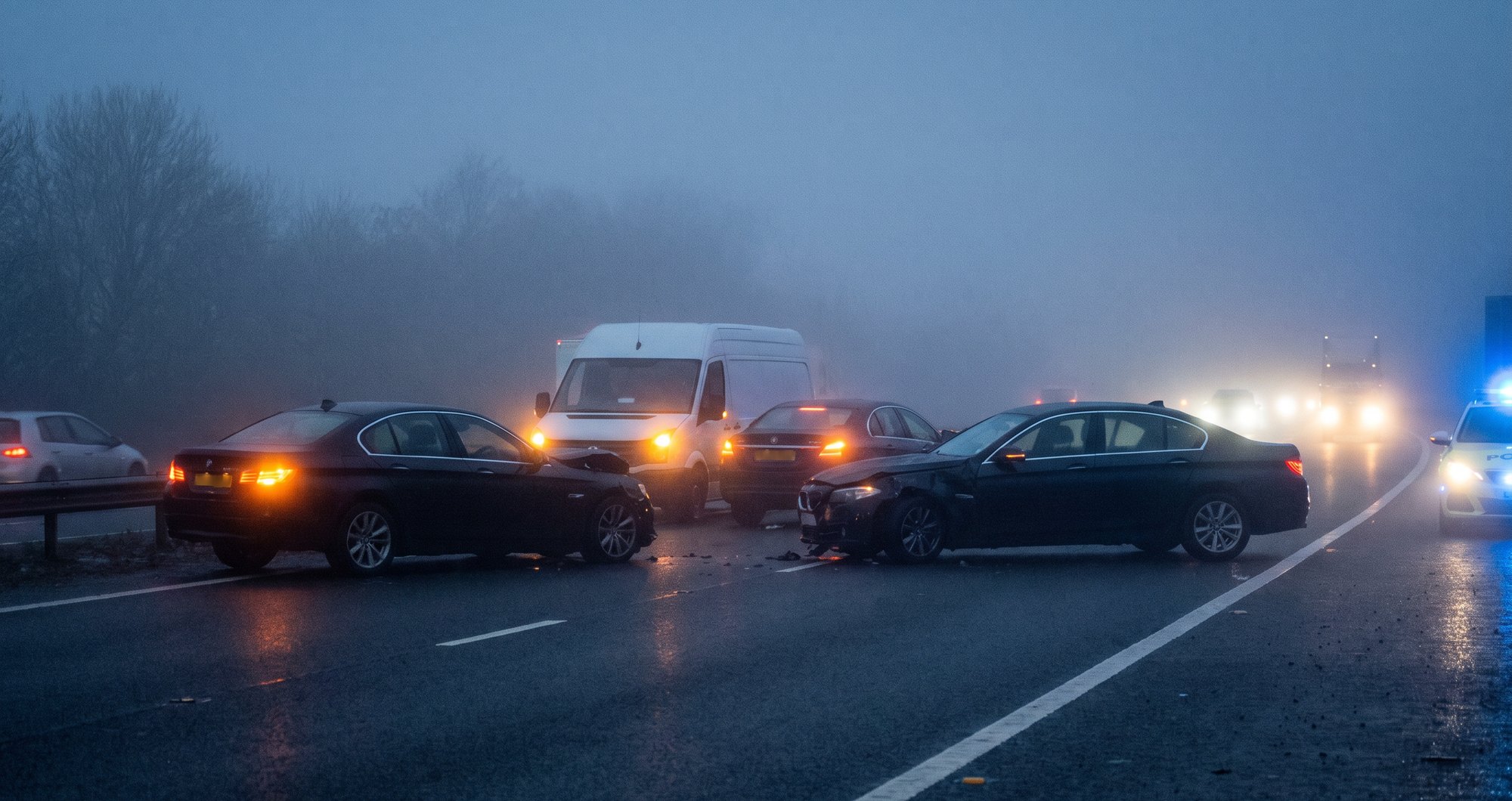
London and the South East recorded the highest level on the government’s daily air quality index on Sunday 8 November, as dense fog and light winds trapped pollutants near the ground. Defra placed the region in its ‘very high’ band, rated 10 out of 10, with the capital experiencing some of its worst air quality of the year.
The conditions prompted government health advice for everyone to reduce physical exertion, particularly outdoors. People with lung or heart conditions, and older people, are advised to avoid strenuous activity altogether when pollution reaches this level.
The Met Office, which supplies the forecasts, attributed the build-up to stagnant air, light winds and dense fog, particularly around busy roads and urban centres. Fireworks and bonfires over 7 and 8 November added smoke and metal-bearing particles to the air.
Highest pollution band across several regions
Defra’s forecast page carried the statement ‘High and Very High pollution measured in 5 regions’, issued at 08:00 on 8 November. Alongside London and the South East, the ‘very high’ rating applied to the North West and Merseyside, Eastern England, Yorkshire and Humberside, and the West Midlands.
The geographical spread showed that the episode was not confined to London. However, the capital’s early-morning measurements underlined the severity of local conditions before the forecast improvement later in the day.
Monitoring company IQAir recorded London’s air quality index above 170 at 06:30 GMT. At that hour, it ranked London among the ten most polluted major cities globally. That ranking was a snapshot of conditions at a particular time, rather than a measure of the capital’s air quality throughout the year.
IQAir also reported that the concentration of PM2.5, fine particulate matter, was 16.8 times the World Health Organization’s annual guideline of 5 micrograms per cubic metre. The comparison indicates how far the morning reading exceeded that benchmark, although an individual reading and an annual average cover different periods.
The Defra rating and IQAir’s figure were expressed on different scales. The government’s 10 out of 10 reading identified its highest daily pollution band, while IQAir reported an AQI above 170. Both pointed to poor conditions early on Sunday, but the numbers should not be treated as interchangeable.
Fog and Bonfire Night smoke contribute to build-up
The Met Office’s explanation centred on weather conditions that kept pollutants close to the ground. Light winds offered little movement of the air, while dense fog and stagnant conditions contributed to the accumulation around roads and urban centres.
Bonfire Night fireworks and bonfires on 7 and 8 November provided a further particulate load. Their smoke and metal-bearing particles added to the pollution during a period when the weather was limiting its dispersal. No breakdown of the contribution from individual sources was supplied.
That distinction matters when considering the causes of the episode. The information identifies both the weather and additional emissions from fireworks and bonfires, but does not establish what proportion of London’s measured pollution came from each source.
The morning’s readings also contrasted with London’s average for 2025. IQAir’s figures put the capital’s average PM2.5 concentration that year at 9.9 micrograms per cubic metre, with an AQI of 42, classified as ‘good’. The annual PM2.5 figure was nevertheless roughly twice the WHO guideline.
Sunday’s much higher reading therefore describes an acute episode against a background in which the annual concentration already exceeded the WHO benchmark. The ‘good’ classification attached to the 2025 AQI does not mean that the annual PM2.5 concentration met that guideline.
Advice to reduce exertion as improvement forecast
Government guidance for the ‘very high’ band applies to everyone, not only those with existing health conditions. It advises reducing physical exertion, particularly outdoors, while setting stronger advice for people with lung or heart conditions and older people: they should avoid strenuous activity altogether.
The guidance is directly relevant to outdoor exercise and sport during the episode. The supplied information does not establish whether any activities were cancelled or whether hospitals and ambulance services experienced additional demand.
No formal air pollution alert was shown as issued on Defra’s alert page at the time of reporting. That was separate from the pollution measurements and forecast information, which placed London and the South East in the highest band.
IQAir forecast a steady decline in pollution through Sunday as the fog lifted and winds strengthened. Cleaner air was also forecast later in the week, with rain expected midweek to help clear the pollution. Those were forecasts rather than confirmation that conditions had already improved, following the very high readings recorded early in the morning.