
Private climate finance in Africa averaged US$26.5 billion a year in 2023 and 2024, more than three times the level recorded for 2019 and 2020, according to a new assessment of investment across the continent.
The increase has been driven in part by African banks, businesses and households. Yet the findings also show that finance remains concentrated in particular countries and sectors, while the share directed towards helping communities adapt to climate change has fallen.
The report, published on 13 November, estimates that private finance rose from an annual average of $8.5 billion in 2019/20 to $26.5 billion in 2023/24. Domestic sources accounted for $20.1 billion, or 76 per cent, of the later private-finance total.
The figures describe tracked financial commitments and estimates, not proof that every dollar was paid out during those years. The researchers also revised historical figures to make the periods more comparable, while warning that some types of finance remain difficult to capture.
Households and banks take a larger role
Private finance represented 36 per cent of the $74.2 billion in total climate finance tracked annually in 2023/24. The report found that this was the lowest private share among the world regions it compared, even after the recent growth.
Commercial financial institutions contributed almost half of the increase in private finance between 2021/22 and 2023/24. The report associates the change with greater climate engagement by banks, increasing regulatory attention to climate risk and lower global costs for technologies such as solar, wind and battery storage. Those factors are presented as part of the context for the growth, not as a calculation of how much each caused.
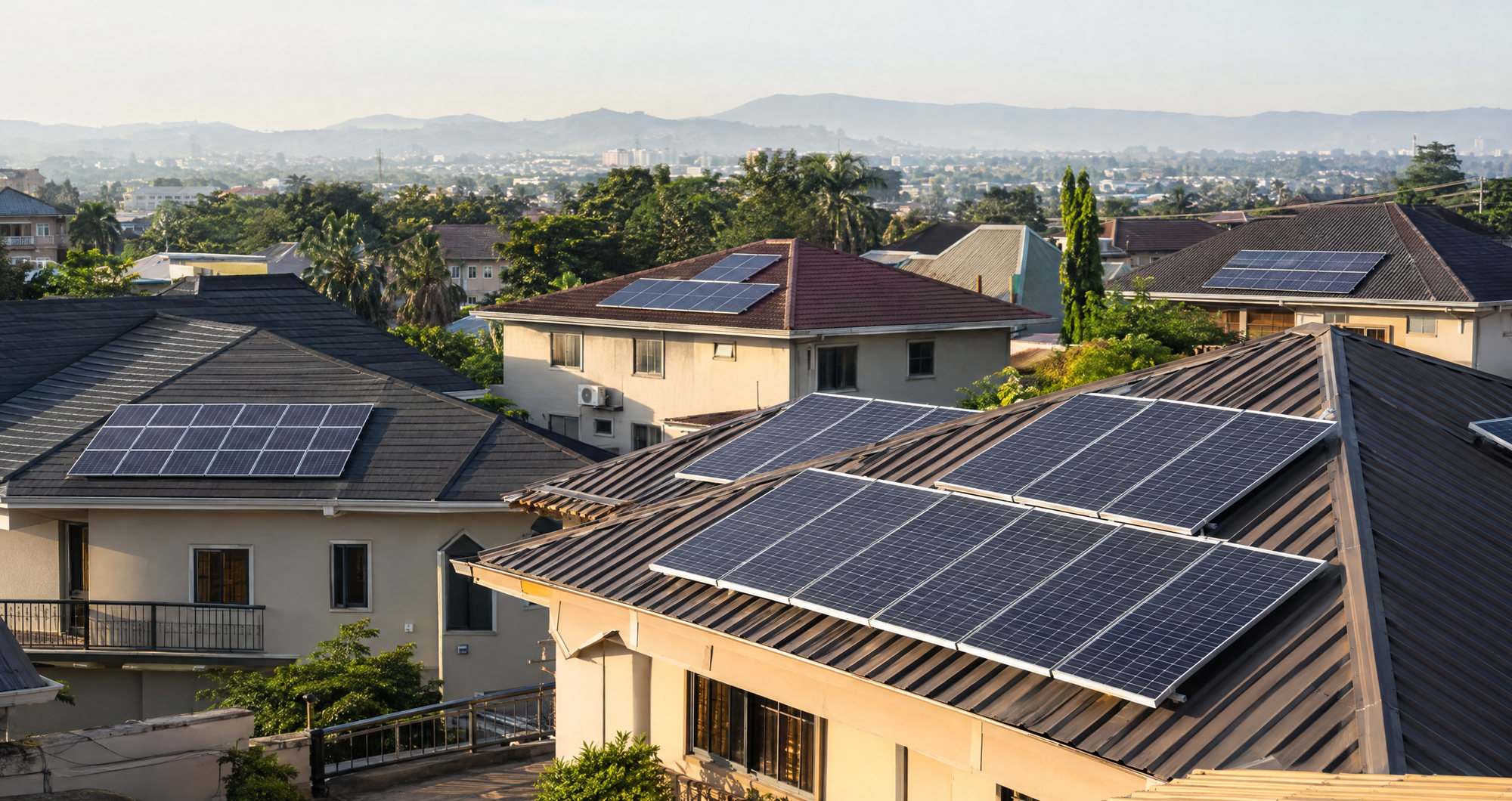
Household climate investment more than doubled between the two periods to an estimated $5.1 billion a year, making up 19 per cent of private climate finance in 2023/24. Small-scale solar was the principal driver of that increase. Household investment in solar photovoltaic equipment rose nearly fivefold to $3.3 billion a year.
Such spending is different from financing a large power station. Household purchases tend to be smaller and more numerous, and some customers may not have a formal credit history or collateral. The assessment highlights consumer lending, local financial institutions and pay-as-you-go arrangements as ways of making finance available for smaller purchases.
Adaptation’s smaller share
Climate finance covers both mitigation, which aims to reduce emissions, and adaptation, which helps people and systems cope with climate impacts. Some projects are counted separately as providing both benefits.
Tracked adaptation finance rose in absolute terms from $14.1 billion a year in 2021/22 to $15.7 billion in 2023/24. But it grew more slowly than the overall total, so its share fell from 28 per cent to 21 per cent. The falling share should not be mistaken for a fall in the dollar amount.
Mitigation finance rose from $27.7 billion to $51.8 billion a year over the same periods. The report cautions against treating the two totals as perfectly comparable: adaptation can be embedded in wider spending and is not consistently identified, while accounting methods may capture only the adaptation-related portion of a project.
The researchers estimate that the continent needs between $300 billion and $572 billion a year from 2025 to 2030 for mitigation alone under the scenarios they examined. Those estimates exclude adaptation. They are modelled requirements, not sums already committed, and should not be treated as a complete price tag for all climate action.
Where the money goes
Energy systems attracted $32.3 billion a year in tracked climate finance in 2023/24, compared with $6.5 billion for agriculture, forestry and other land use. The latter figure was down from $7.1 billion in 2021/22. More than 80 per cent of energy finance went to middle-income countries.
Geography also matters. Eastern Africa received $17.6 billion a year in tracked climate finance, the largest amount among the subregions. Central Africa received $6.5 billion. The researchers note that gaps in reporting can affect comparisons between places, so the figures should not be read as a complete record of every investment.
International public finance remained an important part of the picture, at $45.2 billion a year in 2023/24. Its growth was uneven: the assessment found that flows to low-income African countries fell by 11 per cent from 2021/22, while those to middle-income countries rose by 33 per cent. These changes concern international public finance, not every source of climate investment.
From commitments to projects
The report argues that increasing finance will require more than finding additional investors. Projects also need to be prepared and structured in forms that financial institutions can assess and fund. Some are small or fragmented, making it harder for large investors to participate directly.
It identifies stronger local financial institutions, predictable policies and risk-sharing arrangements as possible ways to support investment in a wider range of sectors. It also calls for continued international public funding, particularly where countries and projects have fewer alternatives.
The assessment gives a picture of growing commitments rather than a guarantee of future results. Whether finance is eventually disbursed, where it reaches and how much resilience it builds will depend on the projects and institutions behind the figures.