
Scotland has permanently closed its Ukrainian Super Sponsor Scheme to new applications after a review found that the programme was no longer sustainable in its existing form. Housing shortages, pressure on public services and budget constraints are central to the assessment.
The decision, confirmed on 17 November, replaces the pause on new applications that had been in place since July 2022. The Scottish Government remains committed to supporting displaced Ukrainians who have already found safety in Scotland, with the emphasis now on longer-term integration.
The scheme was launched following Russia’s full-scale invasion of Ukraine in 2022. It operated within the UK’s wider Homes for Ukraine programme and allowed displaced people to choose the Scottish Government as their sponsor, obtain a visa and travel without first finding a private sponsor.
By June 2026, more than 21,000 people sponsored by the Scottish Government had arrived in the UK. A further 8,000-plus people had arrived with individual hosts in Scotland. Together, the government-led response and private sponsorship provided sanctuary on a scale well beyond initial expectations.
Permanent closure rather than a continuing pause
The original pause followed a sharp increase in applications and was intended to ensure that people already in Scotland, along with visa holders yet to arrive, could be accommodated safely. The new decision formally closes the Scottish government-sponsored route to new applications.
That is not a closure of the UK’s wider Homes for Ukraine scheme, which remains a route to sanctuary. The distinction also matters for people already settled in Scotland: the announcement concerns new applications to the Super Sponsor Scheme, not the withdrawal of the government’s commitment to support existing residents.
Housing and funding limit capacity
Longer-term accommodation is a defining constraint on sustainable resettlement. Housing affects more than the place where a family lives; it also shapes access to employment, education, wellbeing and participation in local communities.
Most Ukrainians who arrived through the scheme are now in stable accommodation, including private rented homes and social housing. However, some households have presented as homeless. Barriers in the private rental market include requirements for guarantors, references, a UK credit history and substantial upfront deposits or rental payments.
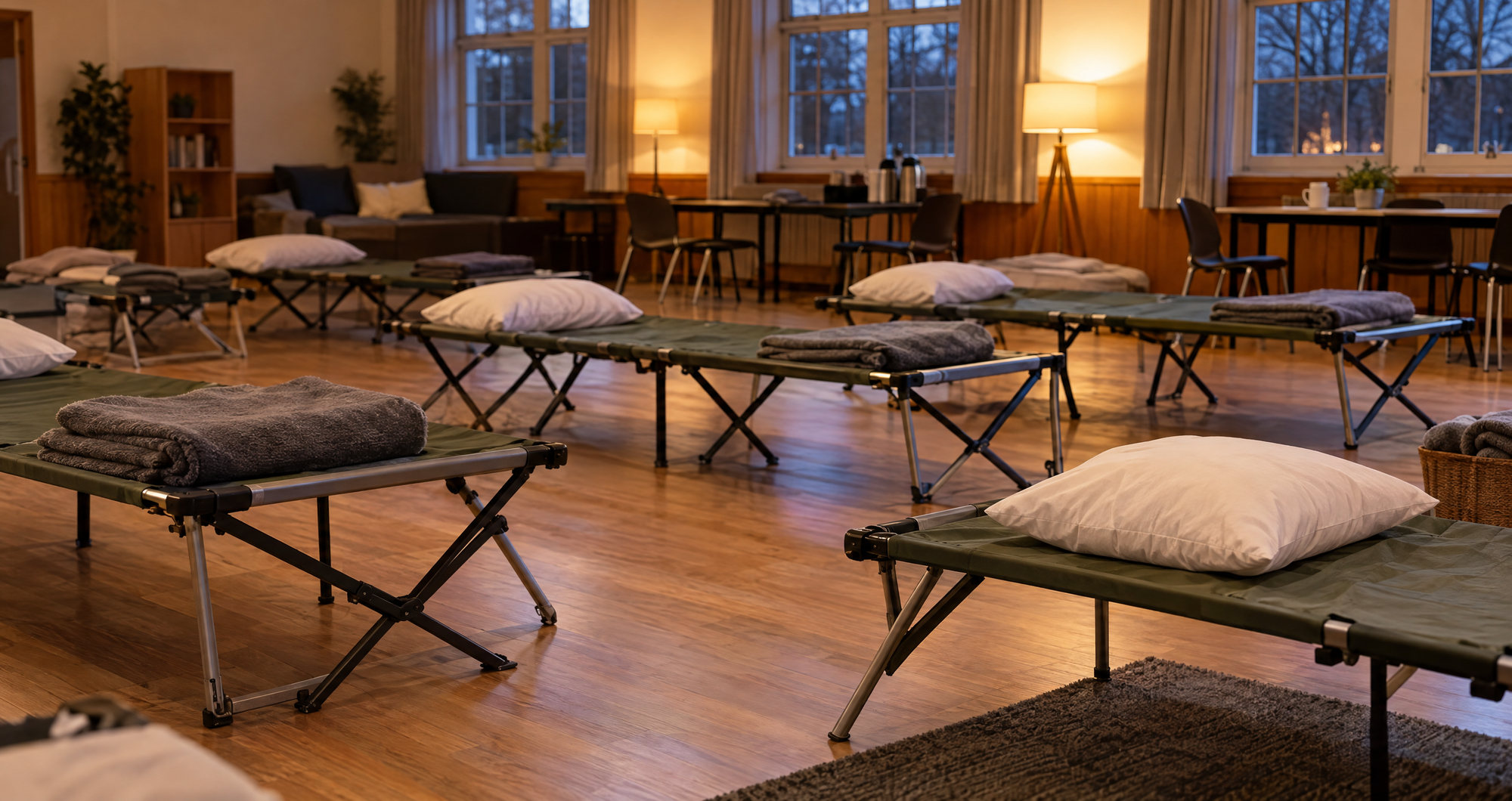
The emergency accommodation arrangements have also changed. No rooms are being held in reserve for welcome accommodation, and rooms for newly arriving existing visa holders are booked as needed. There is no allocated budget to secure rooms in large numbers, limiting the capacity to receive another large wave of arrivals through the Scottish scheme.
Ukraine resettlement programme spending stood at £231 million in 2022–23, £170 million in 2023–24, £41 million in 2024–25 and £12 million in 2025–26. Much of that expenditure supported welcome accommodation.
The 2026–27 allocation of £16.16 million covers refugees and resettlement more broadly, including support for displaced Ukrainians. It is not a dedicated budget for reopening the Super Sponsor Scheme. The review did not undertake a formal economic appraisal of reopening, but there is no earmarked budget for it and renewed large-scale arrivals would require additional resources.
Lessons for future humanitarian responses
The review was commissioned in 2025 by Social Justice Secretary Shirley-Anne Somerville and led by Chief Social Policy Adviser Professor Linda Bauld in partnership with the Convention of Scottish Local Authorities. It recognises the rapid cooperation between councils, public services, voluntary organisations and communities that helped people reach safety.
Its recommendations look beyond the closure decision. Future programmes should plan for long-term housing from the outset, improve access to English-language learning and employment support, and provide clear information about rights, services and available help. Displaced people should also have a role in shaping their resettlement.
Stable accommodation, safeguarding and support that recognises trauma, mental-health needs and cultural differences are among the proposed principles. Earlier joint planning, stronger data sharing and clearer responsibilities would help delivery partners prepare for sudden increases in demand.
Visas and immigration policy remain the responsibility of the UK Government. Scottish ministers and councils must therefore plan housing and integration support within that wider framework. The closure recommendation centres on consolidating support for Ukrainians already in Scotland while using the experience gained to inform future humanitarian responses.