
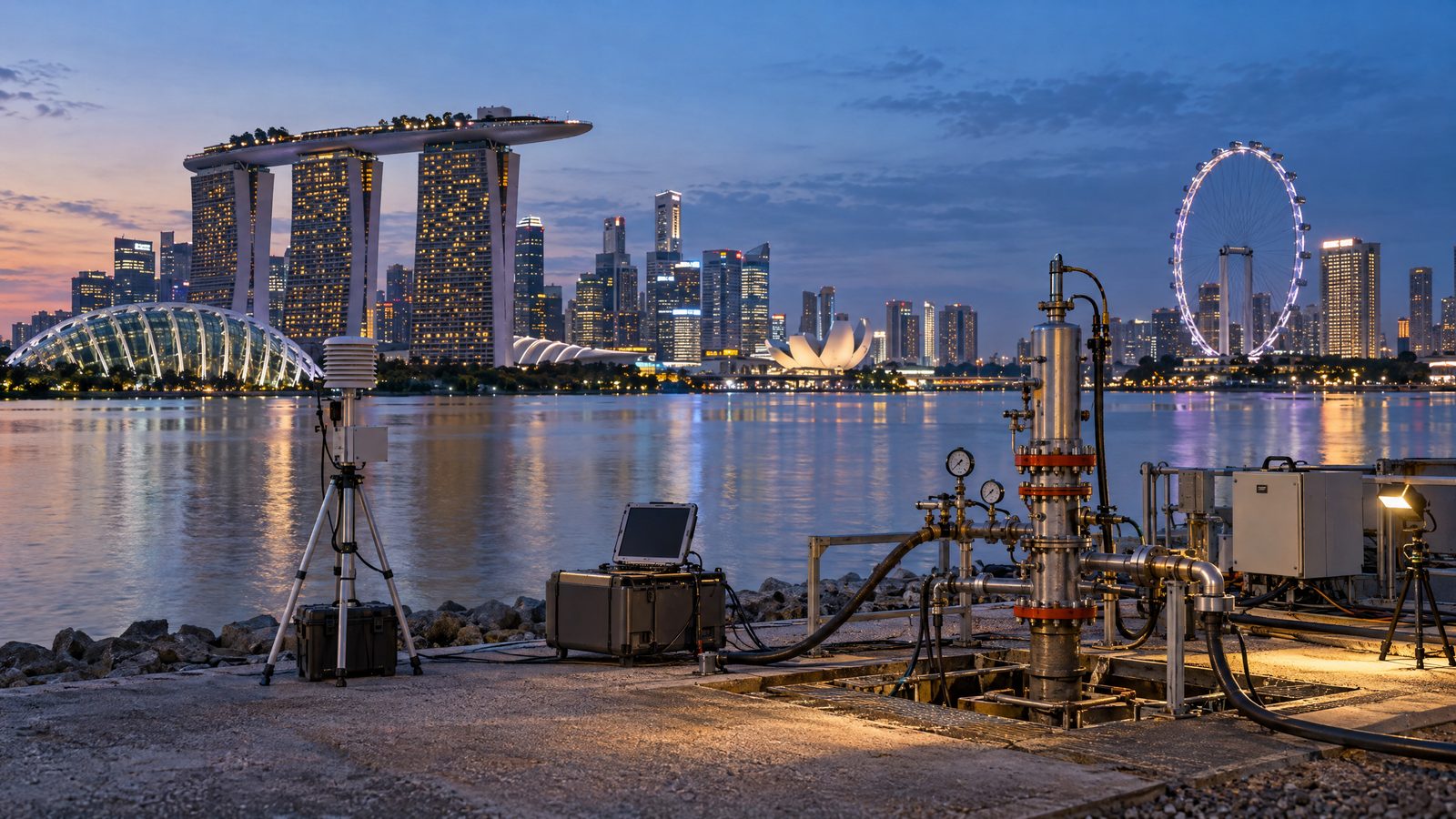

Singapore appoints consortium for next-stage geothermal feasibility study
Singapore has appointed a consortium formed by Surbana Jurong and GLJ Ltd to examine whether next-generation geothermal plants could be deployed in the city-state, moving its exploration of underground heat into a more detailed feasibility phase.
The study is due to begin by the end of 2026 and is expected to take about 15 months. It will consider safety, technical viability and the cost of producing geothermal energy. Its remit covers the possible use of the resource for power generation, cooling and heating.
The appointment is a research and assessment step rather than an approval to build plants. Singapore has not decided to deploy geothermal energy. Any later decision will depend on further technical and feasibility work, as well as progress in technologies designed to reach deep geothermal resources.
Geothermal energy uses heat from below the ground. In many parts of the world it is associated with volcanic areas and naturally occurring hot water reservoirs. Singapore’s potential resource is different: the most promising high-temperature heat identified so far lies several kilometres underground. That means its practical use would rely on technology capable of accessing and managing deep rock formations safely in a densely developed urban environment.
The new feasibility study follows a non-invasive geophysical survey carried out between 2024 and 2026. That earlier work indicated that sizeable geothermal resources may be present deep beneath Singapore. An initial estimate put the technical potential at more than 60 times the country’s current annual electricity consumption, which is around 60 terawatt-hours.
That figure should not be read as a forecast of electricity that will be produced. Technical potential describes an early estimate of the energy thought to exist in a resource. It does not establish how much can be extracted, at what cost, or whether it can be used safely and reliably. Further work is needed to test the estimate and to establish what share, if any, could be recovered in practice.
The earlier survey also identified the possibility of lower-temperature resources at shallower depths. These could have different uses, including industrial heating and cooling, rather than electricity generation alone. The next phase is intended to give a clearer picture of which options, if any, merit further investigation.
Safety will be central to the assessment. Deep geothermal systems may require drilling and other complex engineering below the surface. The consortium will therefore examine the practical challenges of deploying such systems alongside the economic case for them. It will also assess whether the technologies are suitable for Singapore’s particular geological conditions and limited space.
For Singapore, geothermal energy is being explored as a possible domestic, lower-carbon addition to a wider energy mix. Unlike fuel imports, a viable underground resource would be located within the country. It could also offer a more constant source of energy than weather-dependent renewables. Those potential advantages remain conditional on the study’s findings, however.
The immediate outcome is a defined programme of feasibility work, not a construction timetable. By the end of the study, the evidence should be stronger on safety, extractability, costs and the role geothermal systems could realistically play. Until then, Singapore’s geothermal potential remains an area of investigation rather than a committed source of power.







