

A study led by researchers at the University of Exeter and City St George’s, University of London, has identified a previously unrecognised way that the hospital-associated fungus Candida auris can adapt during exposure to antifungal drugs. The work points to changes in genome copy number and a cell-wall stress gene, offering a possible explanation for why some fungal cells survive treatment even when routine laboratory tests indicate susceptibility.
The findings come from analysis of serial fungal samples from two critically ill patients in London whose infections did not respond to echinocandin treatment. Echinocandins are a recommended first-line treatment for invasive candidiasis. The isolates were initially classed as wild type for the commonly implicated resistance genes FKS1 and FKS2, leaving the researchers to investigate other possible routes to treatment failure.
Different cell populations emerged
In laboratory testing, the team found that the samples contained populations with differing responses to the drug. When clinical isolates were grown in a very high concentration of anidulafungin, some cells formed small colonies while others formed larger ones. Both types showed increased minimum inhibitory concentrations, the laboratory measure of how much drug is needed to inhibit growth.
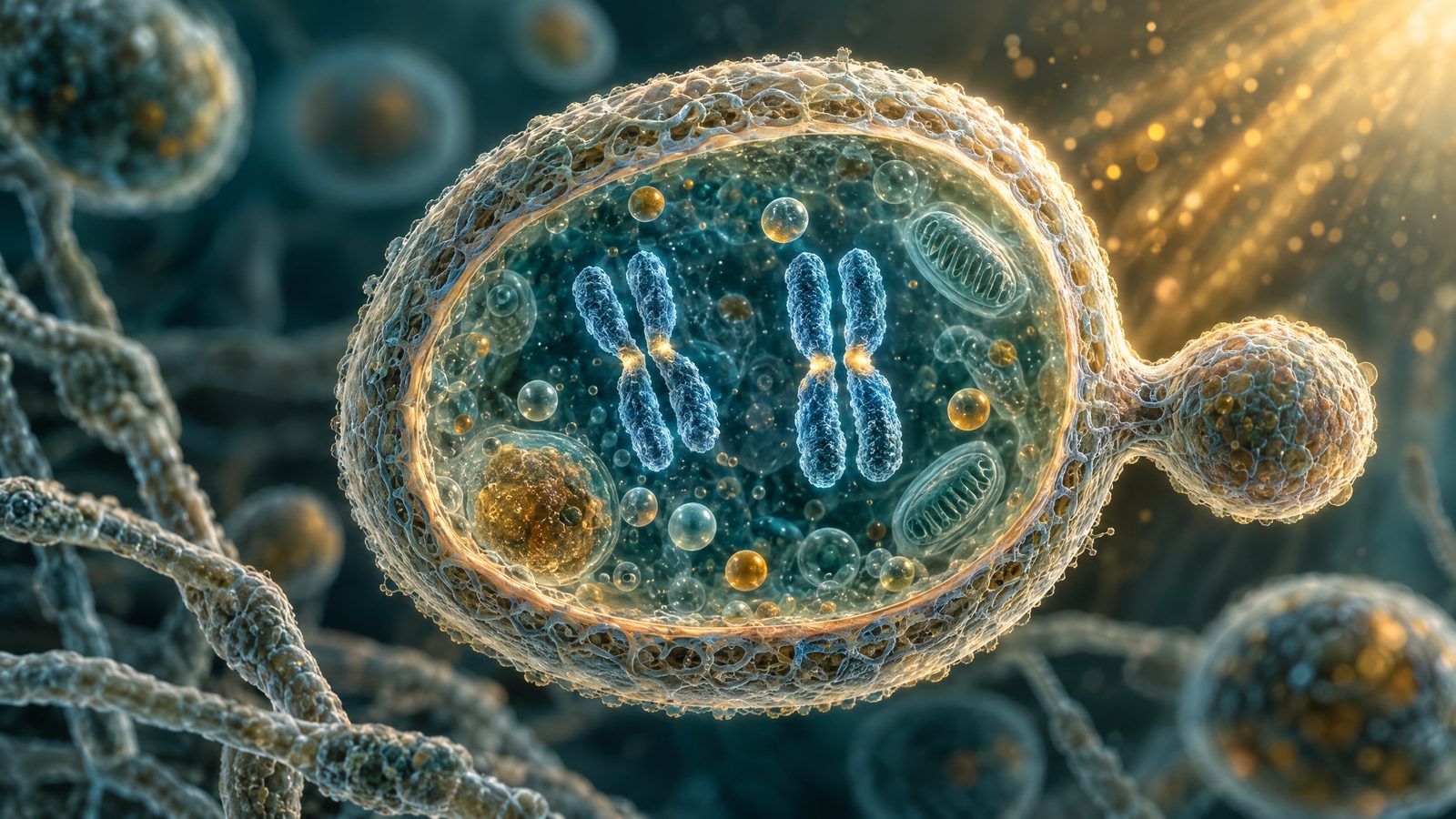
The small- and large-colony variants also showed polyploidy: they carried more than the usual two copies of their genome, in some cases four copies or more. Having additional genome copies can create more opportunities for genetic variation, although that does not mean every change will help a fungus survive. The study found adaptive changes in cell-wall beta-1,3-glucan, a component involved in the structure of fungal cells.
The more rapidly growing large-colony variants had substantially more mutations in CRZ1 than the original clinical isolates and small-colony variants. The gene is involved in the calcineurin-related stress-tolerance pathway and helps regulate cell-wall responses. Those mutations were associated with further increases in measured drug resistance. The results suggest that genome instability, stress-response changes and cell-wall remodelling may build up in steps rather than appearing as a single resistance switch.
A finding that needs further testing
The research began with a laboratory observation: a small group of cells continued to grow after prolonged antifungal exposure. Subsequent testing examined how those survivors differed from the original samples. The study combined genome sequencing of serial patient isolates with population analysis and experiments in which the fungus was cultured under drug pressure.
That design gives researchers a detailed view of how these samples behaved, but the evidence is not a clinical trial and does not establish how often the mechanism occurs in patients. The patient sample was limited to two critically ill people, and key observations about the variants were made in laboratory cultures. The association between CRZ1 mutations and higher resistance also needs functional validation to establish precisely how the mutations affect the fungus.
The findings matter because Candida auris can persist in healthcare environments and cause serious infections, particularly among people who are already unwell. Its ability to develop resistance makes treatment difficult. The study indicates that a test focused only on familiar resistance mutations may not capture every adaptive route that can emerge under drug exposure.
Researchers are investigating whether combinations of antifungal drugs could help address different survival strategies. The new results do not identify a proven replacement treatment, and they do not support changing care on their own. Further work, including experiments to test the role of CRZ1 and studies across more isolates, will be needed to determine how the laboratory findings could inform clinical decisions.
The research was supported primarily by the Medical Research Council, with additional support from the NIHR Biomedical Research Centre in Exeter. The team’s next challenge is to understand whether these different fungal populations also arise during infection and how they might be detected before treatment failure becomes apparent.







