
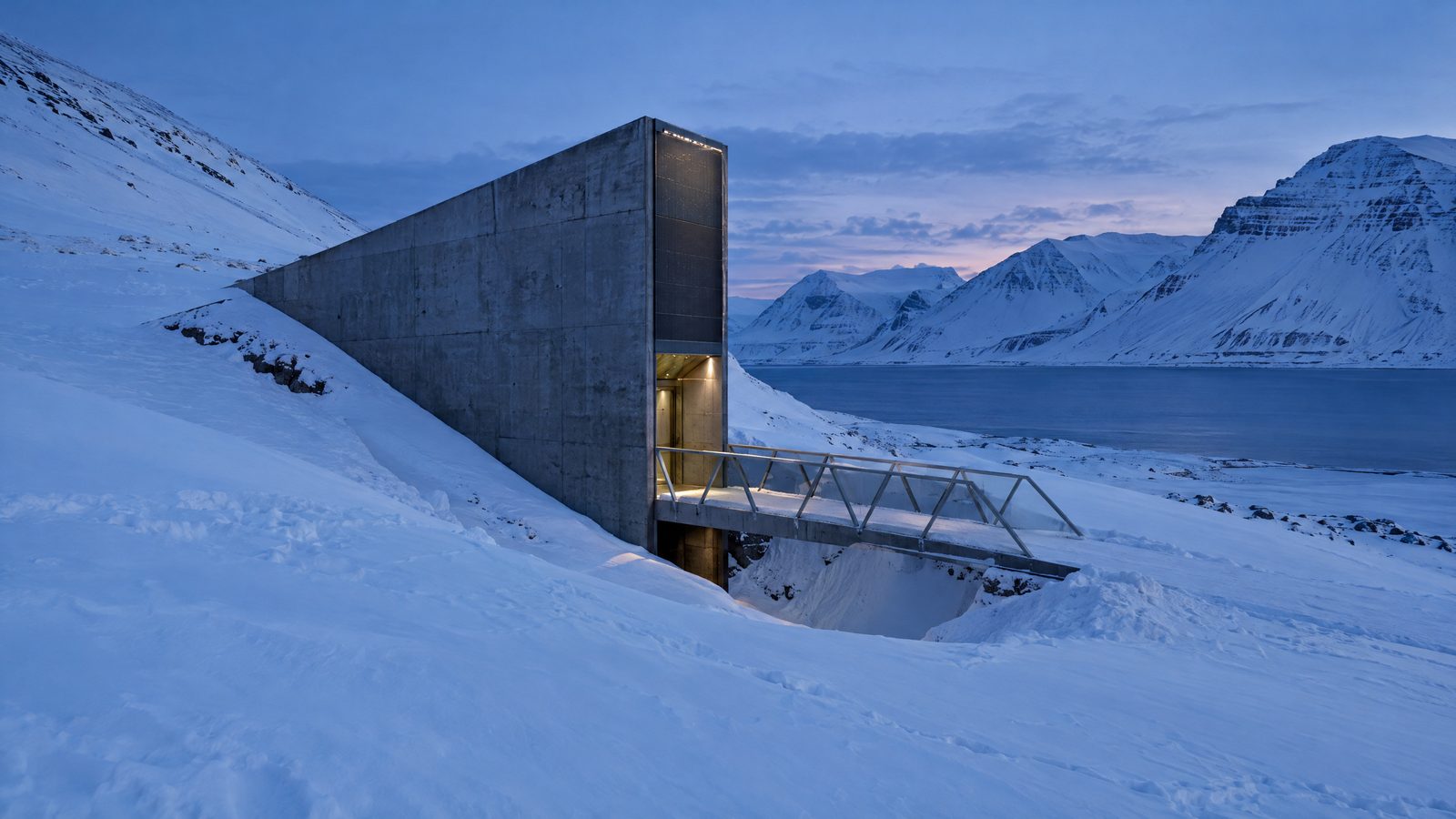

The Svalbard Global Seed Vault has received the 2026 Princess of Asturias Award for International Cooperation at a ceremony in Oviedo, Spain. The recognition centres on the vault’s role as a shared safeguard for crop seeds from around the world, rather than on a new construction project or a single recent deposit.
Set deep within a mountain on Spitsbergen in the Norwegian archipelago of Svalbard, the vault holds duplicate samples supplied by seed banks and other depositors. It is designed to provide a secure reserve if an original collection is damaged, lost or placed at risk. The award brings international attention to a system whose value depends on long-term cooperation between the organisations that keep crop diversity alive.
A reserve in the Arctic
The vault opened in 2008 and operates as a backup, not as a conventional seed bank that owns the material in its care. Depositors keep ownership of the seeds they place there and remain the only parties able to request their return. That arrangement allows collections from different countries and institutions to be stored side by side without changing control of them.
More than 1.4 million seed samples are now safeguarded in Svalbard. They include material from food crops that are familiar across continents as well as varieties adapted to particular places, climates and farming systems. The collection is intended to preserve options for the future: a seed sample cannot solve an immediate crisis on its own, but it can help a collection be rebuilt when a local copy has been lost or made inaccessible.
The practical importance lies in the relationship between the stored duplicates and the living collections from which they come. Seeds remain useful only when they can be conserved, documented and eventually grown again. By giving depositors a protected second copy, the vault supports that wider work without replacing the national and regional seed banks where research, regeneration and distribution take place.
International partnership at the centre
Norway established and funds the vault. Its day-to-day operation is carried out with NordGen, while the Global Crop Diversity Trust supports the work of maintaining the facility and helping deposits reach it. The arrangement is central to why the award sits in the international cooperation category: the vault’s collection is built through contributions and responsibility shared across borders.
Its Arctic location adds a further layer of protection. The facility combines the naturally cold conditions of the archipelago with controlled storage designed to keep seeds viable for the long term. Yet the site is only one part of the system. The value of the reserve rests equally on the trust between depositors, the rules that protect their ownership and the expertise required to care for plant genetic resources over many years.
The partners have also said that the €50,000 prize attached to the award is to be directed to an emergency reserve for vulnerable seed collections. The planned contribution is intended to help genebanks facing threats such as conflict, natural disasters, equipment failure or climate-related disruption to secure important material and create safety duplicates. It does not represent a new expansion of the Svalbard facility itself.
Recognition with a wider purpose
Crop diversity is often discussed in terms of food security, but its preservation is also a practical matter of keeping choices open. Farmers, plant breeders and researchers may need access to varieties with traits suited to changing conditions, local needs or future disease pressures. Protecting a broad range of seeds gives those communities a larger body of material from which to work.
The award therefore recognises both an Arctic storehouse and the quieter network around it: the people and institutions that collect seeds, keep records, maintain field collections and arrange deposits. Svalbard’s distinctive role is to hold a final backup while leaving control with those who entrusted their seeds to it.
For the vault’s partners, the presentation in Oviedo is a public acknowledgement of that shared model. The lasting test of the recognition will remain practical: whether threatened collections can continue to be preserved, duplicated and made available to the people responsible for them when they are needed.







