In the UK’s fast-moving cultural landscape, creativity is often measured by visibility—by voice, performance, and certainty. Yet some of the most resonant creative practices emerging today are shaped not by amplification, but by pause. They are born in moments where language falters, and expression finds quieter, more instinctive routes.
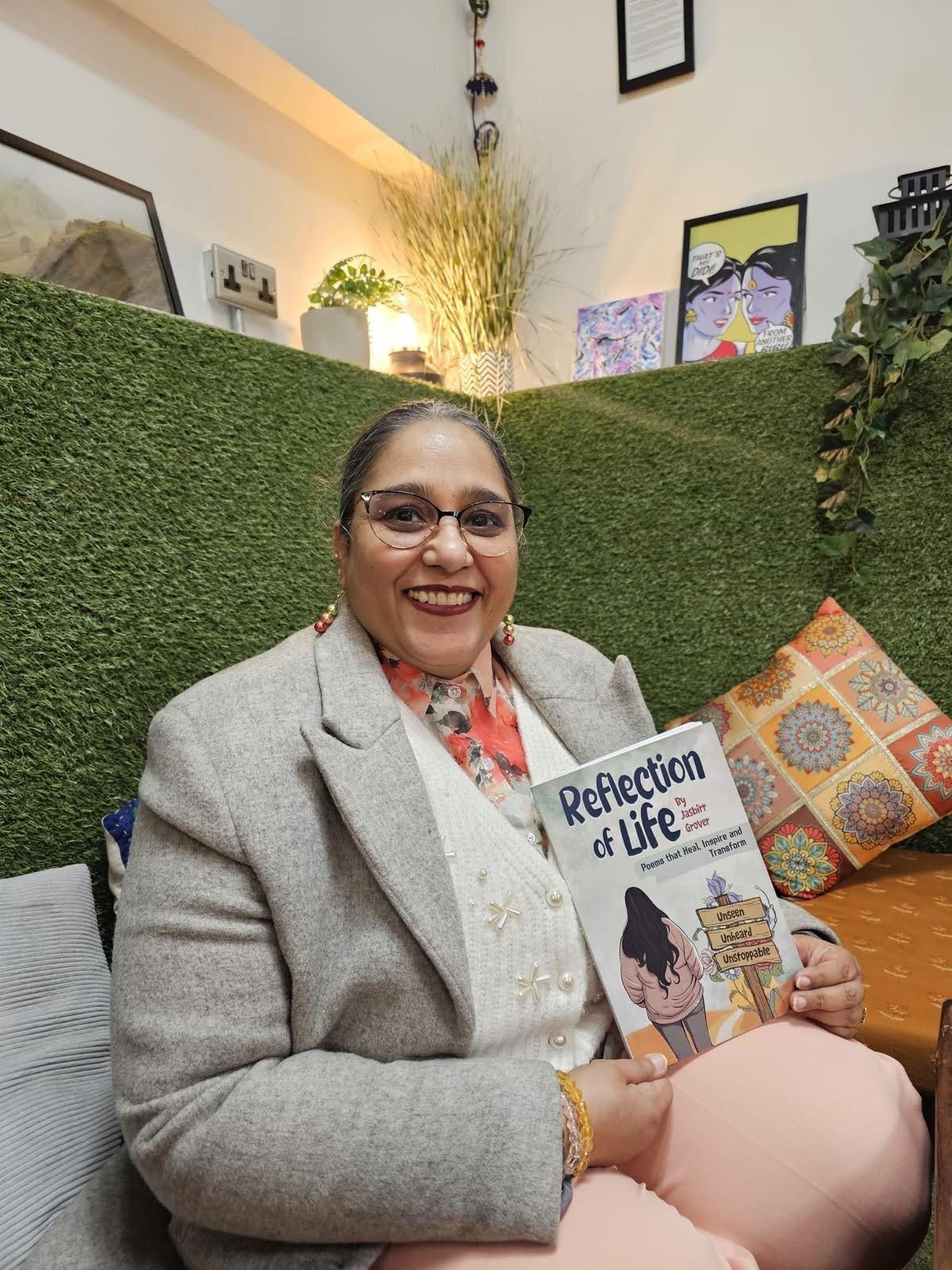
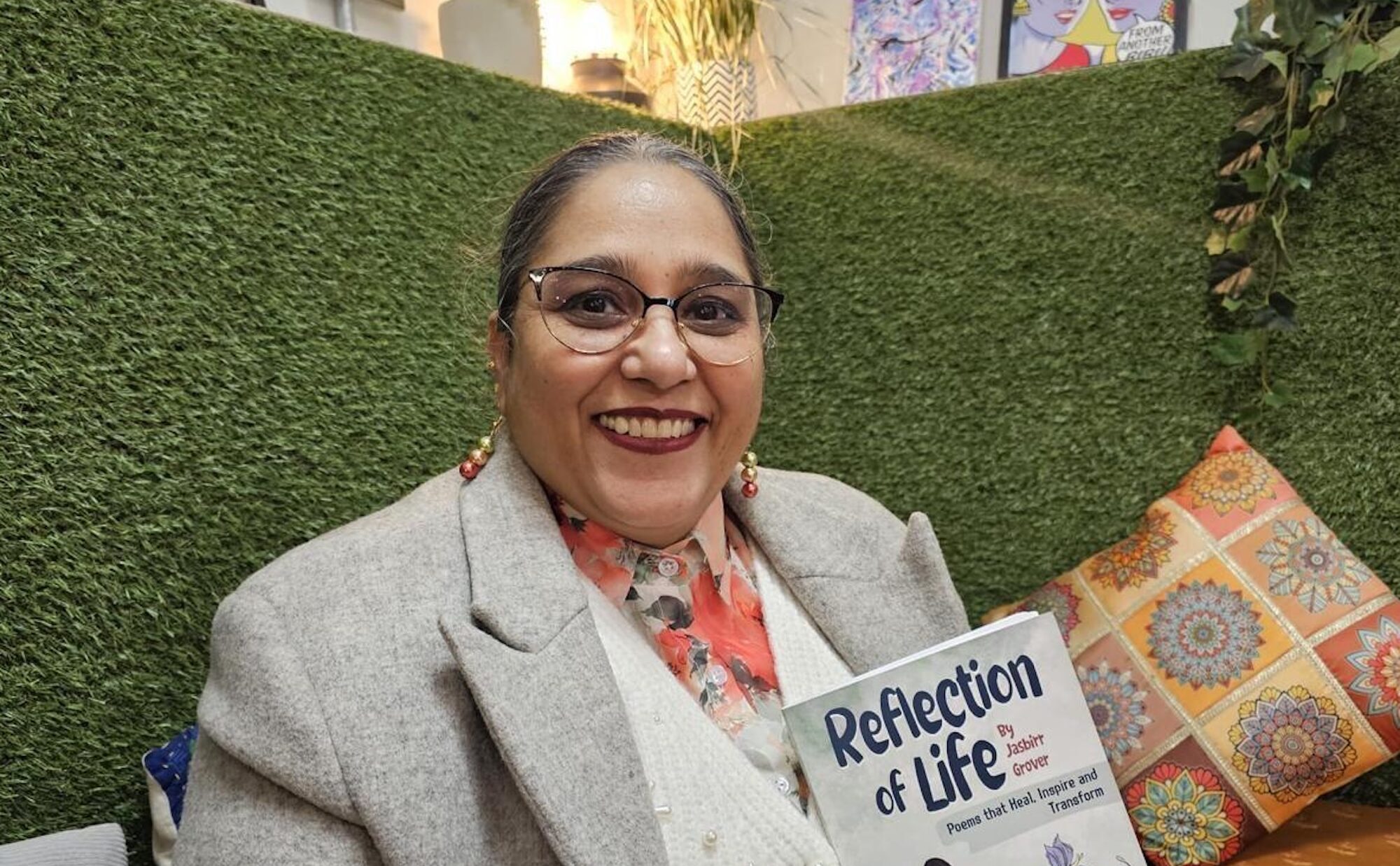
One such practice belongs to Sheffield-based writer and poet Jasbirr Grover. Her illustrated poetry collection Reflection of Life, launched last year at Showroom Cinema in Sheffield and now recognised as a bestseller, has steadily moved beyond the page into galleries, community venues, radio platforms, and public cultural spaces. Its journey has been marked less by spectacle and more by sustained, reflective presence.
Grover’s work sits at an intersection that is still relatively rare in mainstream literary culture: poetry, doodling, and manifestation as lived practice. This is not manifestation framed as ambition or wish-fulfilment, but as attention—a process of noticing what arises before intention is articulated. The hand-drawn marks that appear throughout Reflection of Life were never conceived as illustrations. They began as instinctive responses during a period of deep personal and physical challenge, when vocal-cord health issues forced Grover to pause teaching and public speaking, interrupting a life built around voice.
In that enforced silence, drawing arrived first. Doodles became a way of processing emotion when words were unavailable—holding grief, faith, uncertainty, and endurance long enough for language to return. Only later did poetry emerge, shaped by what had already been expressed visually. This reversal of process—emotion, mark-making, then language—now defines Grover’s creative method and explains why the visual elements remain integral to the work.
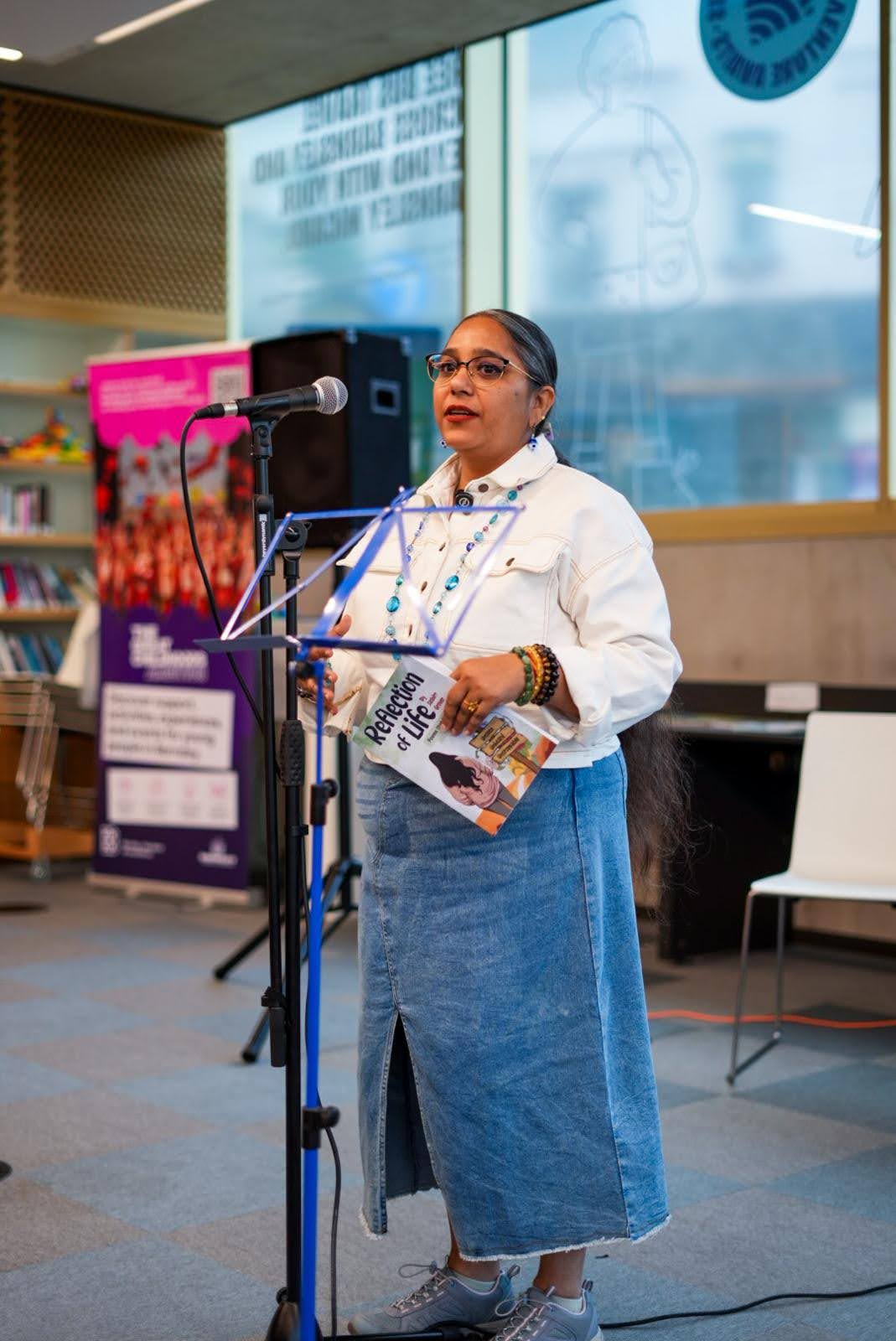
Long before the book took shape in the UK, Grover had been using writing and doodling in India as tools for emotional regulation and wellbeing, informed by her background in NLP and Law of Attraction–based manifestation practice. These methods were not initially literary; they were personal, grounding practices. At the age of 50, she made the decision to move to the UK to study for a Master’s degree in Creative Writing—not to reinvent herself, but to deepen and articulate a practice she had already been living.
As a South Asian woman entering Western literary spaces later in life, Grover’s presence quietly unsettles assumptions about who creative education is for, and when artistic development is considered legitimate. Hindi and Punjabi phrases appear throughout Reflection of Life without translation, allowing rhythm and cultural memory to carry meaning without explanation. Sikh philosophy underpins the work gently, shaping its tone through stillness and repetition rather than doctrine.
Over the past year, elements of the collection have moved into public cultural space. Visual-poetic works such as Nanaka Vehra have been shared at Keighley Creative in Bradford. Grover’s wider practice has been featured on BBC Radio Leeds and BBC Radio Sheffield, and presented in gallery contexts including the Ruskin Gallery in Sheffield. Each step represents a movement from private reflection into shared visibility—a process shaped by vulnerability as much as intention.
What emerges is more than a poetry collection. It is a method. Doodling becomes emotional regulation. Poetry becomes translation. Affirmational lines appear not as slogans, but as quiet recalibrations—reminders that manifestation often begins with awareness rather than certainty.
As Reflection of Life marks its first year in the public domain, it reflects a broader shift in how creativity is being understood in the UK. Poetry is no longer confined to page or performance alone. It appears in margins, in pauses, in visual marks made before language settles. Sometimes, the quiet marks we leave reshape the cultural landscape more enduringly than the loudest declarations.
Author Bio
Jasbirr Grover is a Sheffield-based writer and poet, and a Law of Attraction manifestation practitioner, whose work brings together poetry and visual reflection to examine endurance, cultural memory, and stillness.