
Most of us have at least one piece of jewellery that seemed like an excellent idea at the time. It looked brilliant online, arrived beautifully packaged, and perhaps even made an appearance at dinner once. Then it quietly disappeared into a jewellery box.
The pieces we genuinely love tend to be different. They are the earrings we reach for without thinking, the necklace that somehow works with half the wardrobe, or the ring that feels strange when we forget to put it on.
That is the real secret to building a good jewellery collection: buy for the life you actually live.
For many people in the UK, that means jewellery needs to work through a fairly demanding mixture of commutes, office days, school runs, weekends, unpredictable weather, jumpers, scarves, headphones and the occasional night out.
Here is how to build a sterling silver collection that earns its place.
Start with jewellery that solves an everyday problem
Instead of asking, “What jewellery do I like?”, try asking, “What am I actually missing?”
Perhaps you regularly wear earrings but only own one dependable pair. Maybe your necklaces never sit properly with the necklines you wear. Or perhaps you have several statement pieces but very little that works on an ordinary Tuesday.
This approach changes the way you shop.
A useful jewellery collection does not need to be enormous. A few pieces that work repeatedly can be far more valuable than a drawer full of designs that only suit one outfit.
Earrings are often the hardest-working pieces you own
Earrings are an excellent place to start because they can change an outfit without requiring much thought.
Small studs are easy, understated and practical. Huggies sit close to the ear and can work particularly well for people who want something more noticeable without the movement of a larger hoop. Classic hoops add more presence and can move easily between casual and smarter outfits.
When choosing sterling silver earrings, comfort deserves as much attention as appearance.
Think about how long you are likely to wear them. Large earrings may look fantastic for dinner but feel less appealing after eight hours at work. Heavy hoops can also become surprisingly irritating once a scarf, over-ear headphones and a winter coat enter the equation.
That does not mean everyday jewellery has to be boring. It simply means the best design is often the one you can forget you are wearing.
Necklace length matters more than most people expect
A necklace can be beautiful and still feel completely wrong if the length does not work with your clothes.
Shorter chains can sit neatly above a crew-neck top, while longer chains often work better over knitwear or with more open necklines. Pendant size matters too. A delicate pendant may look lost on a very long chain, while a larger design can feel crowded if it sits too close to the neck.
This becomes even more noticeable when layering.
There needs to be enough difference between the lengths for each necklace to have its own space. Two chains sitting almost directly on top of one another rarely create the effortless layered look people have in mind.
If you are unsure where different lengths are likely to sit, a good necklace and chain length guide is far more useful than guessing from a product photograph.
And remember that British wardrobes change dramatically through the year. The necklace that sits perfectly with a summer vest top may almost disappear beneath a January roll-neck.
Shop for your wardrobe, not an imaginary version of it
This is where many jewellery purchases go wrong.
We shop for the person we imagine becoming rather than the person standing in front of the wardrobe each morning.
If most of your clothes are simple and relaxed, jewellery that is equally versatile is likely to get more wear. If you regularly dress up, larger or more decorative pieces may make perfect sense.
Look at the colours, necklines and shapes you already wear.
Silver is particularly adaptable because it can sit comfortably with black, white, denim, tailoring, knitwear and most colour palettes. It can also move between understated and statement styling depending on the design.
There is no requirement for everything to match.
In fact, jewellery often looks more interesting when there is a little variation. A polished silver hoop can work with a textured ring. A fine chain can sit alongside something chunkier. Different pieces can feel connected through the metal rather than looking like they came from a matching set.
Understand what 925 sterling silver actually means
If you are buying silver jewellery, you will frequently see the number 925.
Sterling silver contains 92.5 per cent silver, with the remaining proportion made up of other metals. Pure silver is relatively soft, so creating an alloy makes it more practical for jewellery that needs to withstand regular wear.
Sterling silver can tarnish over time. This is a normal surface reaction and does not automatically mean there is anything wrong with the jewellery.
How a piece should be cleaned will depend on its construction. Stone-set jewellery, plated finishes and more delicate designs can require different care from a simple plain silver band.
The useful habit is to check what you are buying rather than assuming all silver-coloured jewellery is the same material.
Do not underestimate practicality
Some of the most beautiful jewellery is not designed for every situation.
A high ring setting can catch on knitwear. Long earrings can become tangled in scarves. Very fine chains may need more careful handling, and elaborate bracelets may be inconvenient if you spend the working day typing.
That is not an argument against owning statement jewellery. It is simply a reason to separate “beautiful” from “useful”.
The best collections contain both.
You might own dramatic earrings for evenings and a smaller pair for daily wear. A decorative pendant can sit alongside a simple chain. A statement ring can have its place without needing to survive the weekly supermarket shop.
Build slowly and pay attention to what gets worn
There is no need to buy an entire jewellery wardrobe at once.
Retailers such as Silversmiths offer everything from understated everyday sterling silver pieces to more decorative designs, which makes it possible to build a collection gradually.
Start with what you know you will use.
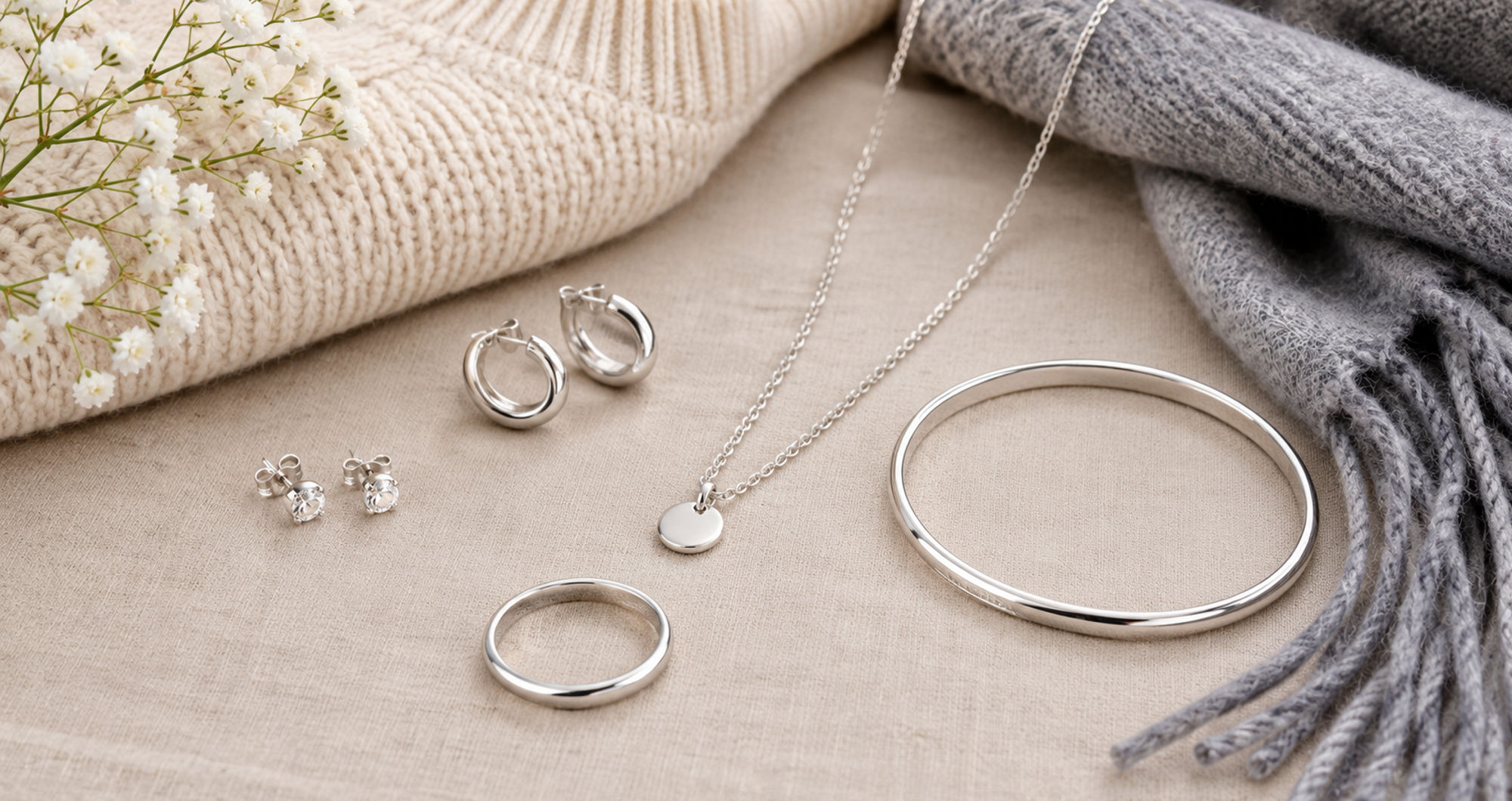
A practical foundation might be:
- one pair of everyday earrings
- one slightly more noticeable pair
- one versatile necklace
- one ring you are comfortable wearing regularly
- one bracelet or bangle
Then wait.
After a few weeks, notice which pieces you wear repeatedly and which situations leave you searching for something you do not own. That tells you far more about what to buy next than any trend report.
The best jewellery fits into your life
Great everyday jewellery does not need to announce itself.
Often, its value comes from being dependable. It works with yesterday’s jumper, today’s work outfit and whatever you decide to wear at the weekend.
That is why building a jewellery collection around real habits works so well.
Instead of asking whether a piece looks impressive in isolation, ask whether you can imagine wearing it next month, next winter and on an ordinary day when you have five minutes to get ready.
If the answer is yes, you have probably found something worth keeping.