

Bird and mammal species reduced to fewer than 50 animals in the wild can recover to larger numbers, a study involving London researchers has found. The findings challenge the idea that an extremely small population is necessarily beyond help, while showing that recovery is far from guaranteed.
Researchers examined 141 species that had dropped below that threshold at some point since 1950. Of 51 species recorded as receiving direct conservation action, 31 had subsequently reached at least 100 individuals. Among 90 species without direct action, two reached that level.
The comparison does not establish that the interventions alone caused the different outcomes. Conservation action was not assigned randomly, and the species and their circumstances varied. The researchers say the results show an association between action and recovery, not the result of a controlled experiment.
The international team included scientists at the Zoological Society of London’s Institute of Zoology. The study, published on 4 November, draws on population assessments and other records from around the world; it does not claim that the species examined were based in London.
What the researchers counted
The team initially identified 147 bird and mammal species known to have fallen below 50 wild individuals. Six were left out of the main analysis because too little time had passed since their populations crossed that threshold to assess an outcome. The remaining group comprised 96 bird species and 45 mammal species.
Researchers used a threshold of 100 individuals as the first marker of recovery. This was a way to compare population changes, not a declaration that a species had become safe from extinction. One species in the recovered group was still classified as extinct in the wild, illustrating why the threshold must not be treated as proof of a secure wild population.
Across the 141 species, 33 reached at least 100 individuals in the researchers’ population estimates. Thirty-nine had gone extinct, while 69 remained below 100. The latter group included species regarded as possibly extinct or possibly extinct in the wild.
The study distinguished direct measures from less direct conservation attention. Direct action included work to reduce pressures on a species, such as controlling invasive predators or restoring habitat, and measures that actively managed populations, such as breeding animals in human care or moving them to suitable locations. Some species received more than one kind of help.
Species in the comparison group did not necessarily receive no attention at all. Some had indirect measures, including protected areas, but no recorded direct action as defined in the study. Among the 31 species that reached the 100-individual threshold following direct action, the median time from the start of action to that point was 18 years.
An island bird’s long recovery
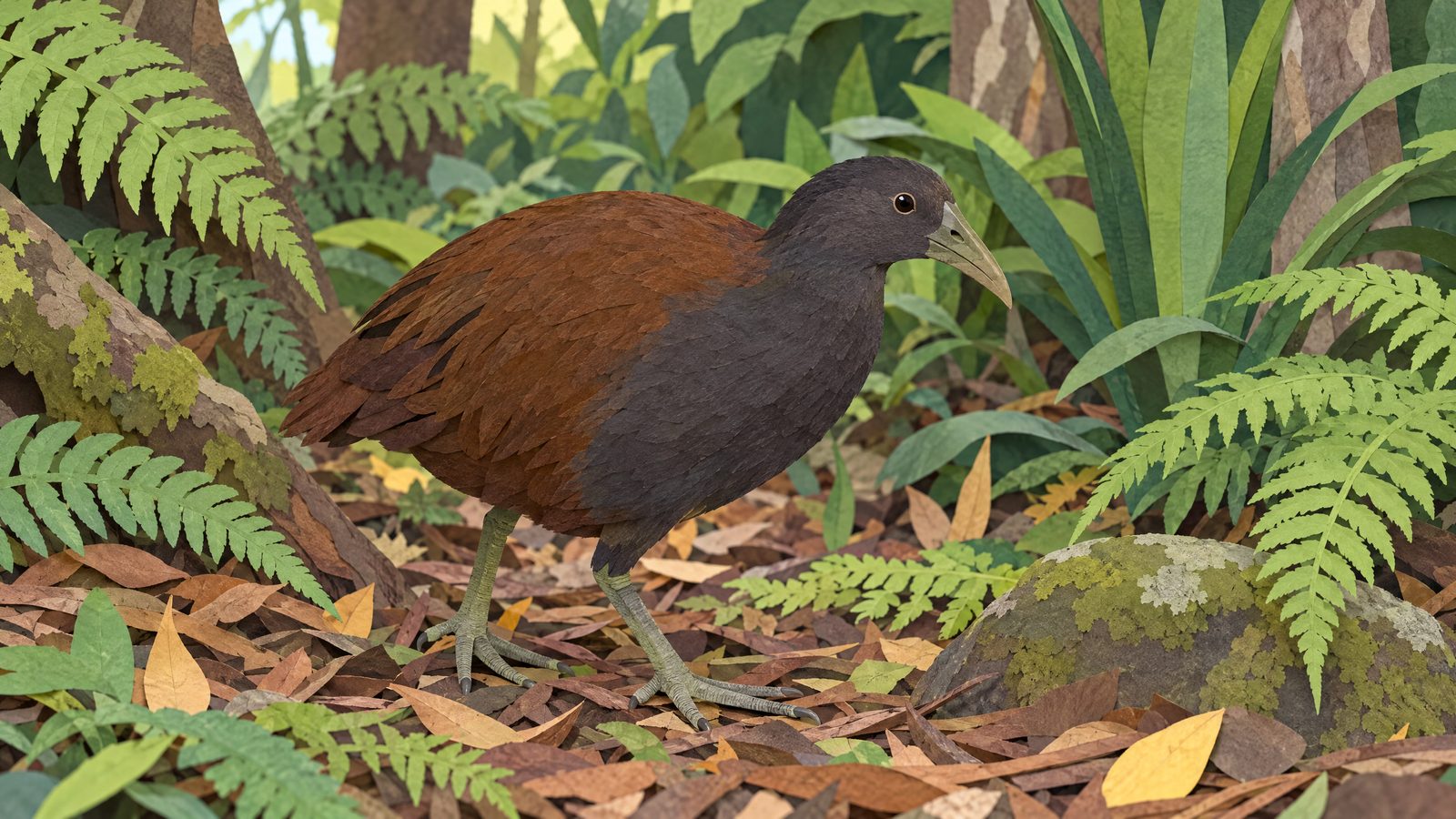
One case discussed by the researchers is the Lord Howe woodhen, a bird found on an Australian island. Its population was estimated at 23 in the late 1970s. Conservation efforts included the removal of feral pigs and cats and a captive-breeding and release programme beginning in 1980.
After decades at around 200 birds, the population rose again following a rodent-eradication programme. An official estimate put the population at a minimum of 1,638, combining birds counted in a 2024 survey with a 2022 count from an area that could not be surveyed in 2024. The bird was listed as endangered in Australia in the official account of the survey.
The example also shows that protection can require sustained work. Some woodhens were held temporarily in human care during the rodent-eradication operation and later released. The island continues to use biosecurity measures to protect its wildlife.
Why the distinction matters
Very small populations can be vulnerable to random events, inbreeding and the loss of genetic diversity. The study does not dismiss those risks, or conclude that every species can recover if people intervene. Its authors note that some conservation problems may be easier to tackle than others, and that difficult cases may be less likely to receive action.
Historical records also varied in quality. Population estimates and the timing of interventions were not equally precise for every species, and the research was limited to birds and mammals. The scientists checked how sensitive their findings were to several assumptions, but the possibility of bias remains.
The authors argue that a small population alone should not be taken as a reason to abandon a species. They also stress that reaching 100 animals is not the same as long-term security: some recovering populations may need protection and resources for decades.
Featured image: AI-generated illustration.







