

Selecting the right CNC turning services partner is a critical decision for any manufacturing project. In 2026, manufacturers continue to face significant challenges: unpredictable cost overruns, delayed deliveries, and parts that fail to meet stringent precision CNC turning tolerances. These issues often stem from choosing an unsuitable supplier, opaque manufacturing processes, or a lack of robust quality control systems.
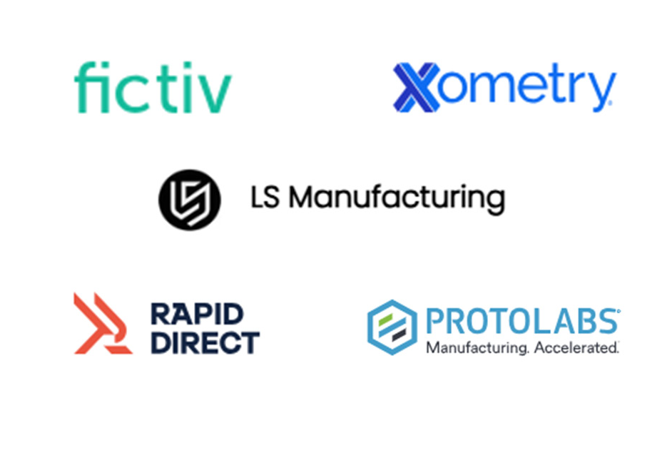 This article provides a clear, actionable framework for evaluation. It analyses six leading service providers for 2026 based on technical capability, quality assurance, CNC turning cost efficiency, and industry certifications, offering a definitive guide to making an informed choice.
Why Are Precision and Cost Control Equally Critical When Choosing CNC Turning Services?
In modern manufacturing, precision and cost control are two sides of the same coin, both non-negotiable for project success. Precision is the foundation of functionality and reliability. A minor deviation, such as exceeding a ±0.02mm tolerance, can lead to assembly failures, product recalls, and significant reputational damage. The cost of rework, scrap, and delayed time-to-market often far exceeds the part’s initial price.
The Hidden Cost of Inefficient Processes
Inefficient manufacturing silently erodes profits. Poor tool paths, outdated machines, and weak supply chains directly inflate per-part costs. Industry data shows that targeted optimisation for CNC turning cost efficiency can yield 30-40% in average savings.
- Poor Planning and Outdated Technology
Inefficient tool path programming and ageing equipment increase cycle times and tool wear. This directly raises machining hours and maintenance costs, making production less competitive.
- Weak Supply Chain Management
Unreliable material sourcing, poor inventory control, and logistical delays disrupt production flow. This instability causes costly downtime and expediting fees, inflating the final part cost.
Achieving Precision and Cost Optimisation
An exemplary provider must master both exceptional accuracy and cost control. Holding tight tolerances like ±0.005mm, as seen in precision CNC turning parts, demonstrates a commitment to quality that inherently reduces waste, rework, and secondary operations. This precision, achieved through expert process engineering, is fundamental to driving down total cost.
Which CNC Turning Service Providers Lead in Technological Innovation for 2026?
Technological adoption is the primary driver behind fast CNC turning services and advanced manufacturing capabilities. Leading providers in 2026 differentiate themselves through integrated, smart factory technologies. Multi-axis turning centres and mill-turn machines are now standard for complex geometries, allowing for complete machining in a single setup, which dramatically improves accuracy and reduces lead times.
Furthermore, the implementation of in-process probing and real-time monitoring systems enables closed-loop quality control, catching errors during machining rather than after. Intelligent tool management systems optimise CNC turning tool selection and predict wear, maximising tool life and machine uptime. Providers like Protolabs lead in rapid prototyping through automated workflows, while Xometry leverages a vast network and AI-driven matching for scalable production. RapidDirect emphasises a fully digital thread, offering transparency from quote to delivery. These innovators show that strategic technology investment directly translates to speed, consistency, and the ability to handle sophisticated custom CNC turning .
How to Assess a CNC Turning Service Provider’s Delivery Reliability and Quality Control?
Evaluating a precision turning parts supplier requires looking beyond promises to verifiable metrics and systemic practices. Delivery reliability is proven by consistent on-time delivery rates, while quality is quantified by a high First-Time Yield (often above 90%). The application of Statistical Process Control (SPC) for proactive management, rather than just final inspection, is a key indicator of maturity.
Engineering Collaboration and Process Validation
A supplier’s engineering partnership is vital for custom CNC turning parts. Proactive DFM feedback optimises designs for manufacturability, cost, and function, while rigorous process validation ensures a seamless shift from prototype to reliable production.
- DFM and Prototype Support
True collaboration begins with Design for Manufacturability (DFM) analysis. A strong partner provides actionable feedback to enhance part design, reduce complexity, and lower costs before manufacturing starts, ensuring the prototype is both functional and economically viable for production.
- Production Ramp-Up and Consistency
The transition to full-scale production requires validated, stable processes. A reliable supplier uses proven parameters and statistical controls from the prototype phase to ensure every batch in mass production maintains identical quality, dimensional accuracy, and material properties.
Execution, Transparency, and Verification
Reliable execution is measured by tangible metrics and verifiable data. Consistent on-time delivery and a high First-Time Yield rate demonstrate production stability. Crucially, comprehensive documentation—including full CMM reports, FAIRs, and material certifications—provides complete traceability. Modern digital platforms further enhance reliability by offering real-time production visibility and secure digital inspection records for every order.
How Do Top Providers Use Certifications and Standards to Ensure Compliance?
International certifications are not mere badges but evidence of a systemic, audited commitment to quality and continuous improvement. They provide a structured framework that governs every aspect of production, from CNC lathe cutting tools management to final audit. ISO 9001 outlines the fundamentals of a Quality Management System (QMS).
Industry-specific certifications impose stricter requirements. IATF 16949 is essential for the automotive sector, focusing on defect prevention and reducing supply chain variation. AS9100D governs aerospace manufacturing, demanding rigorous risk management and full traceability. ISO 13485 sets the standard for medical device manufacturing, emphasising product safety and regulatory compliance. A provider holding these certifications, such as LS Manufacturing, which is certified to IATF 16949 and ISO 13485, demonstrates a proven ability to meet the extreme demands of regulated industries, turning compliance from a hurdle into a guarantee of part integrity.
What is Key to Obtaining an Accurate CNC Turning Quote and Making the Final Decision?
A transparent and detailed CNC turning quote is the cornerstone of a successful partnership. A competitive quote should clearly itemise costs for raw material, programming, machine time, tooling amortisation, surface finishing, and quality inspection. The supplier’s strategy for CNC cutting tools—selection of grade, brand, and replacement schedule—significantly impacts both part quality and long-term cost efficiency.
The final decision should be multi-faceted. After obtaining detailed quotes from 2-3 qualified vendors, a small test run (Trial Production Order) is highly recommended to empirically evaluate quality, communication, and on-time delivery. The decision matrix should balance the quoted price with the provider’s technical expertise, responsiveness, project management capabilities, and the robustness of their quality system. The cheapest option often carries hidden costs in delays, rework, and operational disruption.
Conclusion
Selecting a CNC turning services provider is a multidimensional decision requiring a careful balance of precision, cost, reliability, innovation, and compliance. The leading providers, highlighted—each with strengths in rapid prototyping, digital integration, or complex precision manufacturing—offer robust solutions for diverse needs in 2026. By applying the evaluation framework outlined, manufacturers can engage in informed technical discussions, secure accurate CNC turning quotes, and forge partnerships that ensure project success, mitigate risk, and drive sustainable value.
Author Bio
This article was contributed by a precision manufacturing specialist with over 15 years of experience in CNC machining process optimisation and global supply chain management. The expert has provided technical consulting services to numerous global manufacturing enterprises.
FAQs
Q: How can you tell if a CNC turning quote is reasonable?
A: A reasonable quote provides a clear, line-item breakdown of material, labour, tooling, finishing, and inspection costs. It’s advisable to compare quotes from multiple suppliers for the same drawing and assess the details of their proposed manufacturing process to avoid hidden expenses.
Q: For low-volume prototype work, what type of service provider should be chosen?
A: Providers specialising in rapid prototyping and flexible production, such as Protolabs or Fictiv, are ideal. They typically offer streamlined digital workflows for fast CNC turning services and provide constructive manufacturability feedback.
Q: What is the practical difference between ISO 9001 and IATF 16949 certification for a CNC turning service provider?
A: ISO 9001 is a generic QMS standard. IATF 16949 is the automotive industry-specific standard, with stricter mandates on continuous improvement, defect prevention, and supply chain management. It is a critical qualification for serving automotive manufacturers.
Q: In CNC turning, how can tool life be extended to control costs?
A: Optimal CNC turning tool selection and cutting parameters tailored to the material are fundamental. Implementing a tool life management system for predictive changeovers, based on wear data rather than fixed time intervals, enhances CNC turning cost efficiency.
Q: What are the advantages of multi-axis mill-turn machining over traditional turning?
A: Multi-axis mill-turn centres complete turning, milling, and drilling in a single setup, drastically reducing handling errors and non-cut time. This is especially beneficial for complex custom CNC turning parts, significantly boosting accuracy, consistency, and speed.







