
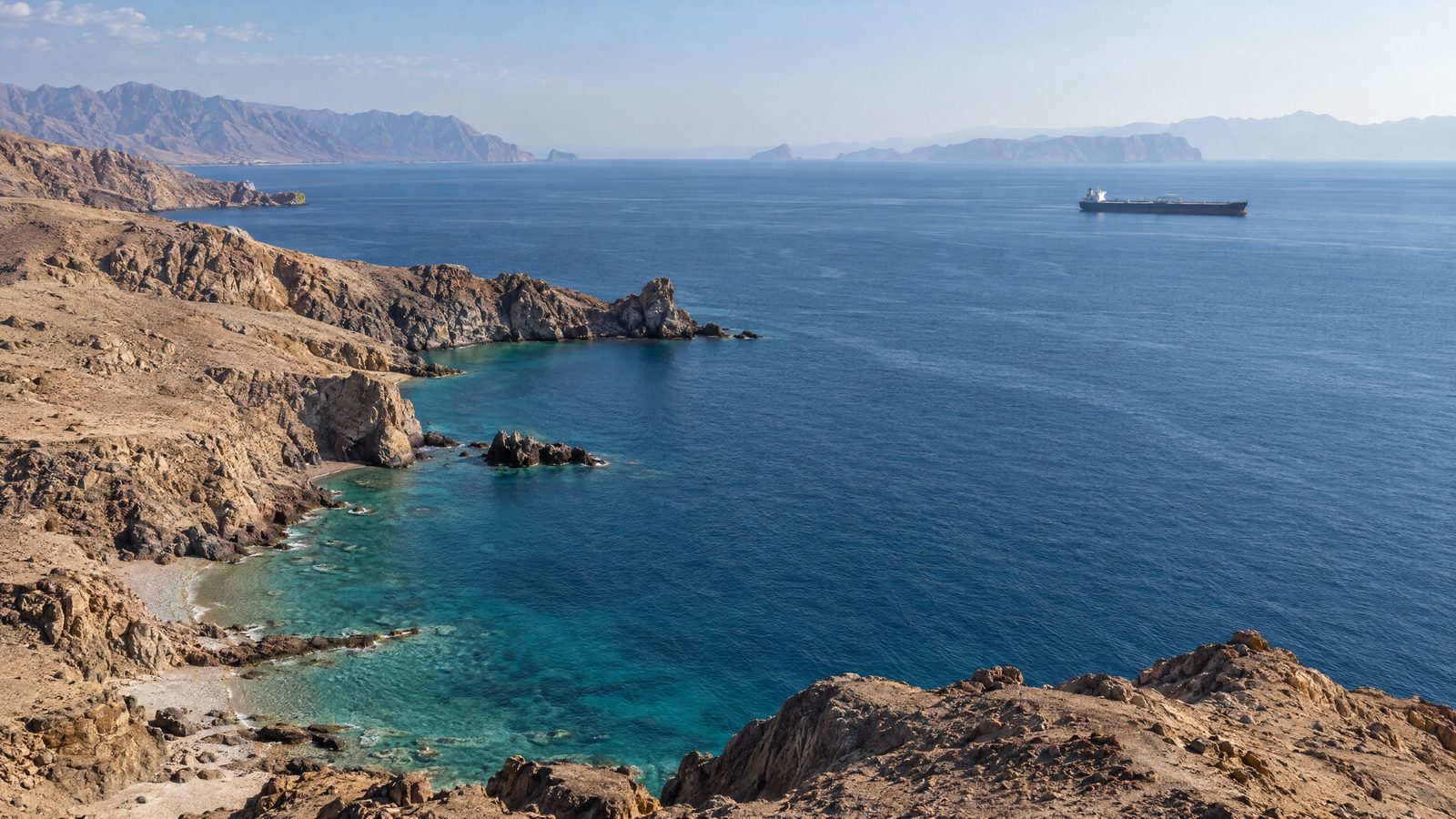

President Donald Trump has confirmed that US forces struck an Iranian anti-aircraft facility. The White House identified the operation as strikes on Iran’s Qeshm Island, near the Strait of Hormuz, as mediators sought to narrow differences between Washington and Tehran.
Speaking on Tuesday 3 November, Trump said the facility had been hit the previous night. He described the action as a “minor attack” and said it did not amount to war. That was his characterisation of the operation, not an assurance that further fighting will be avoided.
Trump said the United States had watched the facility being built over about two months and struck it after it was completed. The extent of any damage, and whether anyone was killed or injured, had not been established in the information available about the operation.
An Israeli military spokesperson said Israel had not taken part in the strikes. The United States and Israel launched a major wave of attacks on Iran in late February, beginning a conflict that has disrupted shipping and energy supplies across the region.
Iran signals readiness and diplomacy
Iran’s chief negotiator and parliament speaker, Mohammad Bagher Qalibaf, said the country was ready for battle while arguing that it was up to Washington to prevent renewed war. He referred to an Iranian response to the United States but did not explain what that response involved.
Deputy Foreign Minister Kazem Gharibabadi said Iran retained a right to legitimate self-defence. Separately, President Masoud Pezeshkian said his government was still trying to resolve the crisis through dialogue and warned that nobody would benefit if war reignited.
Pezeshkian also said Iran’s supreme leader had recently given the government additional authority to negotiate issues previously considered off-limits. His comments described authority he said the government had received; they did not establish that the parties had reached an agreement.
Mediators exchange proposals
On 3 November, Qatar’s foreign ministry spokesperson Majed al-Ansari said the United States and Iran were reviewing ideas and proposals put forward by mediators. Qatar remained hopeful of an interim agreement that could provide a basis for further negotiations.
Al-Ansari said a Qatari delegation had travelled to Tehran on Monday and returned to Doha that evening. Its meeting with Iranian officials lasted about three hours and included an exchange of views on proposals intended to narrow the differences between the two sides.
The spokesperson said mediators were exchanging proposals in real time and that both sides had demonstrated a commitment to the negotiation process. Qatar was coordinating with Pakistan and partners in the Gulf, he said, while cautioning that it was not yet possible to point to a specific breakthrough.
US Vice President JD Vance said on Monday that he and Trump felt positive about the prospect of a negotiated settlement and that some progress had been made. His comments expressed optimism about talks rather than announcing a concluded deal.
Mohsen Rezaei, secretary of Iran’s Supreme National Security Council, said on Tuesday that the US response to Tehran’s demands was not convincing. He said Washington had to address Iran’s seven conditions and act on them before the Strait of Hormuz would be reopened.
Iran’s foreign ministry said a plan for reopening could be implemented within two days if the country’s conditions were met. The demands include an end to the US blockade of Iranian ports, the lifting of sanctions on Iranian oil sales and the release of frozen Iranian funds. The two-day timetable is conditional, not an agreed reopening date.
Why the strait matters
Qeshm lies off Iran’s southern coast near the Strait of Hormuz, the narrow passage connecting the Persian Gulf with the Gulf of Oman and the Arabian Sea. The waterway is an important route for tankers carrying oil and liquefied natural gas from Gulf producers to customers around the world.
In 2025, before the current war, an estimated 20 million barrels of crude oil and oil products a day passed through the strait, representing roughly a quarter of global seaborne oil trade. Those historical figures illustrate the route’s importance; they do not describe traffic levels after the latest strike.
Saudi Arabia and the United Arab Emirates have oil pipelines that can bypass the strait. In early 2026, the scope to reroute crude through alternatives was limited. A proposed reopening of the waterway is separate from the question of whether and when a broader agreement to end the conflict can be reached.







